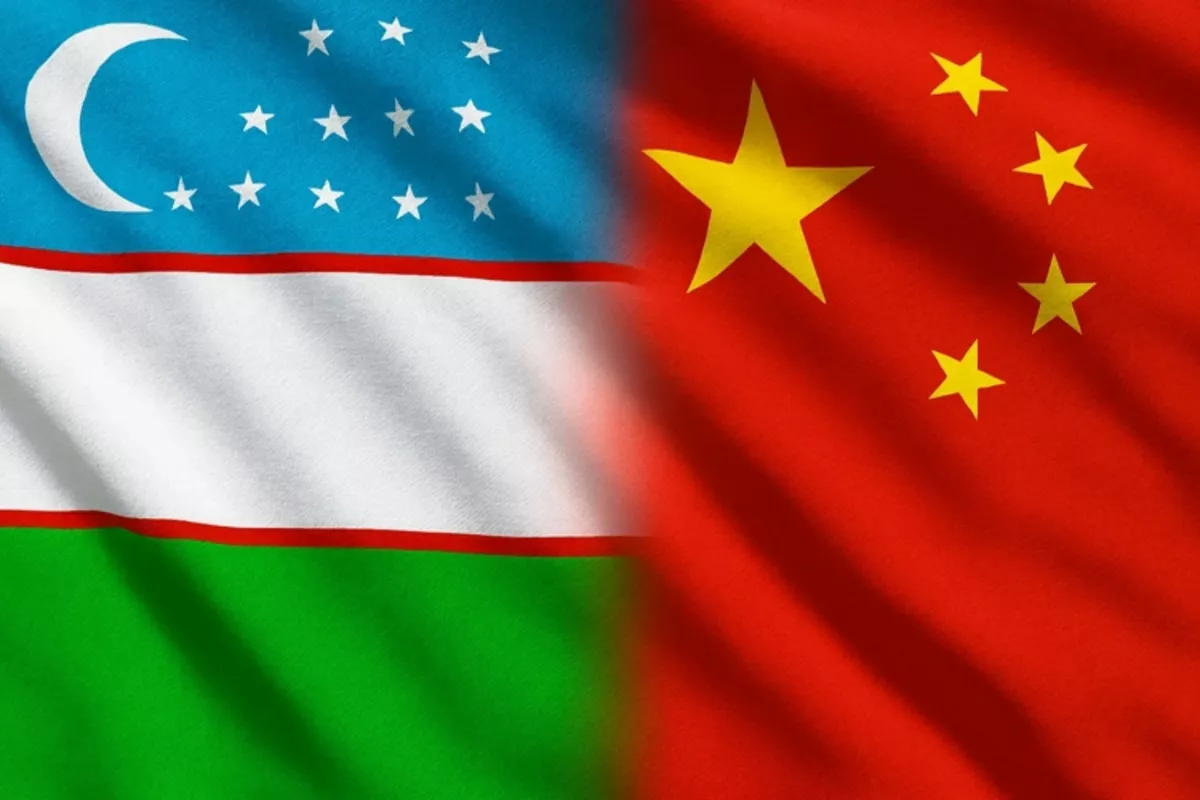
In recent years, cooperation between Uzbekistan and China has taken on a systemic and strategic character, moving far beyond the traditional model of “investor and host country.” Today, China is not only Uzbekistan’s largest trading partner but also the primary external driver of structural transformation within the Uzbek economy. The scale, sectoral diversity, and long-term nature of Chinese investments suggest that a new economic architecture is taking shape - one in which Uzbekistan is gradually becoming one of China’s key industrial hubs in Central Asia.
According to Uzbekistan’s National Statistics Committee, China accounted for nearly 40 percent of all foreign investment and external financing absorbed by the country in 2025. Total foreign capital inflows reached roughly $25 billion during the year, meaning close to $10 billion was associated with Chinese participation. By comparison, the shares of Russia and Türkiye - the next largest investors - stood at around 7-8 percent each. This gap underscores the depth of China’s economic footprint and its unique position among Uzbekistan’s external partners.
Corporate presence mirrors this financial dominance. More than 4,800 enterprises with Chinese capital are currently registered in Uzbekistan, representing over one quarter of all companies with foreign participation. In 2025 alone, Chinese investors established more than 1,500 new enterprises, exceeding the combined total created by all other foreign partners. This rapid expansion reflects not only scale but also diversification, as Chinese businesses operate across mining, manufacturing, construction, energy, pharmaceuticals, agriculture, telecommunications, and increasingly high-tech sectors.
Against this backdrop, the announcement by Huanrong Paper of plans to build a large paper and cardboard manufacturing plant in the Samarkand region fits squarely into this broader pattern. The project, valued at approximately $500 million, will produce industrial cardboard, packaging materials, and office paper. It is designed to be implemented in five stages on a site exceeding 50 hectares within the Urgut free economic zone and is expected to create around 3,000 jobs. Investors estimate annual tax contributions of $50-60 million once the plant reaches full capacity. Importantly, this is not a simple assembly operation but a full-cycle industrial complex with deep processing, aligning with Uzbekistan’s objective of developing higher value-added manufacturing.
The Samarkand paper plant is far from an isolated case. In the Andijan region, a $350 million industrial project with Chinese participation is underway, focused on the production of construction materials and chemical products. In the Navoi and Jizzakh regions, joint ventures are being established to manufacture household appliances, electrical equipment, and mechanical components. In the Fergana Valley, Chinese companies are helping develop textile clusters that encompass the entire value chain - from cotton processing to finished garment production - significantly increasing export potential.
Energy is another cornerstone of Chinese engagement. Over the past few years, multiple agreements have been signed for the construction of solar and wind power plants with a combined capacity measured in several gigawatts. One wind power project in the Bukhara region alone is designed for up to 500 MW. In parallel, Chinese firms are participating in battery storage systems, grid modernization, and hydropower projects. For Uzbekistan, which faces persistent electricity shortages amid rapid population growth and industrialization, these investments are critical for stabilizing the national energy balance and reducing reliance on imports.
Infrastructure and transport also feature prominently. Chinese contractors are involved in upgrading highways, building tunnels, modernizing railways, and developing logistics hubs and industrial parks. A flagship long-term initiative is the China-Kyrgyzstan-Uzbekistan railway, which aims to connect western China with Central Asia and onward to the Middle East and Europe. For Beijing, this corridor diversifies overland trade routes and reduces dependence on traditional transit paths. For Tashkent, it represents an opportunity to anchor itself as a major Eurasian transit hub.
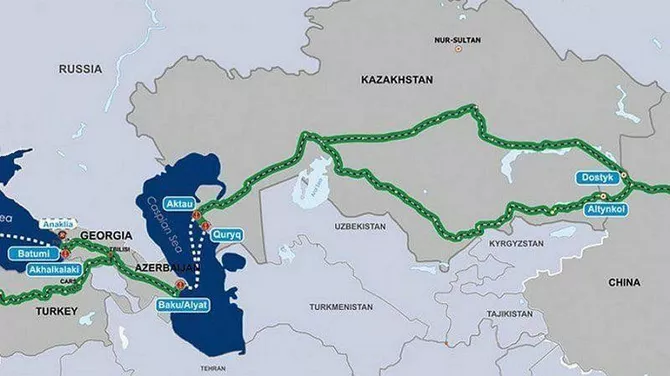
photo: 24kg
Chinese capital has also become increasingly visible in Uzbekistan’s real estate sector. Large residential complexes and mixed-use developments worth hundreds of millions of dollars are being built in Tashkent and other major cities. Developers from China view Uzbekistan as an underpriced but high-growth market, driven by favorable demographics, urbanization, and rising household incomes. These projects stimulate domestic demand for cement, steel, glass, and finishing materials, multiplying their economic impact.
Estimates of accumulated Chinese foreign direct investment in Uzbekistan vary depending on methodology, but many analysts place the figure above $10 billion. Official Chinese statistics reported around $4.5 billion in FDI stock as of 2022, reflecting more conservative accounting. What is not in dispute is the trajectory: since 2017, Chinese investment in Uzbekistan has increased roughly fivefold, coinciding with economic liberalization and active state support for foreign investors.
For Uzbekistan, this influx of capital is accelerating industrialization, boosting exports, and creating hundreds of thousands of jobs. Chinese companies bring modern equipment, engineering expertise, and management practices that often surpass local benchmarks. At the same time, the growing concentration of Chinese capital in certain sectors raises questions about long-term dependency, technological sovereignty, and exposure to geopolitical shocks.
Tashkent is therefore seeking to embed Chinese investment within a broader diversification strategy, expanding cooperation with the European Union, Türkiye, the Gulf states, South Korea, and Japan. Yet in practical terms, China remains the only partner currently willing and able to commit tens of billions of dollars to Uzbekistan’s real economy on a sustained basis.
From a broader geo-economic perspective, China increasingly views Uzbekistan not merely as a consumer market but as a production platform. Locating factories and industrial clusters in Uzbekistan allows Chinese firms to lower costs, mitigate trade barriers, and access markets across Central Asia, the Middle East, and potentially Europe. This logic has become even more compelling amid growing trade frictions between China and Western economies.
In this sense, the Samarkand paper plant symbolizes a much deeper shift. Uzbekistan is being woven into China’s long-term Eurasian industrial strategy. For Tashkent, this creates a historic opportunity to modernize its economy, diversify its industrial base, and integrate into global value chains. Whether this opportunity translates into sustainable and balanced development will depend on how effectively the country manages capital inflows, protects its strategic interests, and ensures that foreign investment serves national development goals rather than substitutes for them.
By Tural Heybatov