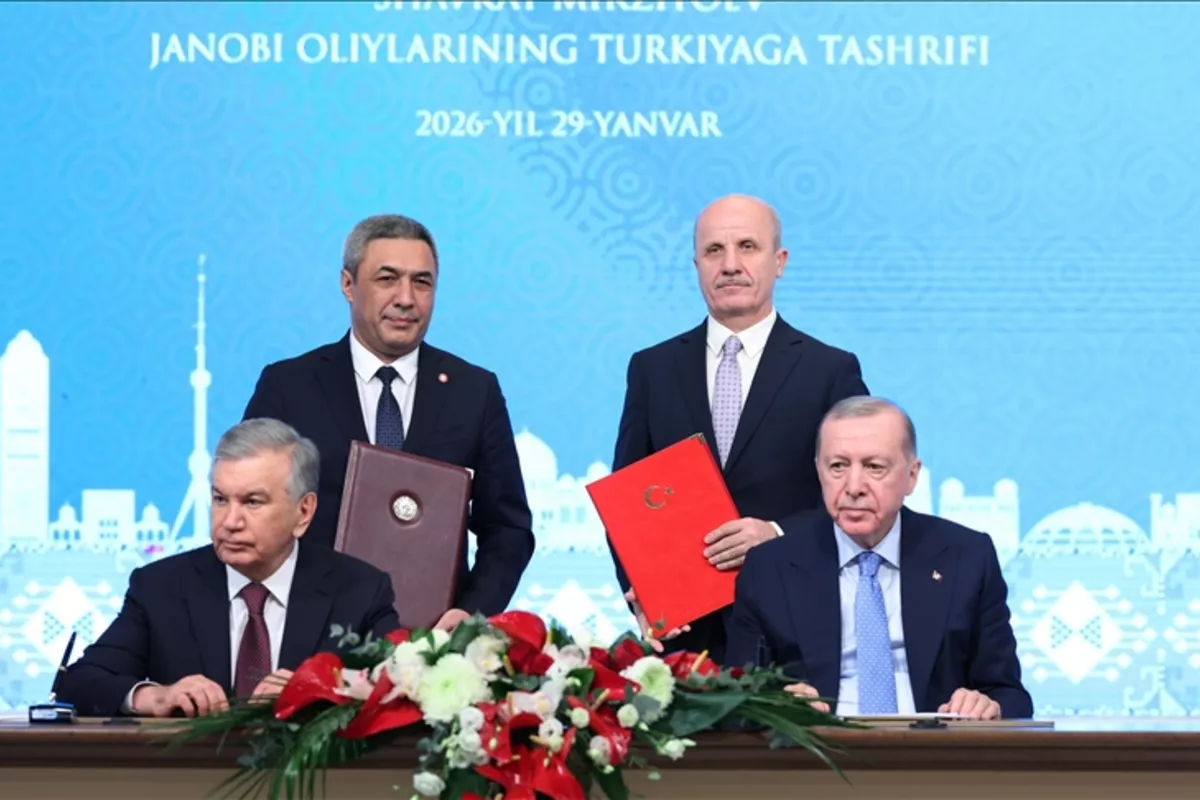
When Türkiye and Uzbekistan signed a memorandum of understanding (MoU) on cooperation in the mining sector at the end of January 2026, the agreement initially looked familiar: another bilateral document added to the long list of accords that usually accompany high-level presidential visits. Such memoranda are common in diplomacy, often signaling goodwill rather than immediate transformation. Yet this particular MoU deserves closer attention. Its timing, subject matter, and institutional context place it at the crossroads of two powerful and durable trends reshaping Eurasia and the wider international system.
The first trend is the global race for critical minerals and rare earth elements-materials that underpin energy transitions, advanced manufacturing, and modern military capabilities. The second is the gradual evolution of cooperation within the Turkic world, where political rhetoric about fraternity is increasingly being translated into concrete institutional mechanisms, long-term coordination, and economically meaningful projects.
The mining MoU signed by Türkiye’s Minister of Energy and Natural Resources Alparslan Bayraktar and Uzbekistan’s Minister of Mining Industry and Geology Bobir (Bobur) Islamov is not merely about extracting resources. It reflects an effort to align industrial policy, strategic planning, and security considerations between two countries that are redefining the practical content of their partnership.
Critical Minerals as Geopolitics, Not Just Geology
In today’s global environment, minerals are no longer treated as neutral commodities governed only by markets. Critical minerals and rare earth elements have become instruments of state power. They are embedded in electric vehicles, renewable energy infrastructure, advanced electronics, aerospace systems, and precision-guided weaponry. Control over their extraction, processing, and supply chains increasingly shapes diplomatic leverage and strategic autonomy.
As a result, mining policy has moved firmly into the realm of foreign and security policy. Governments now negotiate access, processing rights, and technology transfer with the same care once reserved for defense agreements or energy pipelines. The Türkiye-Uzbekistan MoU reflects this shift. Its emphasis on information sharing, research and development, and the implementation of concrete projects signals an understanding that minerals cooperation must be systemic rather than transactional.
In practical terms, such an MoU can serve as a foundation for a broader ecosystem. This may include joint geological surveys and shared data standards, cooperation in processing and refining capacity, coordinated workforce training, and mechanisms for financing and risk-sharing that allow private investment to flow without excessive political exposure. Equally important are environmental, social, and governance standards that ensure projects remain legitimate and bankable in international markets.
Without these elements, mineral-rich states risk remaining exporters of raw materials while others capture the high-value segments of the supply chain. With them, minerals can anchor new industrial corridors and reinforce long-term strategic alignment.
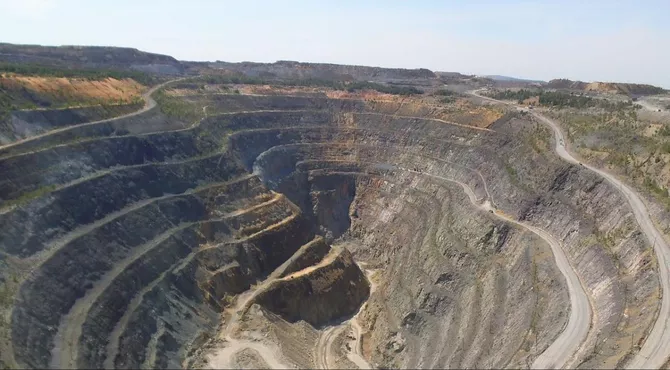
Photo: iStock
Why Institutional Anchoring Matters More Than Symbolism
One reason this MoU stands out is the diplomatic framework in which it was signed. The agreement followed a presidential summit in Ankara and a meeting of the High-Level Strategic Cooperation Council between Türkiye and Uzbekistan. Such settings matter. Documents signed in the shadow of head-of-state commitments tend to carry more political weight than stand-alone ministerial initiatives.
This institutional anchoring turns the MoU from a discretionary document into a policy mandate. Bureaucracies are more likely to prioritize implementation when agreements are linked to strategic councils and joint declarations endorsed at the highest level. It also signals continuity: the partnership is not meant to depend on individual personalities or short-term political cycles.
The mining agreement fits into a broader pattern of deepening cooperation between Ankara and Tashkent. Over recent years, the relationship has expanded beyond trade and cultural ties to include transport connectivity, education, defense cooperation, and regional diplomacy. Mining, particularly in the context of critical minerals, represents a logical next step-one that connects economic development with strategic positioning.
Fraternity as a Tool of Statecraft
The language of fraternity has long been central to Türkiye-Uzbekistan relations. While often dismissed by external observers as symbolic or emotional, this rhetoric serves a practical function. Fraternal framing creates political trust, reduces suspicion, and lowers transaction costs in sensitive areas of cooperation.
This trust is particularly valuable in sectors like mining, where projects are capital-intensive, politically sensitive, and exposed to long-term risks. When cooperation is framed as partnership between “brotherly” states, governments find it easier to justify joint ventures, intelligence-sharing on security risks, and policy coordination that might otherwise face domestic resistance.
The fraternity narrative also links bilateral cooperation to a wider Turkic-world framework. Within this context, economic initiatives are not isolated deals but part of a collective effort to strengthen connectivity, resilience, and autonomy across a shared geopolitical space. Whether one views this framework primarily as cultural, political, or strategic, its institutionalization is increasingly evident.
Security Coordination and the 4+4 Mechanism
The emergence of the 4+4 mechanism adds another layer of significance to the mining MoU. Designed to bring together foreign affairs, defense, internal security, and intelligence institutions, this framework aims to institutionalize coordination across domains that are often treated separately.
At first glance, such a mechanism might seem distant from mining policy. In reality, it is highly relevant. Critical minerals are exposed to a range of non-commercial risks: illicit trafficking, corruption, sanctions exposure, infrastructure sabotage, and geopolitical pressure. Projects that ignore these risks are unlikely to succeed or attract sustainable investment.
A cross-government coordination platform allows Türkiye and Uzbekistan to address these challenges proactively. It can facilitate information-sharing on security threats, align regulatory and enforcement practices, and ensure that mineral projects are embedded within broader national and regional strategies. In this sense, the mining MoU benefits from an institutional environment that recognizes minerals as strategic assets rather than isolated economic inputs.
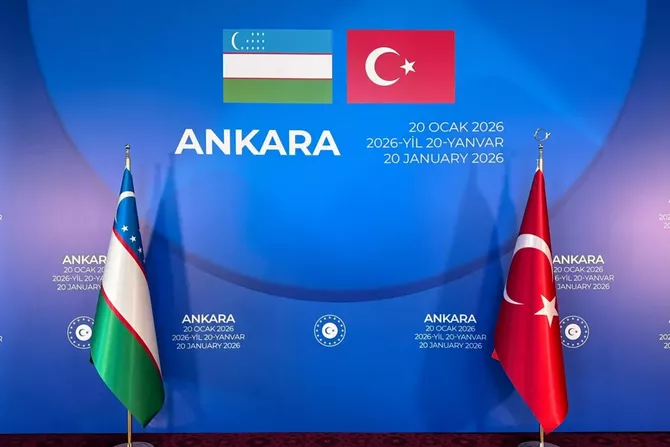
Photo: @ankasamorg/X
From Agreement to Outcomes: What Success Would Look Like
The true test of the Türkiye-Uzbekistan mining MoU lies in implementation. Memoranda often fail because they remain vague or overly ambitious. This agreement explicitly refers to “concrete projects,” creating a benchmark against which progress can be measured.
Three areas offer the clearest path from intent to impact. First, joint exploration and resource-mapping initiatives can reduce uncertainty and attract investment by providing reliable data and transparent project pipelines. Second, pilot processing and refining facilities can help shift cooperation from extraction to value addition, ensuring that both sides benefit economically and strategically. Third, shared standards for training, safety, and environmental management can enhance legitimacy and competitiveness in global markets.
There are also risks to manage. Excessive proliferation of agreements can dilute focus, while imbalanced value chains can undermine political support. Governance failures-whether environmental, social, or regulatory-can quickly erode trust and stall projects. Addressing these risks early is essential if the partnership is to deliver lasting results.
What makes this moment distinctive is the convergence of political will, institutional mechanisms, and global necessity. The demand for critical minerals is not a passing phenomenon; it will shape industrial and security policy for decades. By embedding minerals cooperation within a broader strategic partnership, Türkiye and Uzbekistan are attempting to position themselves not just as participants in this race, but as co-architects of regional supply chains.
Whether this ambition is realized will depend less on rhetoric than on execution. If, within a year or two, the partnership produces functioning joint ventures, shared exploration programs, or early-stage processing capacity, the MoU will stand as a model of how strategic cooperation can be translated into tangible outcomes. If not, it risks fading into the background of diplomatic archives.
For now, the agreement matters because it reflects a deeper shift: the transformation of fraternity from a diplomatic sentiment into a platform for strategic industry, and the recognition that in the age of supply-chain geopolitics, minerals are as much about power and partnership as they are about geology.