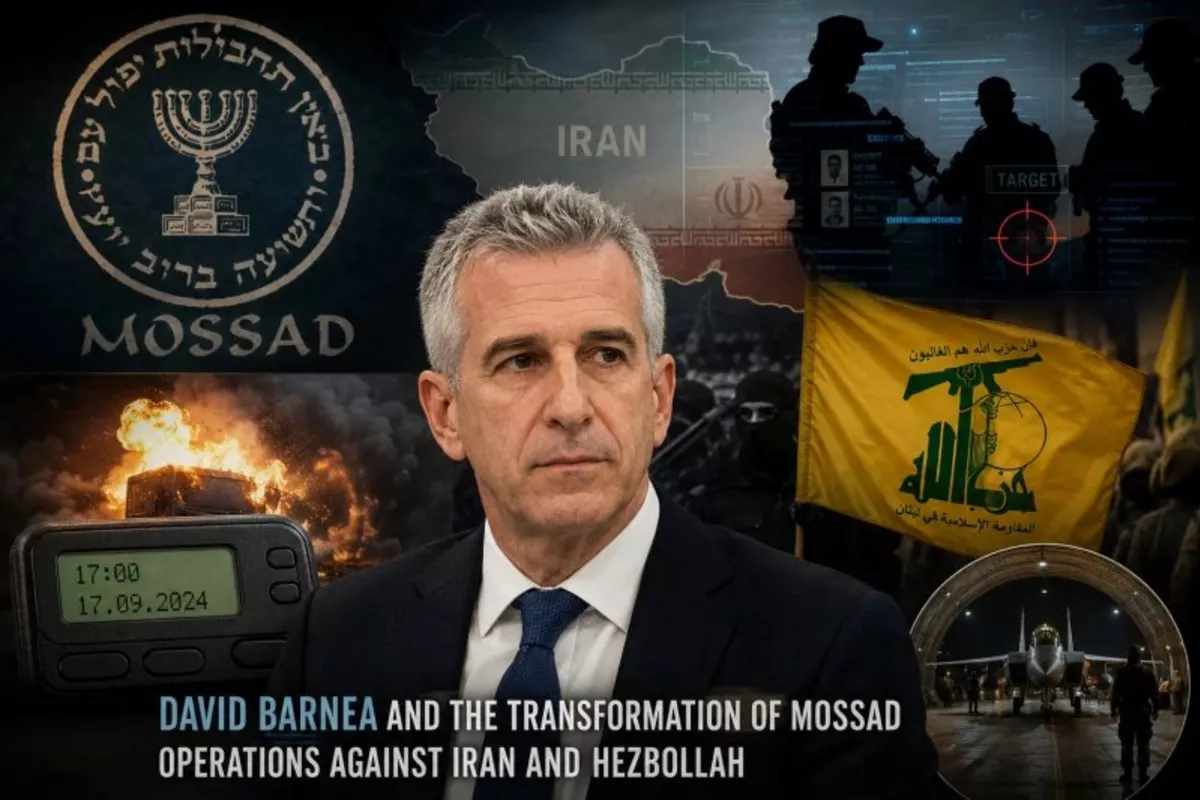
The end of David Barnea’s five-year term as director of Mossad has prompted a reassessment of one of the most intense periods in the history of Israel’s foreign intelligence service. Barnea took over the agency in June 2021 and was 61 when he completed his tenure in June 2026. He spent much of his adult life in Israel’s intelligence community: after serving in the elite Sayeret Matkal unit, he joined Mossad in the mid-1990s and later headed Tzomet, the agency’s principal human intelligence division.
Reports in the Israeli media, based on interviews with current and former intelligence officials, portray Barnea as a proponent of an offensive intelligence doctrine.
Under his leadership, Mossad sought to move beyond isolated covert operations and develop the capability to operate simultaneously across multiple fronts, combining human intelligence, cyber capabilities, artificial intelligence, psychological operations and close coordination with the Israeli Air Force.

Photo: Getty Images
According to Israeli press reports, Mossad personnel referred to these changes as “Barnea’s biometric revolution”. The term did not describe a single technological breakthrough, but rather a broad transformation of intelligence methods at a time when surveillance cameras, facial recognition systems, biometric passports and digital databases had made it far more difficult for operatives to work under cover.
One of the episodes that exposed the vulnerability of older methods was the killing of Hamas operative Mahmoud al-Mabhouh in Dubai in January 2010. Al-Mabhouh was regarded as an important figure in the networks responsible for transferring weapons and funds from Iran to the Gaza Strip.
Dubai police reconstructed the movements of the suspected participants using extensive CCTV footage. The authorities initially issued arrest warrants for 11 people, but the number of suspects later rose to 26. Israeli outlet Ynet reported that more than 20 operatives may have been involved in the mission.
The suspects used foreign passports, including British, Irish, French and German documents. Israel never formally claimed responsibility for al-Mabhouh’s death, but the affair became a major diplomatic and operational challenge for Mossad. It demonstrated that an operative could successfully complete a mission and still be identified later through a combination of digital traces, including surveillance footage, airline records, hotel registrations, telephone data and banking transactions.
Cases of this kind encouraged Israeli intelligence to make greater use of local and foreign agents who had no official, biographical or otherwise visible connection to Israel.
Barnea’s reforms developed along three principal tracks. The first involved maximising the use of cyber capabilities, advanced computing systems, cloud technology and artificial intelligence. The second focused on creating the human and technological infrastructure required to conduct multiple operations against different targets simultaneously. The third aimed to adapt operational methods to the global spread of biometric identification systems.
Before these reforms, Mossad was heavily dependent in many sensitive operations on Israeli operatives working abroad. The 2018 seizure of Iran’s nuclear archive in Tehran is often cited as an example. According to Ynet, dozens of Israeli intelligence officers were involved in that mission, while only a limited number of Iranian agents were used.
Seven years later, that balance had reportedly shifted. During the opening phase of Israel’s campaign against Iran in June 2025, Mossad is said to have relied primarily on local agents. For the first time during a large-scale military campaign, a concealed operational network composed of non-Israeli nationals was reportedly activated.
Major changes also affected Tzomet, the human intelligence division previously headed by Barnea himself. The unit had traditionally been responsible for recruiting sources and managing foreign agents. Following the reforms, new structures emerged specialising in large-scale recruitment, kinetic operations and highly complex missions of strategic importance.
One branch concentrated on expanding human intelligence networks. Another, according to a Mossad official quoted in the Israeli media, was responsible for intelligence operations that “end with an explosion”. Israeli journalists linked such capabilities to operations resembling the killing of Hamas political bureau chief Ismail Haniyeh in Tehran, although Israel has not released a full official account of that operation.
A third branch focused on highly complex missions of strategic significance. The most prominent example was the pager and handheld radio operation against Hezbollah in September 2024.
According to Reuters, approximately 5,000 AR-924 pagers had been ordered for Hezbollah. Small explosive charges and detonators were allegedly concealed inside the batteries in a manner that was difficult to detect through routine inspection. To make the devices appear commercially legitimate, online stores, product pages and other digital traces were reportedly created.
On 17 September 2024, thousands of pagers detonated almost simultaneously. A day later, a number of handheld radios also exploded. According to subsequent Reuters reporting, the two waves of blasts killed 39 people and injured more than 3,400. The casualties included not only Hezbollah members but also civilians who happened to be nearby.
The operation demonstrated that intelligence penetration could be achieved not only through recruitment or cyber intrusion, but also through supply chains. An ordinary communications device had effectively been transformed into a covert operational tool before it ever reached its end users.
Hezbollah had turned to pagers precisely because they were considered safer than smartphones, which can be tracked through geolocation or compromised with spyware. Penetrating the organisation’s procurement system therefore represented not only a physical strike but also a severe blow to its counterintelligence model.
Under Barnea, Mossad’s technology branch was reportedly divided into three areas. The first was responsible for cyber operations. The second focused on digital technologies, artificial intelligence, cloud computing and access to databases. The third designed and produced specialised technical tools for operational units.
Sources within Israeli intelligence claimed that some of the technologies developed by these departments did not exist even within the world’s largest intelligence agencies. They also asserted that Mossad’s cyber branch possessed capabilities unavailable to Unit 8200, the Israeli military’s elite signals intelligence and cyber unit. Such claims, however, come from figures connected to Israeli intelligence and should not be treated as the result of an independent comparative assessment.
The reforms also generated serious internal disagreements. Four department heads reportedly resigned after authority was redistributed. This suggests that Barnea’s changes were not merely technical adjustments, but measures that altered the balance of power within the agency.
Barnea also ordered the creation of an internal communications unit after surveys found that some employees, particularly those at junior levels, did not feel adequately informed about developments within the organisation. Staff members of all ranks were reportedly permitted to email the director directly on matters they considered particularly important.
Another significant innovation was the establishment of an Influence Directorate in late 2021. Mossad had used psychological operations before, but under Barnea they were given a dedicated organisational structure, separate resources and specialists in communications, marketing and information campaigns.
One episode linked to this type of activity was the circulation of photographs showing former Iranian roads and urban development minister Rostam Ghasemi during a trip to Malaysia. Ghasemi, a former Islamic Revolutionary Guard Corps commander, was pictured alongside a woman who was not wearing a hijab. In the context of the strict social standards imposed by the Iranian authorities, such images could be used to inflict reputational damage on a senior political figure.
The most significant test of Barnea’s reforms came during the 12-day war between Israel and Iran, which began on 13 June 2025. On the first day of the operation, Israel deployed about 200 combat aircraft against Iranian nuclear, missile and military targets. At the same time, according to Reuters, groups linked to Mossad were operating inside Iran using drones and precision-guided weapons against air-defence systems and missile infrastructure.
Israeli sources claimed that a covert drone base had been established near Tehran in advance. Ground teams were reportedly tasked with disabling radar installations and surface-to-air missile systems in order to open air corridors for Israeli aircraft.
According to Ynet, some of the operatives were Iranian citizens opposed to the ruling establishment. They were allegedly trained in Israel, returned to Iran and continued their normal lives until receiving activation orders. Shortly before the strikes began, they were reportedly contacted through encrypted channels.
One group was tasked with striking a critical air-defence facility. Other agents were said to have helped disable elements of the IRGC’s air-defence network and ballistic missile infrastructure around Tehran and in western Iran. Synchronising those ground operations with the flight paths of Israeli aircraft was crucial, as any mistake could have endangered Israel’s own pilots.
By 17 June 2025, the Israel Defense Forces claimed to have destroyed more than 70 Iranian air-defence batteries and related systems. The Israeli military also reported strikes on radar stations, missile launchers and installations protecting Iran’s airspace.
After the war, Barnea publicly thanked Mossad personnel for their work and also highlighted cooperation with the CIA. He said Israeli intelligence would continue to monitor Iran’s activities closely. The public acknowledgement of the American agency was itself notable, as intelligence chiefs rarely disclose even broad details of joint operations.
The original account suggested that the Iranian authorities had failed to identify any of the agents involved. The available evidence does not support such a categorical conclusion.
In August 2025, Iranian officials said that police had detained as many as 21,000 “suspects” during the 12-day conflict. They did not clarify what most of those individuals were suspected of. The IRGC separately announced the arrest of eight people accused of attempting to provide Mossad with the coordinates of military sites and information about senior military officials.
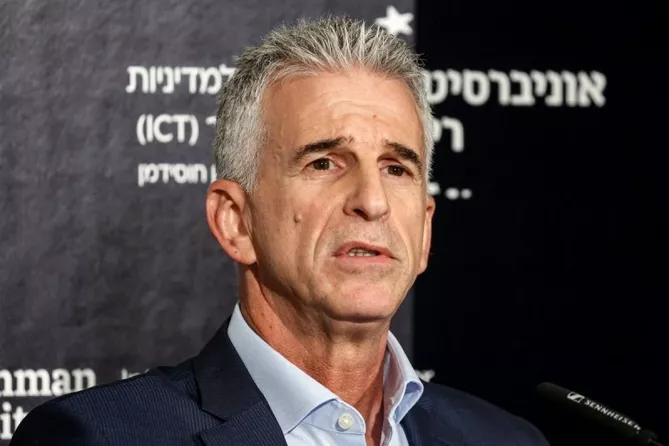
Photo: Getty Images
Iran also announced the execution of several people convicted of cooperating with Israel. Human rights organisations, however, warned that the Iranian authorities might use espionage charges, accelerated judicial proceedings and death sentences as instruments of domestic repression.
As a result, neither Tehran’s claims about dismantling intelligence networks nor Israeli assertions that those networks remained entirely intact can be independently verified.
Barnea’s strategy extended well beyond Iran’s nuclear programme. It aimed to weaken the broader regional system built by Tehran, including Hezbollah, Hamas, Iraqi armed groups and Yemen’s Houthis.
Lebanon was treated as a particularly important theatre. Israeli media reported that Barnea repeatedly advocated more aggressive action against Hezbollah and criticised the policy of containment. In August 2024, he reportedly sent Prime Minister Benjamin Netanyahu a letter recommending that Israel shift its principal military focus from Gaza to Lebanon.
When concerns emerged that Hezbollah might discover the modified pagers, Barnea reportedly argued that they should be activated immediately. The military initially wanted to preserve the capability for use in a broader operation, but the political leadership ultimately decided to act sooner.
Reports also suggested that Lebanese agents linked to Mossad helped refine the intelligence used in the strike on the underground command complex where Hezbollah leader Hassan Nasrallah was located. The episode led to an internal dispute over credit: whether the principal achievement belonged to Mossad, military intelligence, which provided critical information, or the air force, which carried out the strike.
Such disagreements illustrate that operations attributed to a single intelligence service are often the product of cooperation among several institutions. Mossad may provide human access, military intelligence may analyse the information, and the air force may deliver the final strike.
Barnea promoted a model in which intelligence was expected not only to inform political leaders about an adversary’s activities, but also to shape the operational environment directly. In this system, agents, cyber specialists, data analysts, engineers and combat pilots became components of the same operation.
Open publications about Mossad’s capabilities should also be viewed as part of psychological warfare. Israel has an interest in convincing the Iranian leadership that any system can be penetrated, any target located and any official recruited.
Achieving that effect does not require the release of entirely accurate information. It is sufficient to combine verifiable facts, selected operational details and claims from anonymous sources. The result is that Iranian security services must investigate thousands of employees, alter internal procedures and devote substantial resources to searching for possible leaks.
In that sense, one of the lasting consequences of Barnea’s tenure may have been not only the physical elimination of individual targets, but also the spread of mistrust within Iran’s security apparatus.
Sources close to Barnea argued that sustained military and economic pressure could trigger a serious internal crisis in Iran within one to three years. At the same time, they acknowledged that a possible agreement between Washington and Tehran involving economic relief could give the Iranian political system greater resilience.
Such assessments should not be treated as precise forecasts. Iran’s political system has repeatedly demonstrated its ability to withstand protests, international sanctions, economic crises and external pressure. Moreover, efforts by a foreign intelligence service to influence the internal politics of a major state can produce the opposite effect and strengthen public support for the government.
Even so, Barnea’s years at the head of Mossad clearly marked a significant transformation of the agency. It became more active in its use of local agents, digital technologies, artificial intelligence, influence operations and supply-chain penetration.
The known episodes illustrate the scale of that evolution: more than 20 suspected participants in the Dubai operation in 2010; dozens of Israeli operatives involved in the 2018 seizure of Iran’s nuclear archive; around 5,000 modified pagers in 2024; approximately 200 aircraft and covert ground teams during the first strikes on Iran in June 2025; and more than 70 Iranian air-defence systems that Israel later claimed to have destroyed.
Barnea’s main legacy was the attempt to transform Mossad from a predominantly intelligence-gathering organisation into a distributed operational system capable of operating simultaneously across the digital, informational and physical domains.
However, a significant proportion of the available information on covert operations still comes from anonymous Israeli sources. It therefore remains impossible to fully distinguish genuine intelligence achievements from information campaigns designed to magnify Mossad’s capabilities.
By Tural Heybatov