Kazakhstan Bets on Pakistan for Central Asian Connectivity
The Times of Central Asia (TCA) has published an article, titled "Kazakhstan Bets on Pakistan for Central Asian Connectivity."
The Caspian Post republishes the article.
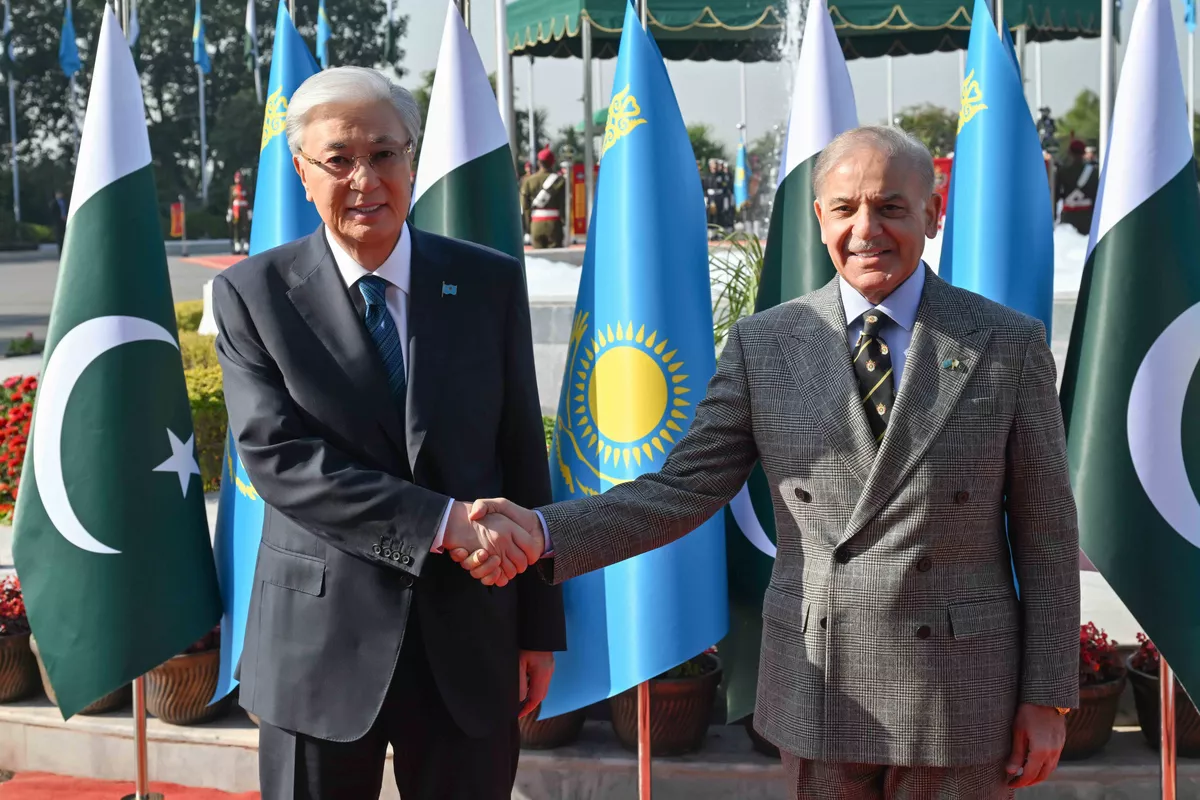
In early February, Kazakh President Kassym-Jomart Tokayev made a historic visit to Pakistan. The last such visit was a two-day trip in 2003 by then-President Nursultan Nazarbayev, during which he met with the Pakistani president at the time, General Pervez Musharraf.
Kazakhstan’s outreach to Pakistan reflects a broader recalibration of its connectivity strategy, as Astana looks to secure more reliable southbound trade routes amid shifting geopolitical and logistical constraints across Eurasia.
The topic of connectivity was already on the table in 2003, and it was also one of the most important issues during the latest visit, with Tokayev discussing the issue during a meeting with Pakistani Prime Minister Shehbaz Sharif.
The trip culminated in the signing of 37 agreements in various fields, including strategic sectors such as mining and, more generally, trade, with the aim of increasing trade from the current $250 million to $1 billion. Official statements indicate that both sides are aiming to reach that target within approximately the next two years. From a political point of view, the bilateral relationship has been elevated to the rank of Strategic Partnership.
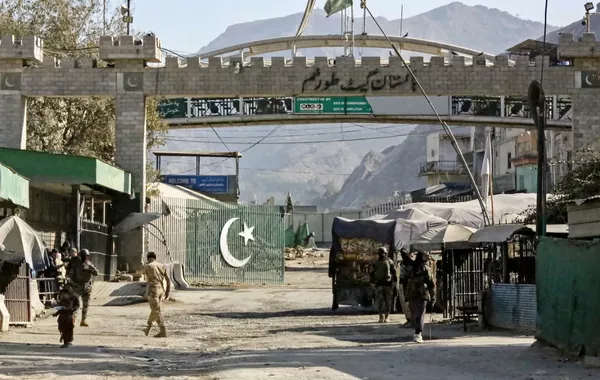
In an official statement released following the visit, great importance was placed upon the issue of connectivity and logistics between South and Central Asia. From this point of view, the Kazakhstan-Turkmenistan-Afghanistan-Pakistan railway took center stage. If completed, the project would connect Kazakhstan to the ports of Karachi and Gwadar and allow Pakistan to be included in the North-South International Transport Corridor and Trans-Caspian Middle Corridor logistics routes. Speaking to the Pakistani media in the days leading up to Tokayev’s trip, the Kazakh ambassador to Pakistan, Yerzhan Kistafin, stated Astana’s willingness to fully finance the construction of the infrastructure, at a total cost of around $7 billion. Kazakhstan’s move represents an acceleration of a logistical competition in this arena involving various players, with some at the forefront, such as Pakistan and Iran, and others further behind, such as China and India.
It has been talked about for some time, but the backbone of the Kazakhstan-Turkmenistan-Afghanistan-Pakistan railway has only recently begun to take shape, as confirmed to The Times of Central Asia by Dr. Nargiza Umarova, Head of the Center for Strategic Connectivity at the Institute for Advanced International Studies (IAIS): “In 2024, Kazakhstan joined the project to construct a railway through Afghanistan, also known as the western trans-Afghan route. The Turkmenistan-Afghanistan-Pakistan (TAP) railway corridor is designed to integrate the transport systems of Central and South Asia, which will stimulate trade and economic ties between the two regions. The TAP railway, which runs through western Afghanistan to the border with Pakistan, could be extended to Pakistani ports on the Indian Ocean. This would provide Central Asian countries with an alternative route to the open seas in addition to the southern ports of Iran.”
Pakistan’s importance as the destination for Kazakhstan’s logistics ambitions was confirmed by Dr. Marriyam Siddique, Assistant Professor at the Pakistan Navy War College in Lahore: “Pakistan serves as the primary maritime gateway for Kazakhstan’s ‘land-linked’ strategy, offering the shortest geographical access to the Arabian Sea,” she told TCA. “By providing deep-sea port facilities at Karachi and Gwadar, Pakistan enables Kazakhstan to diversify its trade routes away from traditional reliance on Russia and China.”
A possible rail link along the north-south axis is also highly regarded by Islamabad, as emphasized by Dr. Adilbek Yermekbayev, Associate Professor at the Center for Regional Affairs of the Al-Farabi Kazakh National University in Almaty: “For Pakistan, the development of transit links with Kazakhstan is economically and strategically attractive, as it provides access to Central Asian markets and, in the longer term, potentially to the markets of Russia and Belarus,” he told TCA. “From Islamabad’s perspective, such connectivity would strengthen Pakistan’s position as a regional transit hub linking South Asia, Central Asia, and parts of the post-Soviet space.”
The potential is clear, as is the main risk associated with the railway. “Afghanistan is geographically indispensable but politically and institutionally fragile as a transit link between Pakistan and Kazakhstan,” stated Yermekbayev. “From Kazakhstan’s perspective, however, it is the current Afghan authorities that may be able to provide a minimum level of security along key transport routes.”
This is a vision echoed by Dr. Siddique, who told TCA that, “The project’s viability depends entirely on Afghan stability.”
Pakistan’s growing role could ultimately undermine Iran’s position. In recent years, Iran had emerged as one of the most promising countries in terms of Central Asian connectivity, but now the situation could be set to change.
“Iran’s port infrastructure competes with Pakistan’s maritime transport capabilities,” Umarova said in assessing the current situation. “There are two strategic ports in southern Iran: Bandar Abbas and Chabahar. Both are used by Central Asian countries to access global trade markets.”
The fact that Tehran is ahead of Islamabad in this regard was also highlighted by Yermekbayev: “Iran plays a more practical and institutionally established role in providing southern transit options for Kazakhstan. Through existing railway and multimodal corridors, Iran already offers Kazakhstan access to ports on the Persian Gulf, making this route significantly more operational than the still largely prospective Pakistan-Afghanistan corridor. At the same time, this role is constrained by both external and internal risks. Consequently, Astana treats the Iranian route as one element within a broader diversification strategy rather than as a single dominant solution.”
According to Siddique, Astana’s recent moves could suggest that this process of “replacement” is already well advanced: “While Iran’s International North-South Transport Corridor is currently more established, Kazakhstan’s offer to fully finance the rail link to Pakistan could shift the competitive balance by removing Islamabad’s capital constraints. If Kazakhstan successfully secures the Afghan segment, the Pakistani route may emerge as a faster, more cost-effective alternative to the Iranian ports.”
As Russia becomes a less predictable partner, including in logistics, and Iran faces renewed internal and external pressures, Kazakhstan’s engagement with Pakistan marks a notable acceleration in a connectivity agenda that has long produced more plans than completed projects.