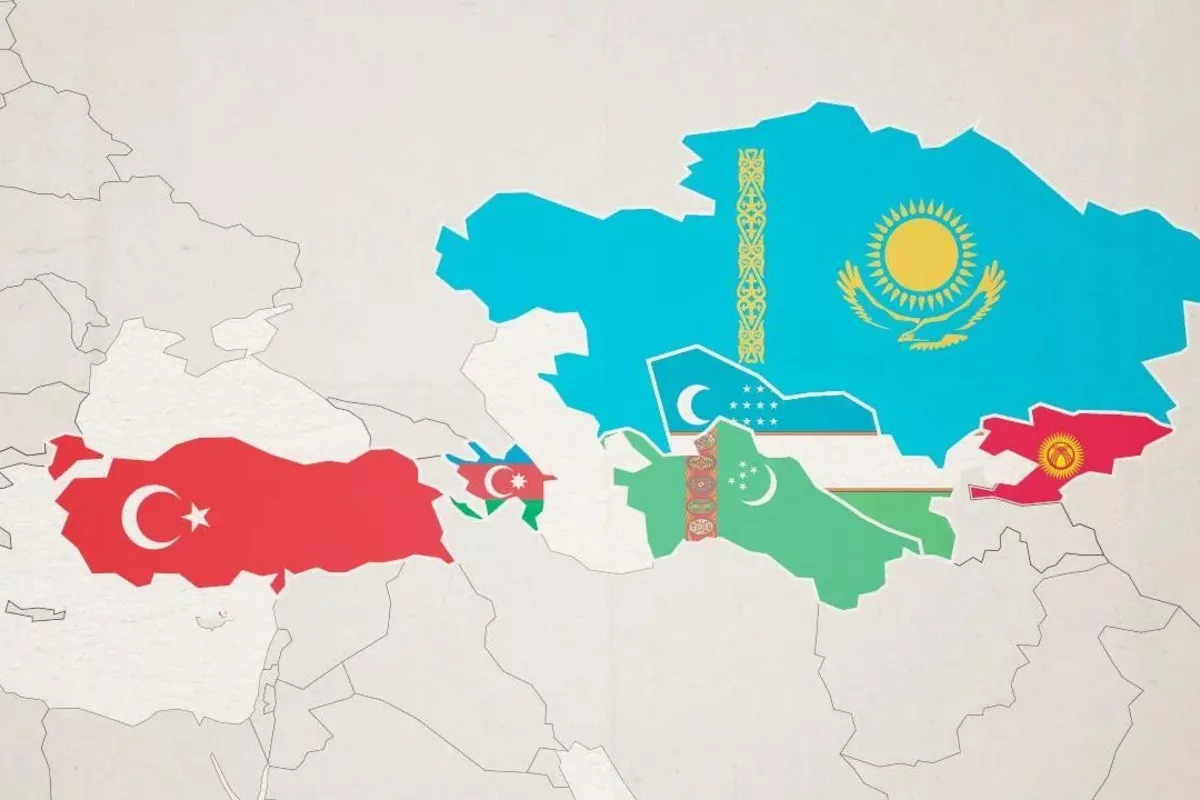
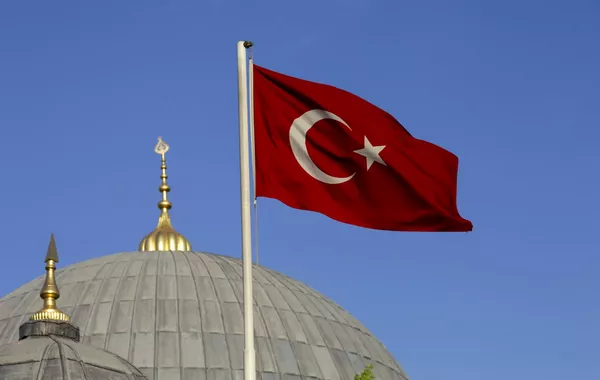
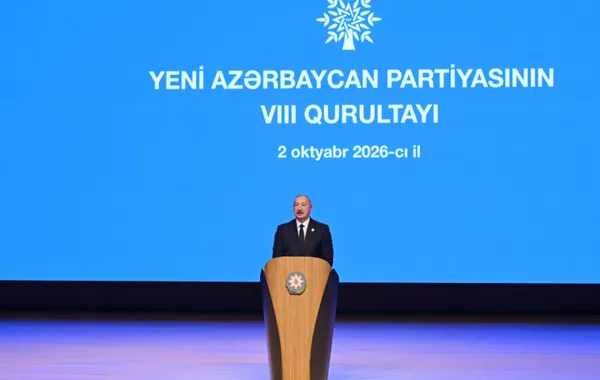
Türkiye’s influence in Central Asia and the South Caucasus is often described as a return-an extension of language, faith, and memory into a contiguous Turkic world that Soviet borders once re-ordered. But influence in the 2020s is less about nostalgia than architecture. Ankara has steadily built an ecosystem that links identity to institutions, institutions to connectivity, and connectivity to hard security. The result is a layered presence: cultural diplomacy and education; trade, logistics, and finance; and an increasingly consequential defense-industrial footprint.
This influence does not amount to domination-Central Asian governments are too practiced at multi-vector foreign policy for that, and the South Caucasus remains contested terrain where Russia, Iran, the EU, China, and the United States all pursue leverage. Yet Türkiye’s approach has become more coherent: it uses a shared civilizational narrative to reduce political friction; it uses the Organization of Turkic States (OTS) to routinize coordination; and it uses transport corridors and defense projects to make cooperation feel “irreversible” in everyday bureaucratic and military practice.
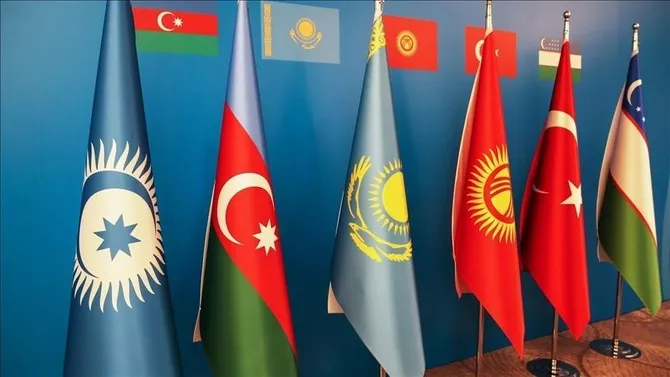
Photo: Anadolu Agency
From shared identity to functional alignment
Rather than pushing for political unity or ideological alignment, Ankara’s regional vision rests on a more pragmatic insight: Turkic identity across Central Asia and the South Caucasus is plural, layered, and historically fragmented. It reflects centuries of migration, imperial rule, and linguistic divergence. Trying to fuse this diversity into a single political project would be unrealistic and counterproductive.
Türkiye’s strategy instead emphasizes functional alignment. The objective is not to erase sovereignty, but to harmonize procedures. Shared forums, compatible standards, routine consultations, and joint projects matter more than grand declarations of unity. This explains Ankara’s preference for building formats-summits, councils, parliamentary assemblies, working groups-rather than relying on personal relationships alone. Formats endure leadership transitions, bureaucratic reshuffles, and domestic political turbulence.
Once these structures exist, they generate their own stakeholders. Customs officials become accustomed to streamlined procedures, railway operators to synchronized timetables, defense planners to joint exercises, and students to shared educational pathways. These constituencies develop a vested interest in continuity. Over time, cooperation becomes less dependent on political mood and more embedded in routine practice.
OTS and the routinization of “Turkic cooperation”
The OTS has become the principal political container for Türkiye’s regional agenda. It is where identity is translated into governance-committees, declarations, working groups, and agenda-setting.
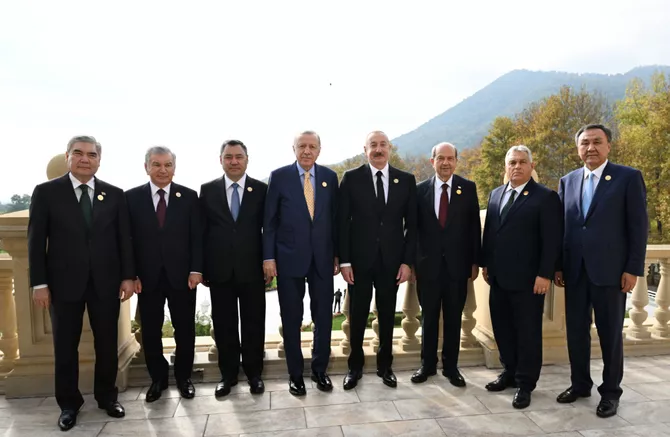
Photo: AZERTAC
Several recent summits illustrate the momentum:
- 11th OTS Summit, Bishkek (6 November 2024): held under a broad economic/digital/security theme, reinforcing that “Turkic world” cooperation is not confined to culture.
- Informal OTS Summit, Budapest (21 May 2025): symbolic and geopolitical-Hungary’s hosting underscores that the OTS seeks external partners and legitimacy beyond the Turkic core.
- 12th OTS Summit, Gabala (7 October 2025): explicitly themed around “Regional Peace and Security,” signaling a maturing security discourse inside the organization.
The Gabala Declaration matters less for any single clause than for its cumulative effect: it normalizes the idea that the Turkic space has a shared security agenda-an important shift in a region where security coordination historically ran through Moscow-centric structures.
Parallel OTS-linked mechanisms are also designed to “lock in” integration financially. The Turkic Investment Fund (TIF) is central here: it is presented as a joint financing vehicle for intra-regional projects and trade expansion, with an authorized capital framework around $600 million and a timeline to begin operational activities in early 2026 reported by regional outlets.
Defense cooperation as credibility
Cultural affinity can open doors; it rarely closes deals. What changed Türkiye’s influence calculus in Central Asia and the South Caucasus is the combination of demonstrated battlefield relevance of Turkish systems and doctrine (most visibly via Azerbaijan’s modernization and drone-centric warfare) and Türkiye’s ability to offer not just weapons, but training, maintenance, and in some cases local production pathways.
Azerbaijan remains the cornerstone of this security dimension
Türkiye-Azerbaijan relations are a showcase for the wider Turkic world. The Shusha Declaration formalized allied relations and provided a framework for coordinated defense planning. Since then, cooperation has deepened through regular exercises, shared training, and evolving mutual assistance mechanisms. What was once symbolic solidarity has matured into institutionalized military cooperation.
At the OTS level, President Ilham Aliyev publicly proposed joint Turkic military exercises in Azerbaijan in 2026, citing extensive exercise activity with Türkiye in the previous year-an example of how bilateral depth can be “scaled” into multilateral ambition.
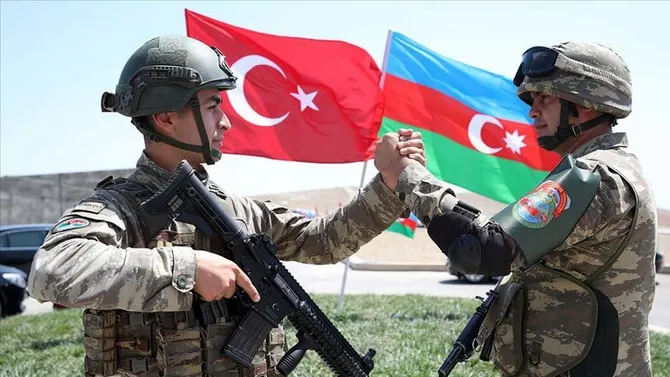
Photo: Azerbaijan's Defense Ministry
Central Asia: from procurement to co-production
In Central Asia, defense cooperation follows a different logic. Governments there are cautious about dependency and resistant to overt alignment. Türkiye’s appeal lies in offering capabilities without heavy political conditions. Its drone platforms, in particular, have become attractive due to their cost-effectiveness, proven performance, and integrated training packages.
Kazakhstan-Türkiye military cooperation: Kazakhstan signed a military cooperation plan for 2025 during talks in Ankara, a typical but meaningful instrument that sustains yearly collaboration cycles.
Drone industrial pathways: analysis and reporting indicate Kazakhstan’s interest in localized production arrangements involving Turkish UAV ecosystems.
Kyrgyzstan’s drone diversification: a major European policy paper noted Kyrgyzstan has ordered multiple types of Turkish drones (with quantities undisclosed), suggesting a strategy of building a layered UAV capability rather than a single-platform purchase.
Uzbekistan’s interest in Turkish UAVs: Uzbekistan is expanding the use of digital surveillance and unmanned systems to reinforce border security, including the deployment of Turkish-made Bayraktar drones. At the latest Security Council meeting focused on defense and national security policy, Chairman of the State Security Service Bakhodir Kurbanov reported that 42 percent of Uzbekistan’s border is now covered by a video surveillance system. He added that more than 1,100 kilometers (683 miles) of fiber-optic communication lines have also been installed. Kurbanov also confirmed that a new special unit equipped with Bayraktar unmanned aerial vehicles (UAVs) has begun operations.
Corridors, connectivity, and strategic geography
If defense provides credibility, connectivity supplies economic logic. The Middle Corridor, linking Central Asia to Europe via the Caspian Sea, the South Caucasus, and Türkiye, has become a cornerstone of Ankara’s regional strategy. Framed as an alternative east-west route, it aligns Türkiye’s interests with those of Central Asian exporters and European consumers seeking diversified supply chains.
From Ankara’s perspective, the strength of this corridor lies not in ownership but in coordination. Türkiye does not need to control every segment. What matters is predictability, harmonized procedures, and growing throughput. Its geographic position as both gateway and terminal ensures that increased traffic translates into strategic relevance.
In the South Caucasus, connectivity has become inseparable from post-conflict diplomacy. Proposals for new transit arrangements linking Azerbaijan to its mainland Nakhchivan and onward to Türkiye have been widely discussed as geopolitically transformative. Regardless of the final branding or governance model, any durable corridor that reaches Türkiye strengthens Ankara’s role as a commercial and logistical bridge while reducing reliance on alternative chokepoints.
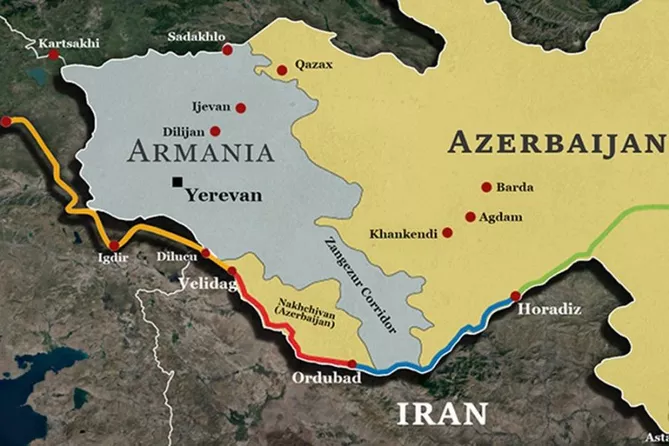
Photo: Wikimedia Commons
Energy as structural influence
Energy ties deepen Türkiye’s influence in quieter but more enduring ways. As both a major consumer and a transit hub, Ankara occupies a pivotal position in regional energy flows. Recent agreements to supply Turkmen gas to Türkiye, even via interim transit arrangements, illustrate how Ankara leverages its market size and infrastructure to attract suppliers seeking diversification.
The Southern Gas Corridor and the expansion logic of existing pipelines reinforce this dynamic. Engineering pathways that allow for increased throughput keep Türkiye central to any future scaling of Caspian energy exports. This creates mutual dependence: producers gain access to markets, while Türkiye gains leverage as an indispensable intermediary.
Finance, trade, and economic architecture
Trade volumes between Türkiye and its Turkic partners vary widely by sector and country, but the strategic aim is consistent. Ankara seeks to move beyond ad hoc bilateral deals toward a more integrated economic space. Business forums, preferential trade discussions, and joint financing tools are all part of this effort.
The Turkic Investment Fund is emblematic of this shift. Its planned launch is intended to support the connective tissue of integration: logistics hubs, digital trade platforms, small and medium-sized enterprises, and cross-border investments. Even if initial disbursements are modest, the institutional framework signals long-term intent.
Cultural diplomacy that still matters
Soft power remains an essential complement to these structural initiatives. Development projects, language instruction, cultural programming, and educational exchanges continue to shape perceptions and build human networks. These efforts create familiarity and reduce friction, producing bilingual officials, Türkiye-educated professionals, and social narratives that normalize Turkish presence.
In regions where strategic alignment can be politically sensitive, this human infrastructure quietly enables cooperation by making it feel natural rather than imposed.
Limits, constraints, and negotiated influence
Despite its growing footprint, Türkiye’s influence faces clear constraints. Central Asian states will continue balancing multiple partners. Russia retains residual security weight, China’s economic gravity is formidable, and regional fragmentation persists. Within the OTS itself, members differ on how far collective commitments should go, especially in the security domain.
Ankara’s success to date stems from recognizing these limits. Rather than demanding exclusivity, it has pursued incremental integration that partners can accept without abandoning other relationships.
Looking ahead: signs of consolidation
The next phase of Türkiye’s regional role will be shaped by practical outcomes. Whether the Turkic Investment Fund finances real projects, whether security cooperation becomes more routine and interoperable, and whether corridor politics translate into functioning infrastructure will all serve as indicators of depth rather than intent.