US President Donald Trump was jubilant when he announced a preliminary deal with Iran to end the war that has brought about the worst energy crisis of modern history - and which has closed the Strait of Hormuz to world shipping.
“Ships of the World, start your engines. Let the oil flow!” Trump wrote in his Truth Social post on Sunday.
Oil prices tumbled. But three days after the agreement was announced by both Iran and the US, marine traffic has not picked up in the narrow yet vital waterway, ship tracking data shows.
Shipping companies and insurance underwriters appear to be taking a wait-and-see approach before deeming transit through the Strait of Hormuz, and the broader ceasefire, sufficiently stable.
So, what are the major challenges as the Strait of Hormuz reopens?
What’s Happening in Hormuz?
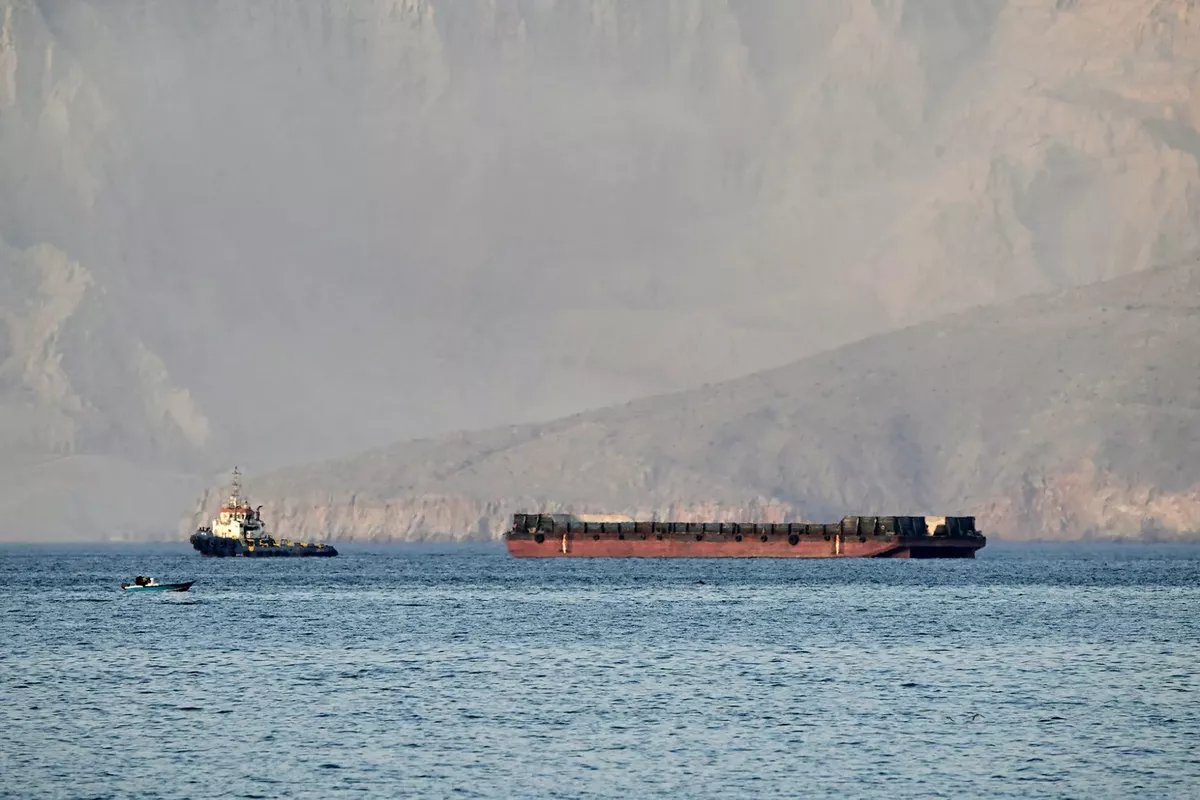
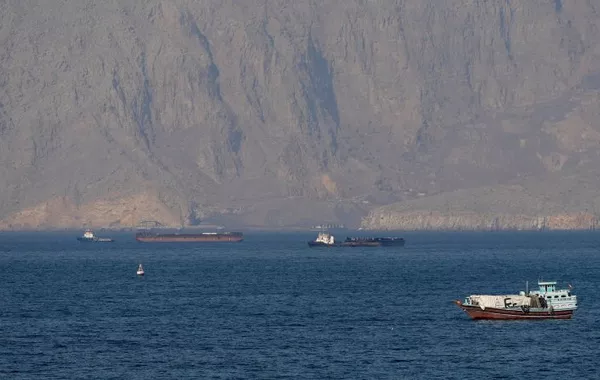
Before the war began, between 120 and 140 ships travelled through the strait each day, about half of them oil tankers carrying some 20 million barrels of oil between them. Iran quickly closed the strait following the start of US-Israeli bombing at the end of February, and the US began a corresponding naval blockade of Iranian ports a few weeks later.
Since the preliminary deal was announced on Sunday, only seven ships have passed through, according to shipping monitor MarineTraffic. Among these were a few tankers carrying Iranian oil which crossed the US blockade line in the Strait of Hormuz - Iran’s “first crude oil exports in two months”, the marine shipping monitor TankerTrackers reported on Wednesday.
More than 550 ships remain stranded on either side of the strait, waiting to transit the Gulf waters.
While Trump insists that the strait is “wide open” for traffic, Iranian officials have reiterated that any transit through it must still be coordinated with Iran’s Islamic Revolutionary Guard Corps (IRGC) and follow a route close to the Iranian coastline.
Why isn’t the Traffic Picking Up?
Besides fears of mines in the strait, which the US says will be cleared now, shipping operators are still wary that hostilities could kick off again at any time.
The unprecedented exchange of missiles and armed drones across the Gulf in recent weeks has heightened security concerns in the Strait of Hormuz. Furthermore, both the US and Iran have attacked and fired upon commercial vessels in the waterway that is only 33km (20 miles) wide at its narrowest point.
Last week, the US military attacked at least three commercial vessels, killing three Indian sailors in one attack.
Then, just one day before the deal was announced, the US military’s Central Command (CENTCOM) said in a statement that its naval blockade had redirected 142 commercial ships that complied and disabled nine vessels that did not comply.
Even though negotiations for a final peace deal are due to begin following a ceremonial signing in Switzerland on Friday, concerns remain that commercial shipping could still be caught in the crossfire.
“It will take more than just a political agreement before we see a normalisation, hence the reason we haven’t seen any material changes until now in Hormuz if looking at AIS-trackers,” said Haider Anjum, a senior equity analyst at Jyske Bank, referring to the transponders ships use to transmit their locations.
“Shipowners need to see actual physical security and stability over a longer period,” he told Al Jazeera. “We must see a sustained period with no incidents before shipowners and insurers will consider that the risk has de-escalated enough.”
This could take around four months, he added.
Shipping operators’ main concerns include the following:
Mines
The threat of underwater mines has plagued the Strait of Hormuz traffic for some time.
Earlier in the war, Iran threatened that it would mine the waterway, but it has never confirmed whether or not it did this. When the IRGC first released a map of the safe route ships it approves for passage can pass, it mentioned that this would avoid “potential” mines.
The US has claimed mines are a risk and said it specifically targeted Iranian mine-laying boats during the conflict.
On June 2, US Secretary of State Marco Rubio told a Senate Foreign Relations Committee hearing that Iran had “mined large segments of Hormuz - international waters”, without elaborating.
However, even the possibility of mines in the waterway is enough to halt traffic, largely because no insurance company will cover ships taking such a risk.
“Even with the reopening, the risk environment remains elevated. The primary risks stem from mines,” Anjum said. “Establishment of a verified and secure mine-free corridor, with mine clearance, is expected to take around two months.”
Nader Habibi, an Iranian-American economist, told Al Jazeera that the crew on vessels transiting the Strait of Hormuz “would still be concerned about their safety for a few weeks as negotiations continue for the unresolved issues between the US and Iran”, adding that there will be a risk of “encountering unresolved mines”.
Tolls
Historically, a transit through the Strait of Hormuz, which flows through the territorial waters of Iran and Oman, has been free of charge. Since the war began, however, Tehran has stated that this will not continue.
Under international law, tolls may not be charged through natural straits such as Hormuz, even if they are not in international waters. However, it is permissible for adjacent states to charge fees for “services” rendered to shipping passing through, such as insurance or docking.
The US and GCC countries have opposed the imposition of any “toll-like” charges for transit, which they say essentially violate freedom of navigation in the high seas. Iran insists that it is not planning to charge tolls for passage, but fees for coordinating safe transit.
It has the right to do this, Tehran says, as the strait is not in international waters. It established the Persian Gulf Strait Authority in May to oversee such operations in the Strait of Hormuz.
“The US is very likely to resist and oppose unilateral tolling by Iran. However, it might be reluctant to restart the conflict over this issue,” said Habibi. “Keeping the strait open is a higher priority even if it has to look the other way on this issue.”
In the longer run, however, Habibi said that it is “unlikely that the GCC countries and the US will allow Iran to demand any tolls”. He noted that the US could decide to sanction vessels paying “tolls” to Iran.
Others do not believe Iran will give up some form of control of the strait, however, as it is the most powerful leverage it has against the US.
Insurance
Insurance companies’ unwillingness to underwrite war-risk premiums - which were largely hiked to unaffordable levels or withdrawn altogether for Hormuz shipping following the start of the US-Iran war - is another major obstacle to restarting shipping through the strait.
“Even in the absence of physical attacks, a lack of available insurance can effectively halt shipping flows,” said Anjum.
“Uncertainty about the durability of the peace deal will pose several challenges for shipping companies, and the insurance rates are likely to remain high,” Habibi, the economist, said.
Anjum, from Jyske Bank in Denmark, told Al Jazeera that war risk premiums have come down from the peak amid hostilities, but still “remain structurally elevated and will likely stay above pre-crisis levels for weeks.”
He noted that pre-war war risk premium hovered around 0.25 percent of hull value for a single shipping transit but rose as high as 5 percent during the war, depending on the vessel’s origin country.
Now, he said, premiums have fallen back to a range of 1 to 3 percent.
Arsenio Dominguez, head of the UN’s shipping agency, on Monday welcomed the deal to reopen the waterway as “an important step toward restoring safety in this vital maritime corridor for seafarers and ships”.
“However, its implementation will require time to ensure that all necessary safety and security guarantees are in place,” he said.
Habibi said that, despite these risk factors, “many ships are expected to pass because both sides have an incentive to open the strait.”
The risk in the Strait of Hormuz, Anjum said, has shifted from a complete closure of the waterway “to a complex, multi-layered security environment with mines below, missiles above, and insurance constraints in between”.