Baku’s Moment: The Hormuz Crisis and Europe’s Energy Diversification Strategy
Supply chain disruptions from the Iran war are reinforcing concerns about the vulnerability of global energy trade routes, and in doing so have highlighted both the strengths and limitations of Europe’s long-running strategy to diversify its energy partnerships.
For decades, Moscow was Europe’s dominant supplier of natural gas, with Russian pipeline imports accounting for roughly 45 percent of EU gas consumption prior to the invasion of Ukraine. European countries such as Austria and Latvia relied on Russia for up to 80 percent of their natural gas imports. The risks that this dependence created, however, became painfully apparent in the aftermath of Russia’s full-scale invasion of Ukraine in 2022, when cuts to Russian supplies contributed to an unprecedented energy crisis marked by soaring prices and concerns over potential shortages, according to Geopolitical Monitor.
In response, European leaders took steps to reduce their reliance on Russia by diversifying suppliers and import routes. The strategy has since reshaped Europe’s energy landscape, expanding its sources of natural gas and strengthening its relationships with alternative providers like Azerbaijan.
Enter Azerbaijan
Azerbaijan has become a key consideration in Europe’s long-term approach to energy diversification. Central to that role is the Trans Adriatic Pipeline, or TAP, which was built as part of the broader Southern Gas Corridor initiative, an effort to improve the security and diversification of Europe’s natural gas supply. The pipeline, which began commercial operations in November 2020, was designed to reduce Europe’s dependence on Russian energy supplies by transporting 10 billion cubic meters (bcm) of natural gas annually from Azerbaijan’s Shah Deniz field directly to Europe.
TAP offers an alternative supply route that bypasses many of the geopolitical complications associated with Russian gas. By September 2025, TAP had delivered its 50th bcm of natural gas to Europe, with plans to double annual capacity by 2027. Achieving that target would further strengthen Azerbaijan’s role within Europe’s broader diversification strategy, reducing the continent’s reliance on more politically volatile sources.
Azerbaijan’s relationship with Europe did not start with Russia’s invasion of Ukraine. Instead, it has developed over decades, formally commencing in 1999 with the EU-Azerbaijan Partnership and Cooperation Agreement, a framework for political and economic collaboration. Energy gradually became a central pillar of that relationship, particularly after the two sides signed a Memorandum of Understanding on the Strategic Energy Partnership in 2006, laying the groundwork for projects like the Southern Gas Corridor. The development of infrastructure linking Caspian energy resources to European markets further strengthened those ties, transforming Azerbaijan into an increasingly important supplier as Europe sought to diversify its energy sources. Today, the EU is Azerbaijan’s largest trading partner and primary export market, accounting for nearly 39 percent of the country’s total trade and more than 70 percent of its exports.
What the Crisis Produced in Baku
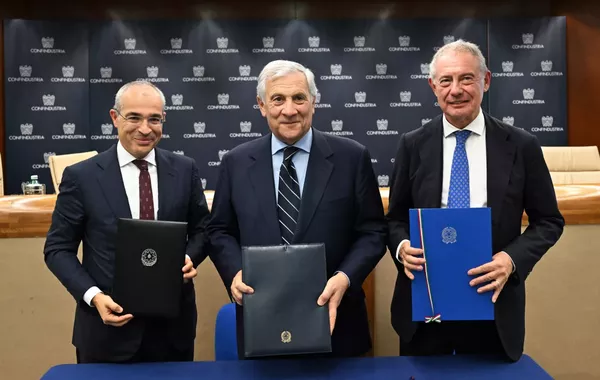
As the Hormuz crisis unfolded, senior European and Azerbaijani officials, including the European Commissioner for Energy and Housing, the President of the European Council, Azerbaijan’s Minister of Energy, and President Ilham Aliyev, held a series of high-level meetings in which they emphasized the strategic importance of their energy partnership and committed to deeper cooperation on energy security and the Southern Gas Corridor. During negotiations held in Baku in early June, the two sides reached a preliminary agreement on the EU-Azerbaijan Partnership Priorities for 2026-2030, a political roadmap outlining future cooperation across areas such as energy, trade, and regional connectivity. They also officially resumed negotiations on a new comprehensive agreement, intended to update and expand the broader political and economic framework governing EU-Azerbaijan relations. Europe’s confidence in Baku was similarly reflected in broader regional energy markets. During Baku Energy Week, a consortium of international energy companies signed a 15-year purchase agreement for gas from Azerbaijan’s Absheron field in the Caspian Sea, signaling confidence in the country’s role as a regional supplier.
Europe’s increased engagement with Azerbaijan falls under a broader effort to strengthen its network of alternative energy suppliers. Norway, which supplied just under 31 percent of EU gas imports in 2025, became a similar focus of European attention in the months following the Hormuz crisis. In August, Germany’s Uniper and Norway’s Equinor signed a 15-year agreement to secure long-term natural gas supplies beginning in 2027. Algeria, another of Europe’s major alternative suppliers, also received renewed attention following the disruption. In March, Italian Prime Minister Giorgia Meloni and Spanish Foreign Minister José Manuel Albares traveled to Algiers as their countries sought to expand energy purchases, while Rome deepened cooperation between Italian multienergy company Eni and Algeria’s Sonatrach through discussions focused on offshore exploration and new sources of oil and gas.
Modest Volumes, Real Resilience
When reviewed against Europe’s broader push to deepen its relationships, Azerbaijan’s gains appear relatively modest. Despite the high-level meetings and partnership agreements, its gas exports to the EU grew by just 3 percent in the first half of 2026, an increase of only 0.2 bcm when compared to the same period a year earlier. Currently, Azerbaijan supplies just under 4 percent of EU gas, illustrating its role within the EU’s broader supply network. Yet even with these modest volumes, Europe managed to avoid widespread natural gas shortages during the Hormuz disruption, a result of years of investment in diversified suppliers, import infrastructure, and energy partnerships. The crisis nevertheless drove energy prices sharply, increasing the collective gas bill for the EU’s 27 member states by an estimated 48 percent. This demonstrated that while diversification can strengthen resilience against disruptions, it cannot fully shield Europe from global energy market volatility.
Europe’s engagement with Azerbaijan during the Iran crisis suggests that leaders view diversification not as a completed project, but as an ongoing process requiring continued investment in the relationships that make it possible. This appears to be the start of a trend: as the world becomes increasingly complex, Europe’s long-term energy security will depend less on any single supplier than on its ability to build and sustain a diverse network of reliable partnerships.
By Holden Johansen