Asian Development Bank Unleashes Billions to Fuel Central Asia's Middle Corridor
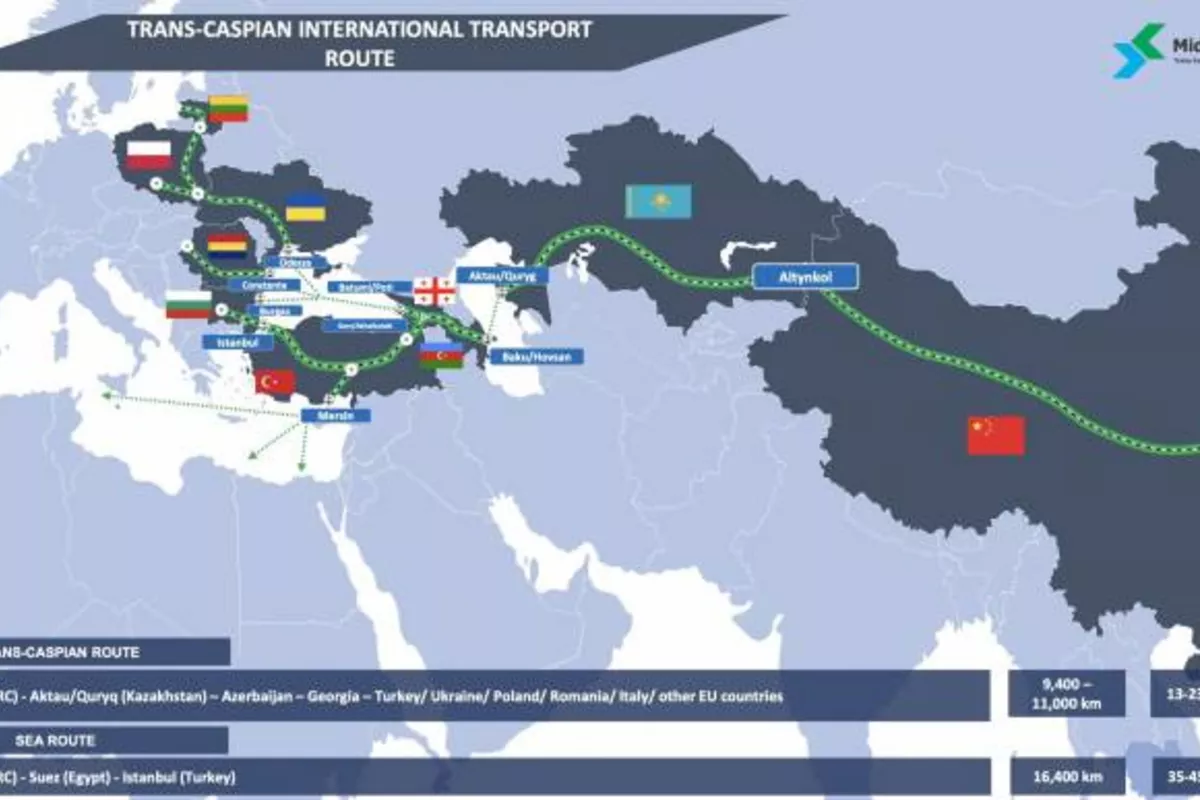
The Asian Development Bank is stepping up its support for Central Asia’s rapidly developing trade corridor, committing billions of dollars to strengthen transport and logistics links across the region. As highlighted by OilPrice, the funding push aims to accelerate development of the Middle Corridor-a key route connecting Asia and Europe that is gaining strategic importance amid shifting global trade patterns. The investment is expected to modernize infrastructure, boost regional connectivity, and position Central Asia as a major hub for transcontinental commerce.
The Asian Development Bank is on a spending spree in Central Asia, authorizing billions in support for states in Central Asia and the Caspian Basin. The bank’s primary aim appears to be stimulating the development of the Middle Corridor trade route, The Caspian Post republishes the article.
On March 2, the ADB announced up to $5.4 billion in financing covering the next four years for Kazakhstan following a meeting between the bank’s president, Masato Kanda, and Kazakh President Kassym-Jomart Tokayev. The commitment is designed to support Tokayev’s modernization program to digitalize the Kazakh economy and political system. Kazakhstan is a lynchpin of the emerging Middle Corridor network.
“The ADB is committed to supporting Kazakhstan’s development priorities that promote sustainable, inclusive economic growth,” Kanda was quoted as saying in a statement issued by the bank.
Two days after the ADB’s Kazakh commitment, Kanda said the bank had agreed to extend up to $1.1 billion to Tajikistan during 2026-28 to support the Dushanbe’s “efforts to build a dynamic private sector that creates jobs.”
Late last year, the ADB pledged to Azerbaijan as much as $2.5 billion in assistance for use between 2026-29 to support “the country’s development priorities, aimed at transforming Azerbaijan into a regional hub for connectivity, trade, and energy linking Central Asia and Europe.” Azerbaijan is envisioned as serving as the Middle Corridor’s western gateway to European Union markets.
In addition, the ADB is working on a technical assistance package to modernize border crossings across Central Asia and the Caucasus. The project is designed to support the development of the US-backed Middle Corridor trade network by streamlining customs procedures along the various trade routes, thus reducing cargo transit times. The plan received concept clearance in late February.
The significance of the latest ADB pledges to Astana and Dushanbe can be best understood when considering that since Kazakhstan joined the bank in 1994, it has received to date $7.7 billion in development assistance in the form of loans, grants and technical assistance. Since Tajikistan joined in 1998, it has received “close to” $3 billion in support.
The big bump up in ADB assistance for Central Asian states comes at a time when the United States has ramped up its diplomatic and economic engagement, driven in large part by the Trump administration’s desire to foster regional connectivity and widen access to Central Asia’s abundant reserves of critical minerals.
In addition to encouraging Middle Corridor development, the bank’s strategy seeks to encourage closer policy coordination among Central Asian states. “To turn today’s gains into lasting prosperity, countries will need to pivot from demand-driven to productivity-led growth-accelerating reforms that strengthen governance, boost private investment, and deepen economic and financial integration,” stated an ADB analysis of Central Asia’s recent economic performance, published in January.
The ADB comprises 69 member states, with the United States and Japan the largest stakeholders with just over 15 percent of shares each. The next three largest stakeholders, China, India and Australia, each hold roughly 6 percent of the bank’s shares.
More ADB assistance for Central Asia may well be forthcoming in the coming months. The Uzbek city of Samarkand will host this year’s ADB annual meeting in early May, offering a prime venue for potential new announcements concerning the region.