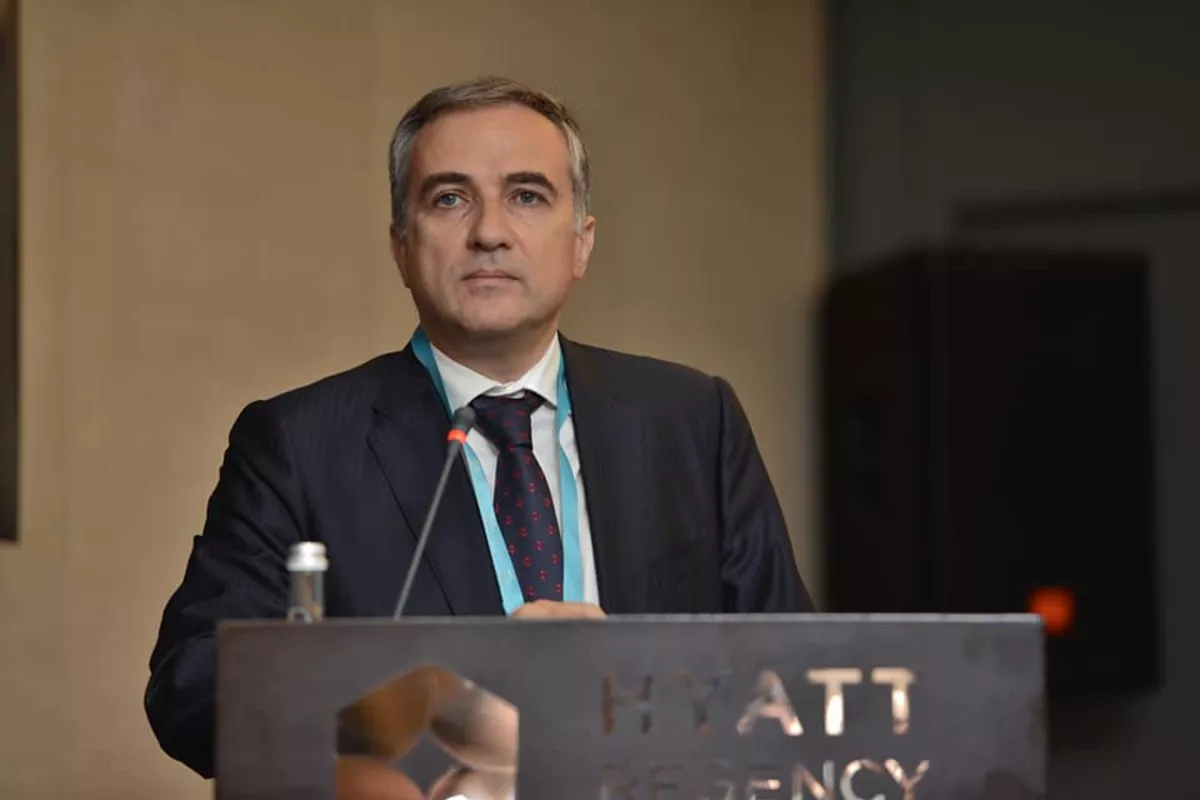
photo: Center of Analysis of International Relations
Chairman of the Baku based Center of Analysis of International Relations Farid Shafiyev has said that Central Asia is not just a neighboring region but a strategic partner for Azerbaijan.
Shafiyev made these remarks at the opening of the international conference “C6: One Region, Shared Future - Enhancing Strategic Dialogue”, The Caspian Post reports via local media.
Speaking at the event, Shafiyev stressed that over the past six years Azerbaijan has shaped its foreign policy around connectivity, diversification, and regional cooperation.
Connectivity as Strategic Resilience
Shafiyev noted that ongoing conflicts across Eurasia have severely impacted energy and transport routes, as well as global supply chains. These developments, he noted, serve as a reminder that regional cooperation built on shared interests is essential for long-term strategic resilience.
By expanding engagement with Asian institutions and strengthening strategic alliances in the East-while maintaining constructive cooperation with the United States and the European Union-Azerbaijan has reinforced the eastern vector of its foreign policy.
“In this context, Central Asia is not simply our neighbor, but our strategic partner,” he emphasized.
From C5 to C6: A New Regional Format
In November 2025, Azerbaijan officially joined the consultative meeting format of Central Asian states as a full-fledged participant, upgrading the framework from C5 to C6. The decision was formalized at the 7th Consultative Meeting in Tashkent, marking a new stage in regional cooperation.
Shafiyev said the move contributes to building a more integrated geo-economic and geopolitical space across the Caspian basin.
Energy, Transport and the Caspian Link
While shared history and cultural ties form a solid foundation, Shafiyev underlined that geo-economics-energy, transport, logistics, and infrastructure-now defines the modern phase of cooperation.
Azerbaijan’s geographic location and developed maritime and transport infrastructure provide additional opportunities for landlocked countries, enabling deeper integration with Türkiye and Europe.
A key role in this process belongs to the Trans-Caspian International Transport Route, which is shaping a new connectivity architecture across Eurasia.
“Simply put, the C6 format expands the range of opportunities-and opportunities are decisive in today’s environment,” Shafiyev said, adding that beyond transit corridors, C6 could evolve into a practical platform for energy cooperation and investment amid the global energy transition.
Share on social media