Hormuz Tensions Could Accelerate Central Asia’s Energy Security Push
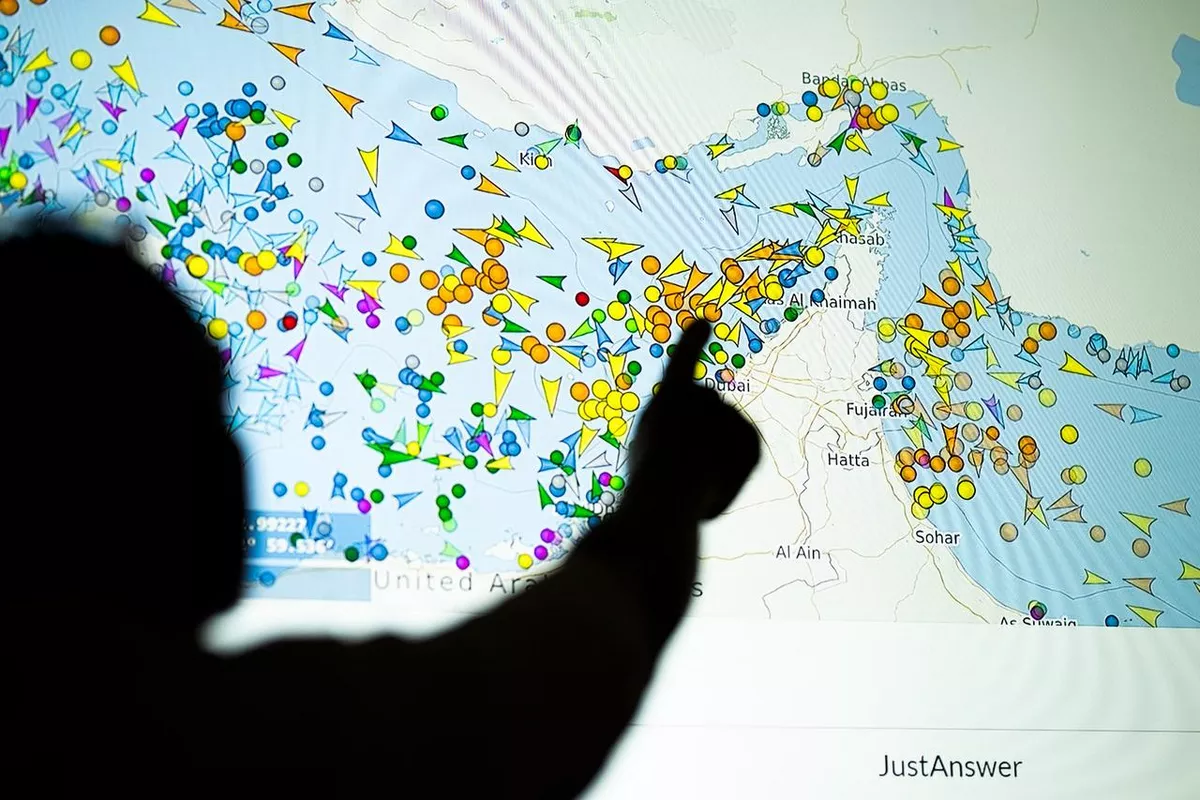
Chief Economist of the Eurasian Development Bank Evgeny Vinokurov said disruptions in global energy markets linked to tensions in the Strait of Hormuz could intensify Central Asia’s search for energy security.
“Such a disruption reminds us that excessive dependence on a single external route or fuel source carries strategic risks,” Vinokurov told Turkish news agency Anadolu Agency (AA), The Caspian Post reports via TürkiyeToday.
He discussed the region’s energy outlook and the possible impact of Middle East tensions on Central Asian energy markets.
EDB Proposes ‘Middle Path’ Energy Strategy
Vinokurov said the EDB advocates a “middle path” strategy for Central Asia’s energy transition.
“This is a planning framework with three measurable goals. First, the system must maintain reliability under peak demand and weather-related challenges; second, transition costs must remain at reasonable levels; and third, carbon intensity must steadily decline, not just superficially,” he said.
He noted that some Central Asian countries currently rely on a single source for up to 90% of electricity generation and argued that the region should move toward a more diversified electricity mix between 2030 and 2040.
While renewable energy should expand significantly, Vinokurov warned against eliminating uninterrupted generation capacity too quickly.
“Flexible gas power plants, storage systems, and grid modernization need to advance simultaneously with investments in solar and wind,” he said.
He added that coal cannot disappear “overnight.”
“Coal still provides cost-effective electricity for system stability and economic development. However, its role should gradually shrink over time through modernization, reduced use and selective replacement,” he said.
Grid Modernization Seen as Top Priority
Vinokurov said electricity demand in Central Asia could increase by around 40% by 2030, making grid modernization and flexible generation capacity urgent priorities.
“Otherwise, renewable energy investments could lead to production curtailments, instability and higher system costs,” he said.
He added that many supply problems in the region stem not only from insufficient generation but also from outdated transmission infrastructure.
‘Middle Path’ Could Cut Costs, Emissions
Addressing criticism that modernizing Under the proposed “middle path” scenario, the region’s future energy mix could include 20% coal with carbon capture and storage, 25% gas, 15% nuclear power and 40% renewable energy supported by storage systems.
Vinokurov said the approach could reduce capital costs by 25% to 40% compared with “the most ambitious green scenario,” while cutting carbon emissions fivefold compared with a conservative fossil fuel-heavy model.
“This scenario reduces capital costs because it does not attempt to rapidly replace all uninterrupted capacity with renewable energy. At the same time, it significantly reduces carbon intensity compared to a coal-heavy pathway,” he said.
He stressed that success would depend not only on building new power plants, but also on improving regional grid integration, storage capacity, electricity trade and management of social costs.
Commenting on the impact of tensions in the Strait of Hormuz, Vinokurov said the region should avoid binary choices in energy policy.
“Choosing either ‘only coal’ or ‘only renewables’ would be a mistake,” he said. “The real lesson is to build a more diversified, more regionalized and less import-dependent system.”
He said regional instability could simultaneously boost interest in backup coal and gas generation, fuel reserves and energy security, while also accelerating investment in renewable energy, storage systems and regional electricity integration.
“Therefore, the middle path is the most resilient strategy; it avoids replacing one dependency with another,” he said.