Alan Cafruny, the Henry Platt Bristol Professor of International Affairs at Hamilton College, told The Caspian Post in an interview that growing speculation about a possible large-scale military operation by the United States and Israel against Iran reflects real shifts in military posture, while the ultimate objectives, risks of escalation, and prospects for regime change in Tehran remain highly uncertain. He also shared his views on how such developments could reshape the regional balance of power and Iran’s internal trajectory.
- In recent months, many Western analysts have speculated that the US and Israel may be preparing for a large-scale military operation against Iran. To what extent do you think these assessments correspond to reality?
- There is little doubt that the US and Israel are preparing for what Donald Trump has called a “significant” military operation against Iran, this time, in contrast to June 2025, with the US taking the initiative. With the arrival of the Abraham Lincoln aircraft carrier and unconfirmed reports of a second carrier en route, what Trump has described as a “massive armada” has now surpassed that of June 2025 in terms of total warships, fighter aircraft, missile defenses, and troop numbers.
Although Israel initially opposed an attack, fearing Iran’s formidable ballistic missile capability based on its experience in June 2025, the US is deploying additional THAAD and Patriot missile systems throughout the Middle East. It has also begun withdrawing civilians from its base in Qatar and has reportedly provided assurances to Israel that preparations would continue for several weeks, although an attack could take place earlier.
The possibility of an attack and its scope will ultimately depend on the Islamic Republic’s willingness to comply with Trump’s demands.
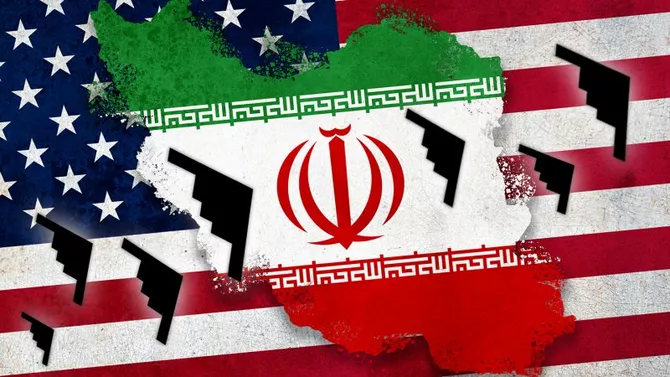
Photo: Shutterstock
- If a strike were hypothetically to occur, what do you think would be its primary goal: deterring Iran’s nuclear program, weakening Tehran’s military potential, or attempting to initiate a regime change process?
- The ultimate objectives are less clear at this point, perhaps even to the Trump administration itself, but they appear more geared toward military objectives than regime change, although the latter is not ruled out.
At the outset, Trump sought to justify the military build-up by referencing Iran’s harsh crackdown on opposition demonstrators. However, recognizing, in Secretary of State Marco Rubio’s words, that Iran is “probably weaker than it’s ever been,” Washington sees an opportunity to weaken Iran’s ballistic missile capability, further rein in its proxy forces throughout the region, further devastate its energy infrastructure, and clamp down on its nuclear program - even though Trump proclaimed in June that “all three nuclear sites in Iran were completely destroyed and/or obliterated. It would take years to bring them back into service.”
Much will depend on Iran’s response. Comparisons to Venezuela are overdrawn insofar as Iranian defense forces, said to include around 1,000 cruise missiles and 4,000-5,000 ballistic missiles, remain formidable, a reality fully recognized by both Israel and the US. At the same time, there is as yet no hard evidence of fatal divisions within the Iranian elite.
While insisting that its nuclear program is civilian, Iran has declared its willingness to negotiate, though not with respect to continuing uranium enrichment. Iranian Foreign Minister Abbas Araghchi is traveling to Ankara today (Friday, 30 January) for talks with Turkish officials in an effort to de-escalate.
US operations would also be hindered by a lack of logistical and intelligence support from allies. The Gulf states, including Qatar, the UAE, and Saudi Arabia, as well as Türkiye, are unlikely to allow the use of their airspace or territory, fearing Iranian retaliation and wider regional escalation. Iran has the capability to shut down the Strait of Hormuz, through which about 20 percent of global oil consumption passes, and has announced that it will conduct live-fire exercises in the strait next week.
- Could a possible strike provoke large-scale protests within the country or, conversely, consolidate society around the current government?
- The US is reportedly considering options to target Iranian security forces and senior leaders, either instead of or alongside attacks on military facilities. However, the impact of such attacks is unclear and could even prove counterproductive from the standpoint of US interests.
Numerous officials and commentators have warned that US strikes could, in fact, weaken already exhausted and depleted opposition forces. Although the massive economic crisis that provoked previous demonstrations has greatly weakened Iran’s leadership, it remains in place.
- How realistic is the scenario of regime change in Iran, with Reza Pahlavi or forces aligned with him coming to power?
- Israeli and US officials fully recognize that air strikes alone cannot bring down the regime. Nor is the killing of Ayatollah Ali Khamenei likely to achieve that result. Regime change would require US boots on the ground, which is highly unlikely, not least because of Trump’s domestic political considerations.
Absent fatal fractures within the Iranian elite and given the almost certain resilience of the IRGC, the most likely scenario would resemble Venezuela: leadership change within the framework of a weakened and potentially more compliant regime.
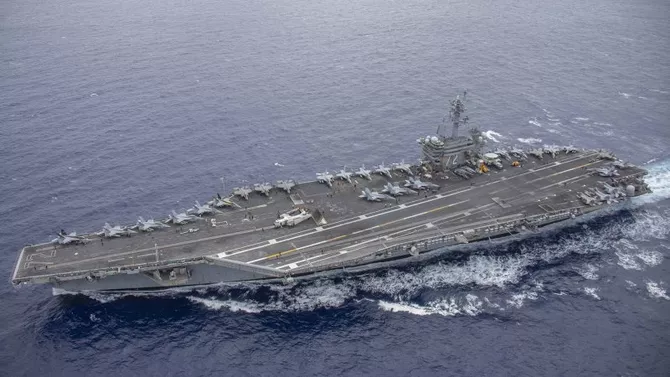
Photo: US Navy
- What impact would regime change in Iran have on the balance of power in the Middle East?
- Even such a limited transition would play into the hands of Washington and Tel Aviv, building on the weakening of Hamas and Hezbollah, the deepening of the Abraham Accords, Iran’s continuing economic crisis, and Russia’s preoccupation with the war in Ukraine.
- How might Iran change in the event of regime change?
- Given the tenacity and resilience of the Islamic Republic, buttressed by the IRGC and powerful paramilitary forces, the Iranian people appear condemned, for now, to the survival of a theocratic and repressive regime and the risk of further devastating conflict.
At the same time, the collapse of the regime, unlikely but not impossible, could result in violent conflict and even civil war among Iran’s constituent ethnic groups: Balochis, Kurds, Arabs, and Azeris, with reverberations throughout the region as Iran potentially fragments.
Yet a more optimistic scenario also exists: the emergence of a democratic and secular Iranian state, once again able to harness Iran’s vast human and energy resources. Such a transformation could be facilitated by a revised JCPOA and the lifting of sanctions that should never have been imposed in 2018.
Notably, Iran’s former prime minister Mir Hossein Mousavi has called for regime change and a constitutional referendum based on “non-interference from abroad, rejection of domestic tyranny, and peaceful democratic transition.”