Gaziz Abishev: Baku and Astana are Building a Pragmatic and Friendly Partnership - INTERVIEW
Azerbaijan and Kazakhstan have steadily deepened their bilateral relations in recent years, forging a partnership grounded in pragmatism, mutual trust, and the absence of serious political or economic disputes. Shared historical experience, cultural affinity, and converging strategic interests have created favorable conditions for closer cooperation.
At the same time, evolving dynamics within the Turkic and broader Central Asian space are opening new avenues for political dialogue and regional integration. Azerbaijan’s expanding engagement with Central Asian platforms reflects a broader effort to strengthen collective security, enhance connectivity, and safeguard sovereign decision-making amid an increasingly complex and competitive global geopolitical environment.
Against this backdrop, The Caspian Post spoke with Kazakh political analyst Gaziz Abishev about the key drivers behind this rapprochement, its regional implications, and how major global actors view the growing cooperation between Azerbaijan and Central Asian states.
- How do you assess the current level of Azerbaijani-Kazakh relations?
- In my view, the current level of Azerbaijani-Kazakh relations follows a balanced course marked by pragmatism and, at the same time, a sense of friendliness rooted in the absence of contradictions. This is very important, because there are cases when countries feel a sense of kinship toward one another, yet economic and military-political contradictions accumulate. At other times, the opposite occurs: countries maintain a high level of pragmatism, but cultural distance prevents closer ties. In relations between Azerbaijan and Kazakhstan, neither of these problems exists.
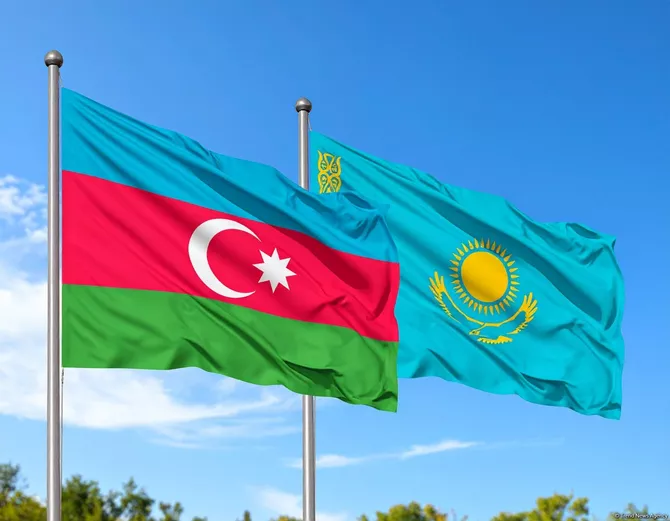
Photo: iStock
- From your perspective, how do the current dynamics of political dialogue between Azerbaijan and Kazakhstan reflect broader trends of interaction in the Turkic and Central Asian directions?
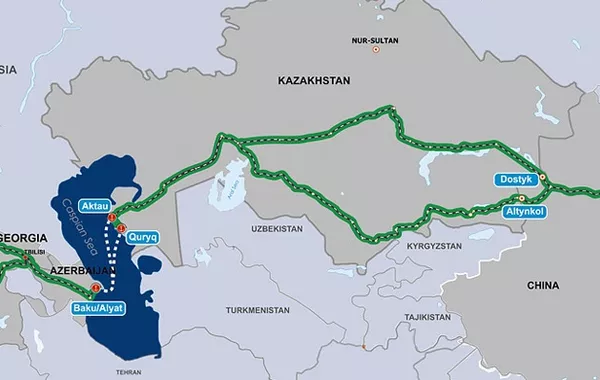
- We share a common Turkic code, similar languages, a shared faith, and a common past as part of the USSR. For this reason, we understand each other’s historical experience very well, treat it with respect, and at the same time have nothing to divide us. There are no territorial disputes, no disagreements over routes, and no conflicts over resources. We are on very good terms. We are two ambitious countries that pursue goals which do not contradict one another.
Therefore, I believe the rapprochement between our countries is a completely natural process, especially given that the current presidents of Azerbaijan and Kazakhstan are graduates of the same university and possess a broad worldview, as well as an understanding of international relations and the need for cooperation in an increasingly volatile world.
- On November 16, at the 7th Consultative Meeting of the Heads of State of Central Asia in Tashkent, a decision was made to include Azerbaijan in this format as a full-fledged participant. What significance, in your view, does Azerbaijan’s participation have in the expanding format of cooperation with the countries of Central Asia?
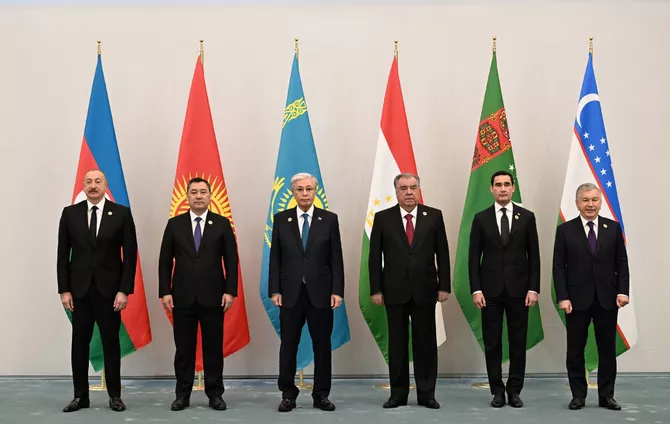
Photo: AZERTAC
- Azerbaijan’s accession to the Consultative Meeting of the Heads of State of Central Asia and the transformation of this format into a single political space is a natural development. It is true that Azerbaijan is not always directly involved in internal Central Asian issues, such as water security or similar matters. Azerbaijan is also less directly engaged in Central Asia’s joint projects with China. However, the point is not limited to narrow, local initiatives.
What is being formed is an intra-continental alliance that allows countries to ensure mutual security and develop collective sovereignty. There is a basic triangle of three relatively large countries - Kazakhstan, Uzbekistan, and Azerbaijan, which pursue fundamentally sovereign policies, while other states gravitate toward them.
- How is the rapprochement between Azerbaijan and the countries of Central Asia perceived in the European Union, the United States, China, and Russia?
- On the one hand, we should not overestimate our importance for the European Union, the United States, or China. We are relatively small countries. On the other hand, it is important to understand that geopolitics does not operate on sentiment, especially between countries located at opposite ends of the world. Everyone seeks to engage with others in a pragmatic way.
For the European Union and the United States, these countries could theoretically be seen as instruments to counter Russia and China, if they allowed themselves to be used in that manner. But they will not allow it.
At the same time, China and Russia would prefer the Central Asian region not to pose any threat to their interests. China is also interested in using the region as a logistical link to Europe. There are many considerations at play - sometimes they see risks, sometimes benefits, and sometimes opportunities to involve the region in their own strategic calculations.
Therefore, the most important thing for us is to remain level-headed, keep national interests firmly in mind, and move as efficiently as possible within the existing global architecture.
By Asif Aydinli