The world is entering an era in which long-standing security guarantees are sounding increasingly unconvincing, while new centres of power are only beginning to outline the contours of a future order.
Debates over the future of NATO, escalating tensions surrounding Israel, growing instability in Syria, and Washington’s efforts to recalibrate its strategic priorities are turning Türkiye into one of the central nodes of global politics.
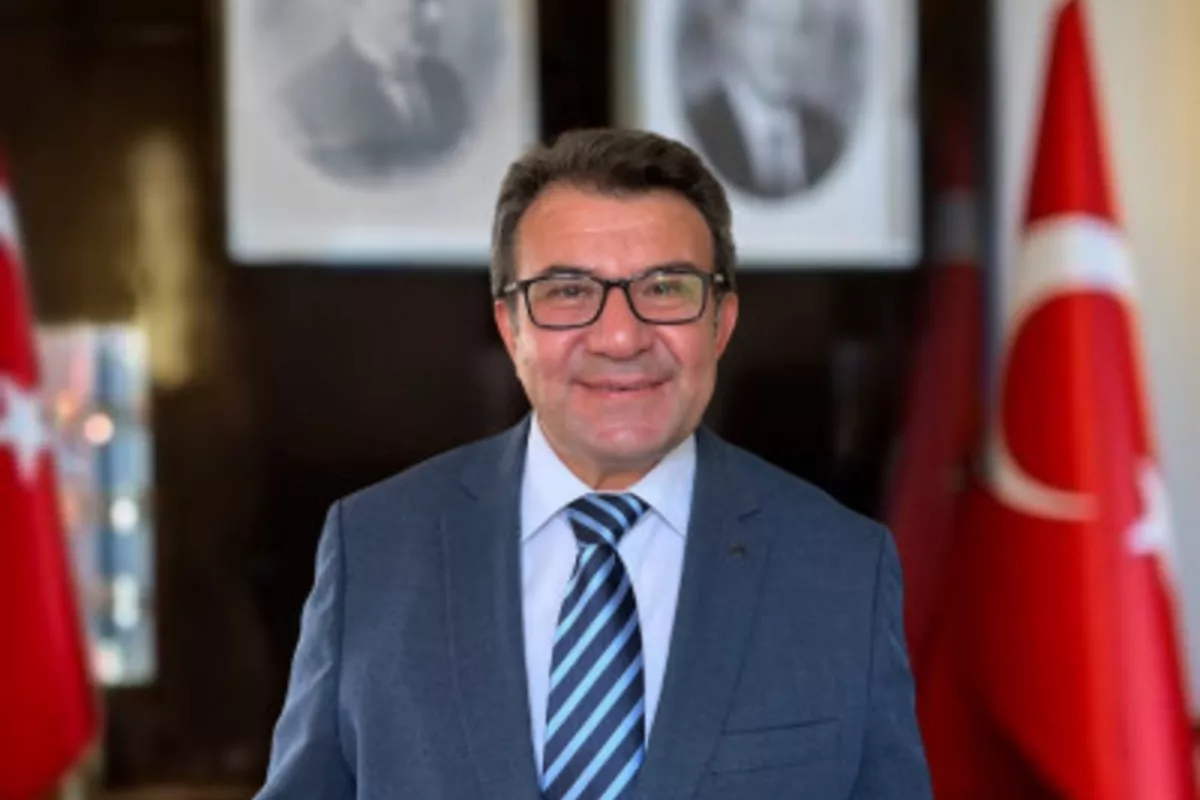
To better understand the depth of these shifts and their possible consequences, The Caspian Post spoke with Turkish political scientist Professor Hüsamettin İnaç of Dumlupınar University.
- If we assume that the United States is indeed considering withdrawing from NATO as a means of gaining greater strategic flexibility, would this imply a fundamental revision of the entire Western security architecture?
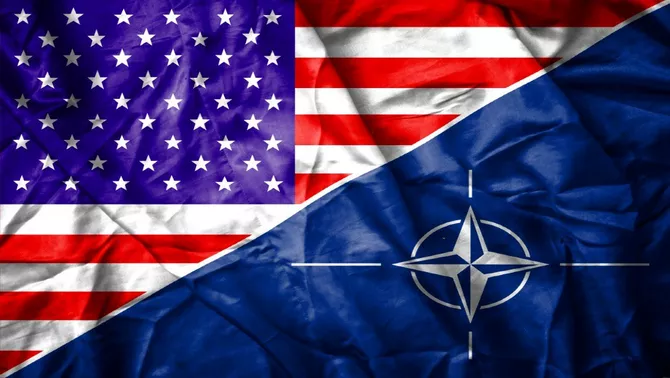
- If the United States were to withdraw from NATO, it would mark the beginning of the dismantling of the entire European security and defence architecture.
Since its formation, Europe has effectively been searching for a system that would allow it to pursue a more independent line from the United States. France, in particular, has long argued that Washington uses NATO as an instrument to advance its own interests and primarily safeguard its strategic positions. It must be acknowledged that there are solid grounds for such claims.
Source: cato
The world has already witnessed this approach in Afghanistan, Libya, Iraq, and several other regions. Against this backdrop, it becomes evident that the West is indeed attempting to develop a new and distinct model of security architecture. However, this is an extremely complex task.
Societies accustomed to a high standard of living and long distanced from military culture are difficult to redirect towards a path of militarisation.
- How realistic, in your view, is the scenario of a direct confrontation between Türkiye and Israel on Syrian territory, and what military, political, or strategic factors could trigger such an escalation?
- Unfortunately, it appears that a confrontational environment between Israel and Türkiye in the Syrian theatre is becoming almost inevitable. Israel seeks to establish itself as a hegemonic actor in the region, pursuing what can be described as an expansionist, even imperial, policy. This, in turn, poses a serious threat to Türkiye’s national security.
This is particularly evident in Iraq and Syria, where the consequences of such policies are already clearly visible. In this context, such a confrontation could indeed occur. Türkiye, especially in light of its recent course towards the nationalisation of its defence industry and significant increases in defence spending, is compelled to approach this risk from a standpoint of military preparedness.
Within Israel itself, judging by reports in the mainstream press, Türkiye is increasingly being viewed as one of the principal threats after Iran.
- Can such a scenario be interpreted as a signal that Washington is prepared to sacrifice its relationship with Türkiye in favour of a strategic alliance with Israel?
- If such a scenario were to materialise, Washington would undoubtedly prioritise Israel. However, it cannot afford to ignore Türkiye. As one of the major powers of Anatolia, Türkiye remains a crucial ally for the United States in the region.
This is primarily due to Türkiye’s significant influence in the North Caucasus, the Middle East, the Balkans, and parts of Africa.
If the United States were to fully sideline Türkiye and effectively push it into the position of an adversary, particularly by encouraging closer alignment with Russia and China, Washington would face substantial strategic losses that would be difficult to offset. No rational geopolitical strategy would allow for such an outcome.
- How would a potential US withdrawal from NATO affect the balance of power in the Middle East and the Eastern Mediterranean?
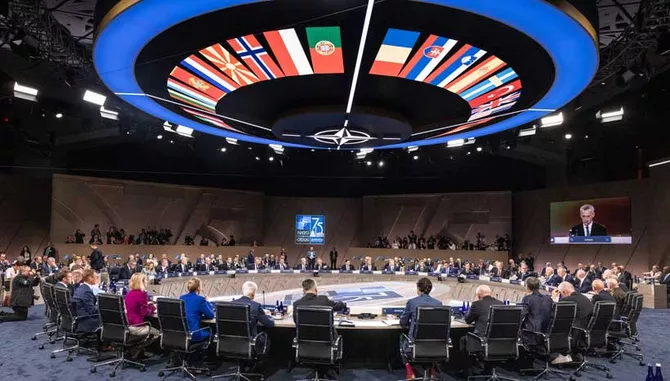
Source: moderndiplomacy
- In recent years, the United States has increasingly perceived Europe as a burden, and in the context of the Russia-Ukraine war, the administration of Donald Trump appears intent on dismantling the 80-year transatlantic alliance. In this context, one can imagine a scenario in which Washington attempts to gradually dismantle NATO or even withdraw from it altogether.
However, I consider such a scenario unlikely. The United States is a country whose economic and strategic influence is deeply rooted in its military-industrial complex. Withdrawal from NATO would significantly reduce its ability to supply arms to allied countries and risk undermining one of the key pillars of its global hegemony.
The war with Iran itself represents a major geopolitical rupture, signalling elements of such a decline. Within the United States, certain ideas are indeed circulating - for example, the concept of a hypothetical “NATO 2.0”, a new security structure in which Türkiye might not have a place.
According to such discussions, Washington could instead attempt to rely more heavily on Israel and South Cyprus. While this path is theoretically possible, it would carry serious consequences. If Türkiye and Israel were to enter into direct confrontation, Israel, in my view, would find itself in an extremely vulnerable position.
In other words, Washington fully understands this reality. The national power potential and military capabilities of Türkiye and Israel are, in my assessment, not comparable. Therefore, I do not consider such a scenario realistic.
Even if a new version of NATO were to emerge in the future, Türkiye would most likely retain its place within it, while Israel, in my view, would remain outside.