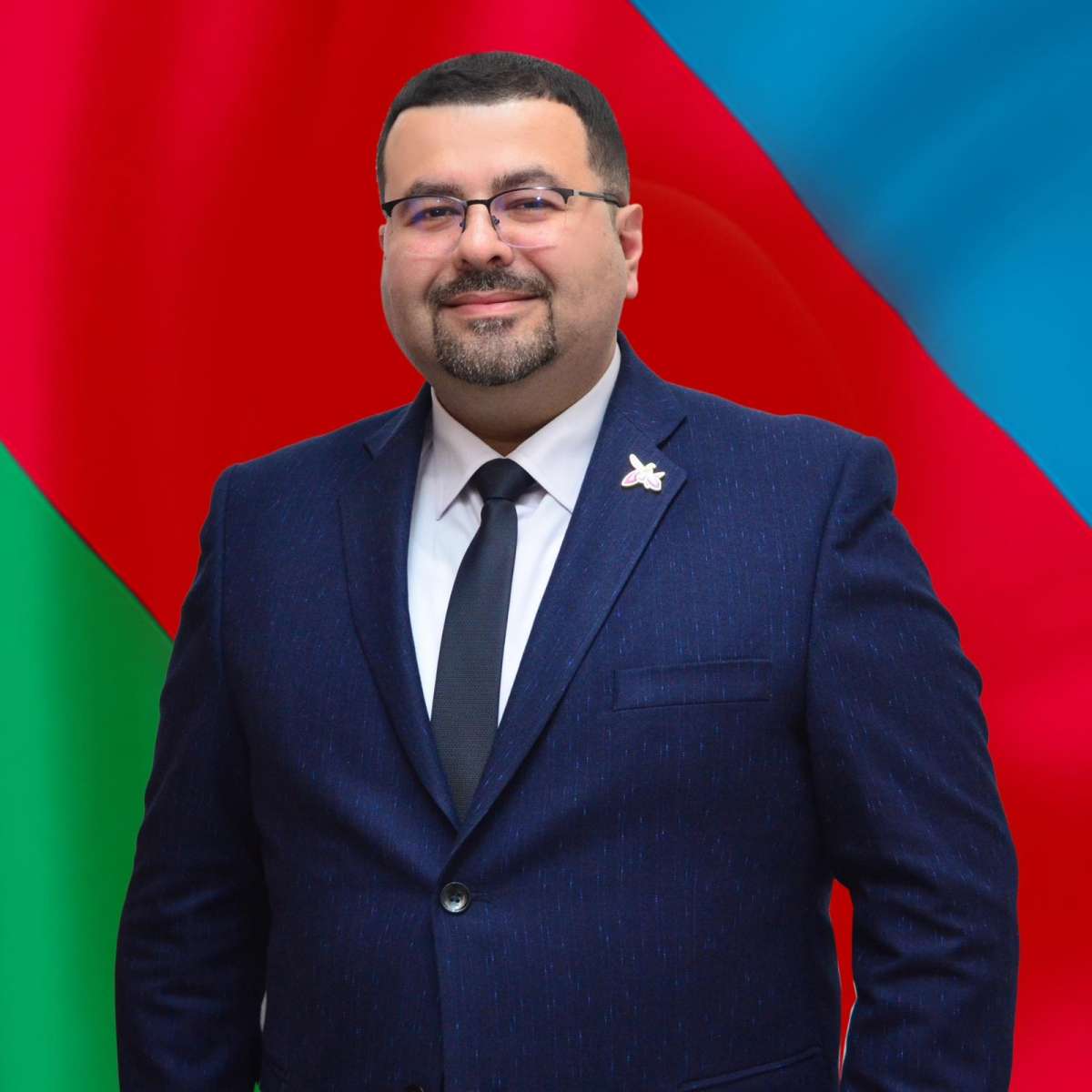
Recently, Baku hosted the third international conference, titled “Cultural Heritage and the Right to Return,” which brought together around 200 experts, diplomats, and researchers from more than 60 countries. The conference’s main conclusion was clear and unequivocal: the issue of returning Azerbaijanis and restoring their cultural heritage is not merely about the past-it is about shaping the future of the South Caucasus.
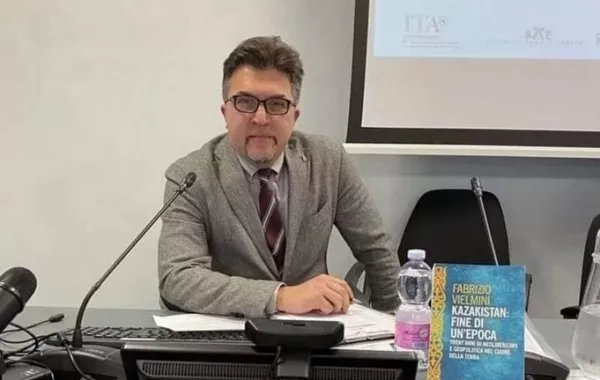
Immediately after the forum, we spoke with Polish political scientist Jakub Korejba, a representative of the Ankara Center for Eurasian Studies (AVIM). In an unvarnished conversation, we discussed selective European “morality,” the mechanisms used to construct the image of a “victim country,” the cost of lobbying, and why Azerbaijan’s growing influence is breaking familiar patterns of silence. This is not a discussion about pity, but about a reality in which the right of return represents a political and civilizational test for achieving sustainable peace.
- Jakub, why does Europe so consistently defend the right of return for certain communities, yet for decades has effectively ignored the centuries-long history of the expulsion of Azerbaijanis from the territory of present-day Armenia? Is this about gaps in knowledge, or a conscious choice?
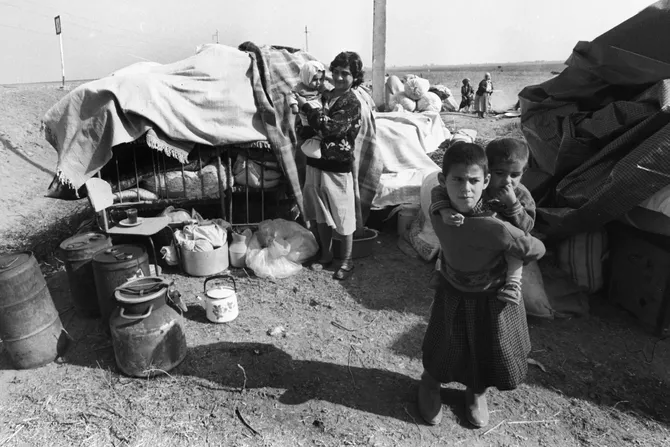
Photo credit: The Caspian Post
- Double, triple, and any other “standards” are not a malfunction but the basic logic of international relations. One should not attribute to states the moral and behavioral characteristics inherent to individuals in interpersonal relations. In interstate politics, there is no single moral benchmark.
There are simply no moral criteria in international relations, and politicians do not rely on them when performing their duties. Everything related to ethics, law, and humanism in the interpersonal dimension remains outside the door. This applies even to the most blatant and obvious violations of human rights.
States pay attention to such facts only when it serves their interests. Appeals to morality, ethics, or even international law in most cases either lead nowhere or trap the country itself in a victim complex. In international politics, this does not work.
What does work is something else - changing one’s own political position. And this is exactly what Azerbaijan has been consistently doing, in my view. Appeals to morality and law are ineffective in the behavior of great powers. What is effective is a change in the political context.
When Azerbaijan becomes strong, economically stable, influential, and successful, its historical agenda begins to prevail - it starts to be taken into account. Only in this way is it possible to assert the Azerbaijani truth over the Armenian falsehood.
Azerbaijan’s positions are growing steadily, year after year. And this is already changing the context in which great powers make decisions and form their assessments. In the long term, this will inevitably lead to the recognition of the facts related to the expulsion of Azerbaijanis from Armenia.
These facts were always known-it is just that under the previous political, strategic, and economic conditions, great powers had no motivation to address them. On the contrary, it was far more beneficial to maintain a distorted picture of reality in international circulation and narratives.
Today, the situation is changing. And as Azerbaijan grows stronger, so does the power of truth.
- Armenia has firmly established the image of a “victim country” on the international stage. But can a state that step by step formed a mono-ethnic space be considered a victim? Where is the line between self-defense and systematic ethnic cleansing?
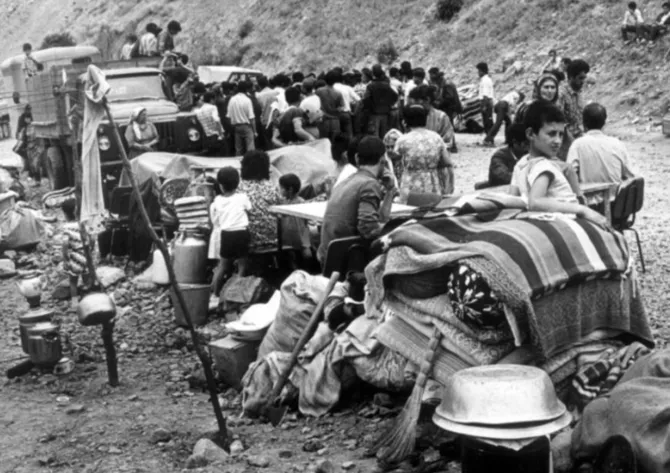
Photo credit: 1905.az
- Europe can turn a blind eye to anything, and, frankly speaking, it always has and continues to do so today.
I am not speaking abstractly. As a Pole, I know this from my own experience. Eyes, ears, and principles are closed precisely at the moment when it is beneficial for their owner. Moreover, most European states are former or existing empires, colonial powers with a deeply rooted post-colonial mindset. And together with it comes a corresponding agenda: elements of racism, Islamophobia, and sometimes openly fascistoid ideas, reinforced by an unfounded sense of superiority.
All of this existed in Europe’s history, exists today, and will probably exist for some time to come. And this concerns not only attitudes toward the Turkic world, Islamic countries, or the East in general. We in Poland feel such attitudes from our so-called “senior partners” on a daily basis. So, unfortunately, there is nothing new here.
Nevertheless, there are grounds for cautious optimism. As the influence and power of European states objectively decline, the hierarchy of relations they impose and their claim to a moral monopoly are gradually becoming a thing of the past.
Armenia offers itself as an instrument of the policy of external actors - be it Russia, France, or the United States. It would be naive to expect these powers to refuse such an offer. They accept it - with all the ensuing consequences, including support for the Armenian agenda even when it has nothing to do with reality.
The West supports Armenia not because it is right, but because it is convenient. Any major power interested in a particular region looks for convenient levers of influence. And the South Caucasus is a region of extreme strategic importance. Azerbaijan, unlike this, is not ready to sacrifice its national interests or trade away the interests of its own people.
Armenia is ready. That is precisely why its “offer” is accepted. Such countries exist in any geopolitically significant region. This is sad, but logical. And the irony is that such models almost always end in defeat-which is exactly what we are witnessing today in the case of Armenia.
- If folklore, music, ashug art, and intangible heritage are the core of national identity, can their deliberate destruction be regarded as a form of cultural genocide? And why do international institutions still avoid this term in relation to the Azerbaijani case?
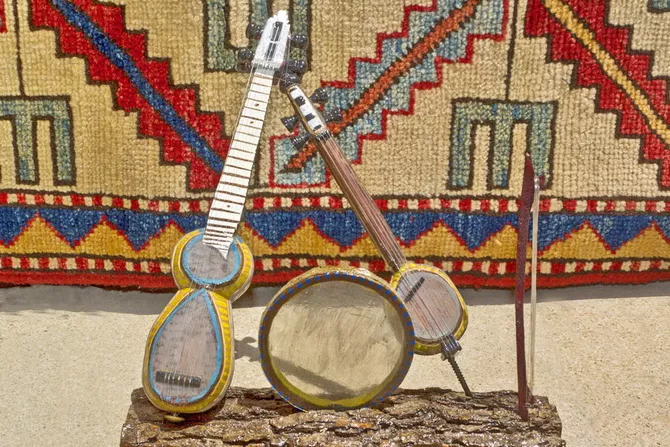
Photo credit: advantour
- The actions of the Armenian side with regard to Azerbaijani cultural heritage, both on the territory of present-day Armenia and for nearly 30 years in Karabakh, fully fall under the definition of cultural genocide. We are talking about the deliberate and systematic destruction of another culture.
Moreover, this destruction is absurd in its own way. It is not accompanied by the creation of an alternative cultural environment, does not lead to the emergence of new artistic forms, architecture, music, literature, or even basic infrastructure. What remains in place of the destroyed heritage is not a new identity, but emptiness.
If, in place of the destroyed Azerbaijani cultural layer, another cultural space had emerged, it would be possible, even theoretically, to conduct a discussion, compare values, argue about quality and meaning. But in reality, we observe something else: destruction for the sake of destruction. This makes what is happening not only an act of cultural genocide, but also a form of outright cultural vandalism.
Such behavior is not just criminal - it is devoid of any rational meaning. It demonstrates not strength, but intellectual and civilizational helplessness.
The international community avoids using the term “cultural genocide” not because of a lack of facts, but for political reasons. For decades, the Armenian factor was used as a convenient, cheap, and virtually free instrument for implementing others’ geopolitical interests - ultimately to the detriment of the Armenians themselves.
That is precisely why they were allowed what in other circumstances would have been unequivocally classified as a crime against cultural heritage and the universal values of humanity.
- The international conference showed the readiness of the expert community to discuss the right of return of Azerbaijanis. But are Europe’s political elites ready for this, given geopolitical calculations, diaspora pressure, and fears of revanchist forces within Armenia?
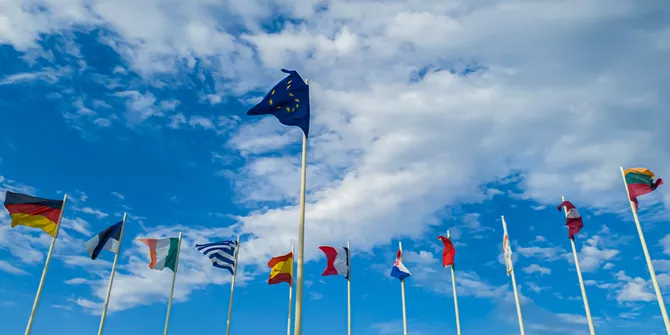
Photo credit: omfif
- European political elites today are indeed not ready for much, and this is clearly manifested in their inability to reform their own states and improve the situation within the European Union. They are sinking ever deeper into administrative decay, becoming detached from their peoples, from reality, and from the genuine agenda. Instead of solving pressing problems, they deal with issues that are either unnecessary to anyone or openly harmful, consistently ignoring what truly matters.
If these elites are unable to cope with crises in their own countries, and we see this daily in many parts of Europe, then they are all the more intellectually unprepared to perceive the complex, multi-layered reality beyond the European context. Contemporary Europe is experiencing several systemic crises at once: technological, financial, economic, demographic, educational, and, most alarmingly, intellectual. Europe’s potential is shrinking, and its capacity for meaningful action is rapidly declining.
Even when some steps are taken, they are usually minimal in effect and devoid of strategic meaning. Added to this is large-scale, practically institutionalized corruption, especially within the structures of the European Union. Almost every day, new facts emerge about what financial interests, what bribes, and what backroom deals stand behind the decisions of certain European officials.
In such an environment, Armenian diasporas feel extremely comfortable, having over the years perfected the art of lobbying to the highest level. They know exactly whom, when, and how much to “pay.” They experience military defeats painfully, but it is difficult to deny them real mastery in the art of bribery and pressure on institutions. As a result, a significant part of European politicians’ statements is not an expression of principles or values, but a direct consequence of such influence.
At the same time, all this activity in reality is limited to rhetoric. Behind the loud words there is neither real power nor real capability. And power cannot exist where there is no truth. That is why it is so important to preserve historical memory, maintain open dialogue, and hold conferences where the truth is spoken and where people gather who are ready to discuss the real agenda, rather than carry out someone else’s political orders.
Sooner or later, this truth will break into the mainstream. History teaches us that it always prevails. We, Poles, waited for decades for the recognition of the truth about the Katyn tragedy, then about the Volhynia tragedy, and about many other pages of our history. We waited, and we achieved it. The most powerful, brutal, and bloody regimes tried to hide the truth and failed.
Those who today try to hide the truth about the history of Azerbaijan and the fate of Azerbaijanis will also fail.
- If the right of return of Azerbaijanis remains outside the international agenda, what will this lead to in the South Caucasus? Are we talking about the risk of a new round of conflict, or about the deliberate destruction of the last chance for sustainable peace between Armenians and Azerbaijanis?
Source: Caspianpost
- In regions such as the South Caucasus or Eastern Europe, the risk of a new conflict always remains. These are spaces where interests intersect-geopolitical, economic, ideological. And where interests converge and where the balance of power and territory remains a key factor of world politics, the potential for conflict does not disappear. We know well, both in the South Caucasus and in Eastern Europe, that a conflict here can be provoked virtually out of nothing.
The history of recent decades shows that conflicts in such regions often do not arise spontaneously, but are constructed. There are many interested parties, and not only states. Managed instability, the exploitation of internal contradictions, the principle of “divide and rule,” and in modern terminology “managed chaos,” have long remained effective instruments of external influence. The South Caucasus and Eastern Europe have repeatedly become arenas for such experiments.
However, today the situation is changing. The consistent, rational, and strategically calibrated policy of Azerbaijan has led to a noticeable reduction in the influence of destructive external forces. This provides grounds for cautious but well-founded optimism regarding the prospects for peace in the South Caucasus. The forces of chaos are losing room for maneuver, while the forces of order and legal logic are strengthening. This is a direct result of Azerbaijan’s state policy.
The restoration of internationally recognized borders became clear evidence that the role of an instrument of external players is a dead-end path. The example of Armenia shows that betting on external governance does not pay off. Ultimately, order, law, and historical truth prevail. That is why today different scenarios of the future are open, and the choice remains with the regional actors themselves.
At the same time, it must be clearly understood that in the event of a new conflict, it is the Armenians who will suffer the greatest losses. Everyone may lose, but for Armenia the risks are existential - up to the loss of statehood, and possibly even a threat to the very existence of the people.
That is precisely why the issue of the right of return of Azerbaijanis to their native lands must inevitably become part of the international mainstream, an element of the global agenda. And this corresponds not only to the principles of justice and international law, but also to the fundamental interests of the Armenians themselves. A new conflict is dangerous primarily for them, and this fact cannot be ignored indefinitely.