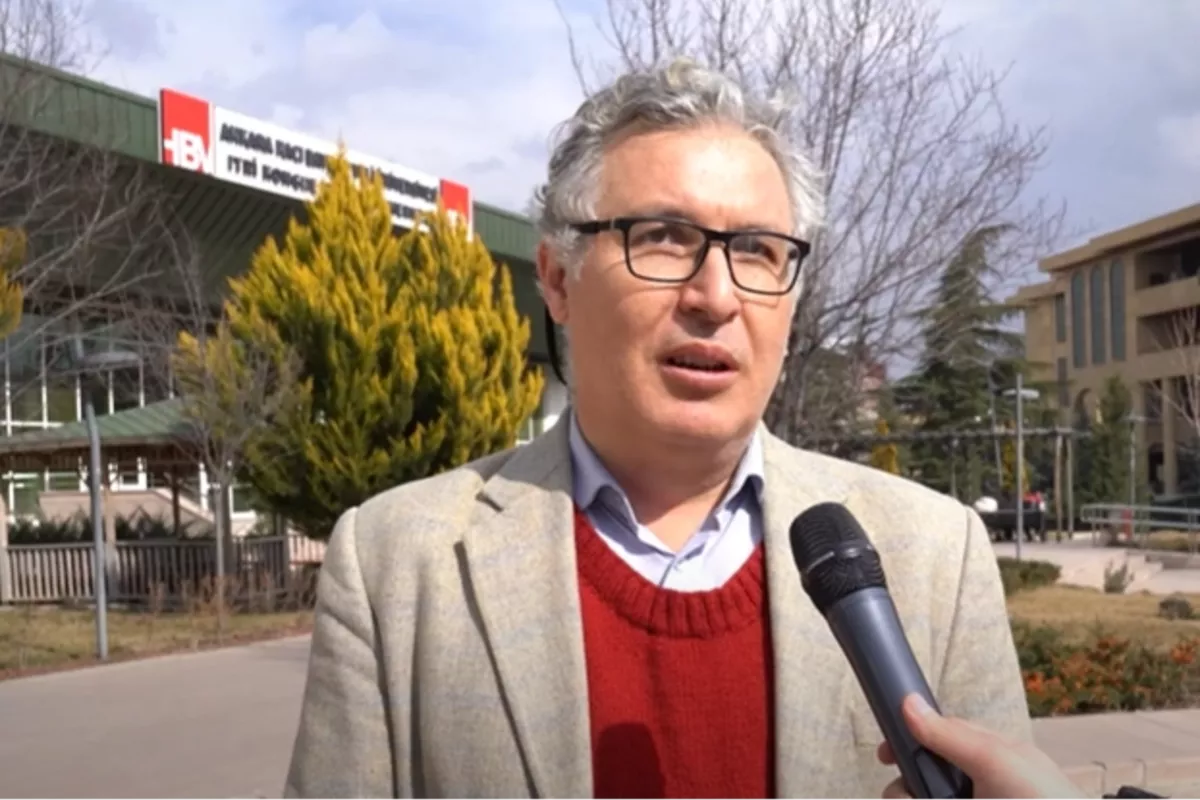
The Fifth Antalya Diplomatic Forum has emerged as a platform for crisis management, regional coordination and strategic dialogue, highlighting Azerbaijan’s central role in the South Caucasus peace agenda and positioning Türkiye as a unifying force amid regional uncertainty. The Caspian Post interviewed Turkish political scientist Sezai Özçelik for detailed insights.
- How do you assess the outcomes of the Fifth Antalya Diplomatic Forum?
- I view this forum not merely as a display of diplomacy, but as a platform where crisis management and regional coordination were effectively carried out. The forum’s theme for Türkiye is well known: “Overcoming Uncertainties in Shaping the Future.”
Today, there are many uncertainties, especially in our region. Looking at the current situation, uncertainty began with the Russia-Ukraine war and then continued with the war in Gaza. More recently, we have observed the consequences of tensions between the United States, Israel and Iran at both regional and global levels. As a result of all these crises, we are also witnessing a European security crisis and a reshaping of the situation in the South China Sea. All of this was discussed at the Antalya Diplomatic Forum.
Türkiye’s Foreign Minister Hakan Fidan held numerous meetings at the forum, sharing a significant amount of information. Among the participants were representatives from Russia, Ukraine, Qatar and the United Kingdom. In addition, Fidan held talks with the foreign ministers of Egypt, Pakistan and Saudi Arabia, particularly on issues concerning Turkish-Iranian relations, the US-Israeli tensions with Iran and the situation in Gaza.
He also organised an informal meeting of the foreign ministers of the Organisation of Turkic States. For Azerbaijan, the most important outcome of the Antalya Diplomatic Forum was the positioning of Baku at the centre of the South Caucasus peace agenda. Azerbaijani President Ilham Aliyev was also present at the opening of the forum.
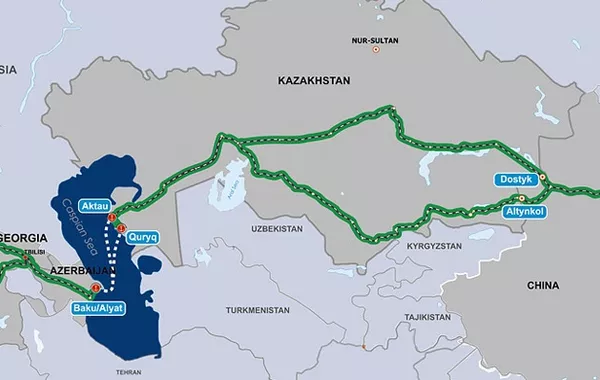
At the opening, both leaders, including President Recep Tayyip Erdoğan, spoke about the normalisation of relations between Türkiye and Armenia, as well as the corridor to be established with Azerbaijan. In the same address, they emphasised strong support for the East-West corridor. This is not merely a symbolic detail.
In the context of the Iranian crisis, Ankara reaffirmed its position, stating that it does not exclude Azerbaijan from the South Caucasus but, on the contrary, sees it as central, and that normalisation and any regional architecture are impossible without Azerbaijan. Moreover, during the meeting between Erdoğan and Aliyev, alongside their readiness to deepen cooperation in trade, energy and defence, special attention was paid to the impact of the conflict in Iran on both countries. Ankara stated that Türkiye seeks a peaceful resolution to the Iranian crisis and will continue to support steps towards lasting peace, especially between Armenia and Azerbaijan.
This shows that the forum brings together three fundamental issues for Turkish-Azerbaijani relations: the Iranian crisis; peace in the South Caucasus, including rapprochement between Azerbaijan, Armenia and Türkiye; and the logistics of the Middle Corridor. I believe there is an important point here.
I see the Antalya Diplomatic Forum as positioning Türkiye as a unifying force and Azerbaijan as a key player in a new regional order. The main message in Antalya is that the South Caucasus is no longer merely a region defined by conflict.
- France’s recent efforts in the Middle East have attracted attention. Will these steps lead to further tensions between Ankara and Paris?
- In recent weeks, France has begun to play an increasingly visible role in the Middle East, particularly regarding Lebanon and Iran. On 11 April, President Emmanuel Macron discussed a ceasefire in Iran and the situation in Ukraine with Erdoğan. Similarly, French Foreign Minister Jean-Noël Barrot stated that a ceasefire between Iran and the US should also include Lebanon.
There are important reasons for France’s interest in Lebanon. First, Lebanon is a former French colony, and France retains historical and political ties. Second, there is a significant Christian population in the country.
Most importantly, Macron announced a joint naval defence initiative involving around 15 countries, which is expected to be discussed in the near future. This appears to be coordinated with the United Kingdom. In essence, we see Paris attempting to restore its role as a key European power in the triangle of Iran, Lebanon and the Strait of Hormuz.
However, I do not think these steps will automatically lead to traditional tensions between Ankara and Paris. In fact, in the short term, they may even produce limited tactical rapprochement. It would be incorrect to claim that Paris and Ankara are completely opposed on issues related to Iran and maritime security. In some respects, their interests overlap.
The real tension lies elsewhere - in geopolitical competition in the South Caucasus and especially the Eastern Mediterranean, a region of significant interest to Azerbaijan, where tensions between Ankara and Paris may intensify. France has taken a firm stance towards Azerbaijan and has consistently supported Armenian positions within the OSCE Minsk Group.
In this context, we see Paris adopting a tougher stance towards Azerbaijan, while lacking the capacity to shape regional connectivity dynamics.
The Armenian diaspora also plays a significant role in French politics. From this perspective, it may become a tool of pressure on Türkiye and Azerbaijan, potentially fuelling confrontation between Ankara and Paris - not because of the Middle East, but due to the South Caucasus. If Paris focuses on post-conflict reconstruction, transport corridors and an inclusive regional order, it may play a constructive role. However, if Macron pursues a more partisan approach aligned with Armenian interests, divergences are likely to deepen.
- How do you assess the current situation in Iran? What are your forecasts?
- I see the current situation in Iran as a multi-layered crisis characterised by a fragile ceasefire and persistent instability. Tehran is under military, economic and diplomatic pressure, but due to its geography, control over energy routes and regional influence, it remains capable of imposing significant costs.
Developments around the Strait of Hormuz suggest that Iran is using it as strategic leverage, linking negotiations to security and investment concerns. Its importance is further underscored by its relative distance from regional actors such as Türkiye, Pakistan and Egypt.
My forecast is that the most likely scenario for the Strait of Hormuz is a prolonged and fluctuating cycle of crisis management - neither full-scale peace nor immediate regime change. We are likely to see periodic ceasefires followed by renewed tensions, partial blockades and reopenings, and continued pressure.
This is no longer classical warfare. The confrontation spans multiple domains, including energy, maritime transport, infrastructure, cyberspace and proxy actors.
As for the South Caucasus, Iran views Azerbaijani-Turkish cooperation - particularly the proposed corridor within the Azerbaijan-Türkiye security framework - as a strategic concern.
Although Iran is currently constrained, these concerns persist. Tehran is worried not only about military pressure but also about broader regional restructuring. It has long supported Armenia and opposed initiatives such as the so-called “Trump Route.”
In this context, Azerbaijan and Türkiye may need to reassess their security strategies, particularly in energy and defence. The South Caucasus is likely to be central to this reassessment.
- Are there any risks for Türkiye arising from the current situation in Iran?
- As tensions around Iran continue, Türkiye’s border regions are becoming more vulnerable. The crisis directly affects the security environment of neighbouring states. It has also driven up oil prices, which is problematic for an energy-dependent economy like Türkiye’s. Fluctuations in fuel prices will inevitably affect the broader economy, while disruptions to global energy flows place additional pressure on Türkiye’s economic balance and regional transit ambitions.
Overall, the Iranian crisis poses short-term risks for Türkiye, but in the medium term it may create strategic opportunities. Ankara could benefit if it manages to shift the dynamic from military escalation towards diplomacy, logistical centrality and regional balancing.
The crisis also creates opportunities for Azerbaijan. Baku has strengthened its position as a regional stabiliser. If the situation in Iran remains contained, the South Caucasus could evolve into a key trade, energy and transport corridor.
However, this depends on Azerbaijan’s ability to manage pressure from Iran while continuing to normalise relations with Armenia. In this sense, the current tensions may reinforce Azerbaijan’s resilience and centrality. Baku is no longer merely a risk-prone location, but increasingly a pivot shaping regional development.
In conclusion, if the conflict around Iran persists, Türkiye and Azerbaijan could emerge as architects of a new geopolitical reality.
The key, however, lies in shifting from reliance on military and economic tools towards stronger diplomatic initiatives and institutional mechanisms within the Turkish-Azerbaijani partnership. If successful, the South Caucasus could become a new centre of Eurasia.
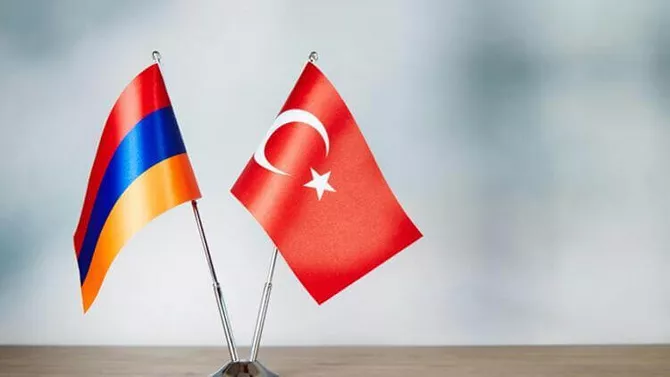
- How do you assess Armenia’s efforts to normalise relations with Türkiye?
Source: AA
- In my view, Armenia’s motivation to normalise relations with Türkiye stems from three main factors. First, the need for economic access. Closed borders and limited connectivity structurally constrain Armenia, and the deterioration of its relations with Russia further increases the need for normalisation with Türkiye.
Second, Armenia seeks to reduce its dependence on Russia and deepen integration with the European Union, making normalisation with Türkiye strategically important.
Third, domestic political dynamics. Prime Minister Nikol Pashinyan has repeatedly indicated that Armenian society is fatigued by conflict and seeks peace with Azerbaijan, as well as normalised relations with Türkiye.
However, normalisation between Türkiye and Armenia is closely linked to the peace process between Azerbaijan and Armenia. A sustainable settlement between Baku and Yerevan is a prerequisite. Azerbaijani officials have repeatedly stressed that peace must go beyond formal agreements, requiring the removal of constitutional obstacles and the achievement of a durable settlement.
President Erdoğan has also reaffirmed Türkiye’s commitment to lasting peace between Armenia and Azerbaijan. Therefore, Armenia’s efforts to normalise relations with Türkiye are positive but incomplete. The foundation for sustainable normalisation in the South Caucasus lies not in contacts between Ankara and Yerevan, but above all in a peace agreement between Azerbaijan and Armenia.