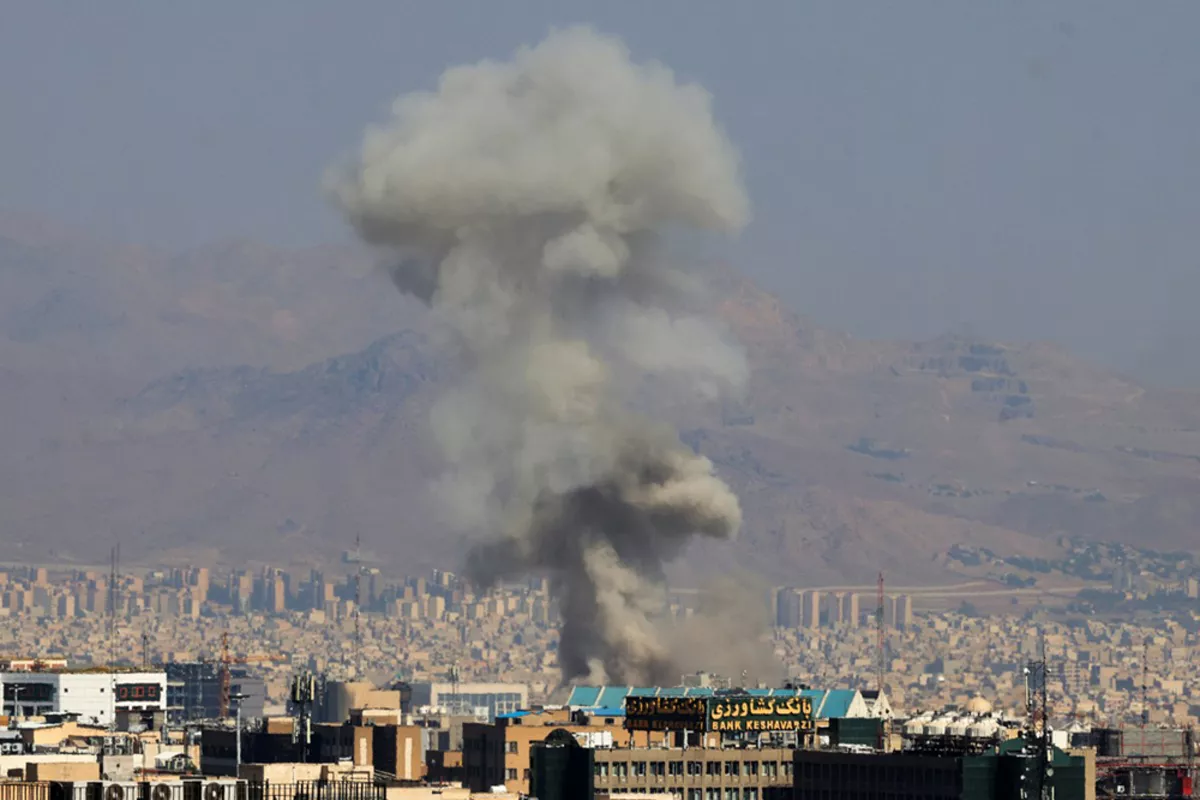
On Wednesday, Iran launched a new wave of attacks across Israel and Gulf nations, including targeting a Saudi oil field, as governments deliberated on releasing oil reserves to counter rising prices.
The conflict triggered by US and Israeli strikes on Iran has spread across the region, affecting shipping routes and energy markets, The Caspian Post reports, citing foreign media.
G7 leaders were due to hold a video conference on Wednesday to discuss the economic impact of the war, including the “energy situation”, the French presidency said. The Wall Street Journal reported that the International Energy Agency was considering its largest ever release of oil reserves.
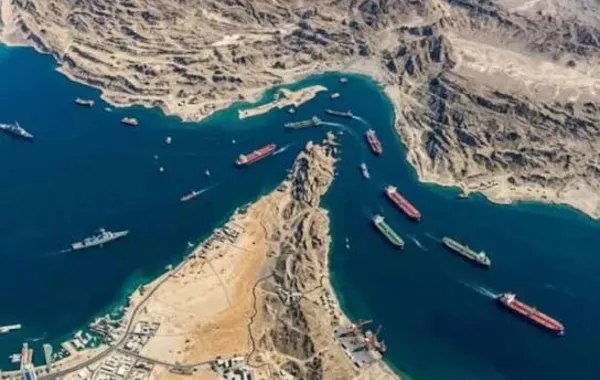
The United States said on Tuesday that it had struck Iranian vessels capable of laying mines in the Strait of Hormuz, a passage through which one-fifth of the world’s oil passes.
The US military released footage showing Iranian boats being destroyed and said it had destroyed 16 mine-laying vessels near the strait.
“If for any reason mines were placed, and they are not removed forthwith, the Military consequences to Iran will be at a level never seen before,” US President Donald Trump wrote on social media.
Trump has also said US forces could escort tankers through the strait. However, his administration later said a social media post by the energy secretary claiming a first escort mission was incorrect.
Oil prices rose five per cent late Tuesday before easing on Wednesday after the report on a possible oil reserve release.
A British maritime security agency said a container ship off the coast of the United Arab Emirates had been hit by an unknown projectile. Another container ship was also hit off the UAE coast in a separate incident, with all crew reported safe.
An unknown projectile also struck a cargo ship in the Strait of Hormuz, causing a fire and forcing the crew to evacuate.
Explosions were also heard across Doha in Qatar, according to AFP correspondents.
Iran Missile Attacks Across Region
Iran intensified attacks on Israel and regional targets, with state media saying missiles were fired for three hours in what it described as the “most intense and heaviest” barrage since the start of the war.
Air raid sirens and explosions were heard in Jerusalem, according to AFP journalists. Emergency services reported no immediate injuries, although Channel 12 said several people were injured in Tel Aviv.
Israel’s military said it had detected a new round of missiles heading towards the country from Iran and had activated air defences.
Iran’s Revolutionary Guards also said they fired missiles at Bahrain and Iraqi Kurdistan, which host US forces. Iranian media also reported that missiles targeted a US base in Kuwait.
Saudi Arabia said it intercepted six ballistic missiles launched toward Prince Sultan Air Base and another missile headed towards eastern parts of the country.
Saudi authorities also said they intercepted seven drones heading towards an oil field in the southeast and eight more drones in the east.
Kuwait said it had shot down eight drones but provided no further details.
Drones were also intercepted near the Shaybah oil field in Saudi Arabia, according to the kingdom’s defence ministry.
Four people were injured after two drones fell near Dubai airport, authorities said, adding that flights were operating as normal.
Seven US military personnel have been killed and about 140 injured since the start of the war, according to the Pentagon.
Iran Says it is not Seeking a Ceasefire
Iranian parliament speaker Mohammad Bagher Ghalibaf said Tehran was not seeking a ceasefire.
“Certainly we aren't seeking a ceasefire,” he wrote in an English-language post on X.
“We believe the aggressor must be punished and taught a lesson that will deter them from attacking Iran again,” he added.
Iranian authorities also warned against dissent inside the country.
“If anyone comes forward in line with the wishes of the enemy, we will no longer see them as merely a protester, we will see them as an enemy,” national police chief Ahmad-Reza Radan said in comments aired by state broadcaster IRIB.
“All our forces are also ready, with their hands on the trigger, prepared to defend their revolution,” he added.
Conflict Spreads Beyond Iran and Israel
The United States and Israel launched strikes on February 28 that killed Iran’s leader Ayatollah Ali Khamenei. His son Mojtaba Khamenei has been named his successor but has not appeared in public.
His safety was confirmed by Yousef Pezeshkian, the son of Iran’s president and a government adviser.
“I heard news that Mr Mojtaba Khamenei had been injured. I have asked some friends who had connections. They told me that, thank God, he is safe and sound,” he wrote on Telegram.
State television had earlier referred to Khamenei as a “wounded veteran of the Ramadan war” but did not provide details.
Iran’s health ministry said on March 8 that more than 1,200 people had been killed and more than 10,000 civilians injured since the start of the conflict.
The conflict has spread to other areas. US forces torpedoed an Iranian ship near Sri Lanka.
In Iraq, groups linked to Iran said five of their fighters were killed in strikes they blamed on the United States.
In Lebanon, Israeli strikes and ground operations against Hezbollah have killed hundreds and displaced hundreds of thousands of people.
Israeli strikes were reported in Beirut’s southern suburbs on Wednesday. Lebanon’s health ministry said five people were killed in the southern town of Qana.
An Israeli strike also hit an apartment in central Beirut on Wednesday morning, state media reported.
Iran said four of its diplomats were killed in an Israeli strike on a seafront hotel in Beirut on Sunday.
Israel said the attack targeted “key commanders” from the Revolutionary Guards’ Quds Force.
Nearly 760,000 people have been registered as displaced in Lebanon, according to Lebanese authorities.
Global Impact
The effects of the conflict are being felt globally.
The United Nations trade and development agency warned that rising fuel and food costs could affect vulnerable populations.
In Egypt, where fuel prices have increased by up to 30 per cent, residents said the rising costs were affecting daily life.
“We were barely getting by as it is. I don't know how people will manage,” said Om Mohamed, a mother of six, speaking at a market in Cairo.
The conflict has also affected Iranian athletes abroad.
Australia said another player and a support staff member from Iran’s women’s football team had sought asylum after being called “traitors” at home over a pre-match protest.
They joined five other athletes who had already sought asylum, while the rest of the team travelled to Malaysia.