Trump Considers Seizing Iran's Kharg Island Amid Ongoing Talks
On March 30, U.S. President Donald Trump openly speculated about seizing Iran's Kharg Island oil terminal in the Persian Gulf, while both the United States and Israel continued their attacks on the Islamic Republic, despite indications of progress in early ceasefire discussions.
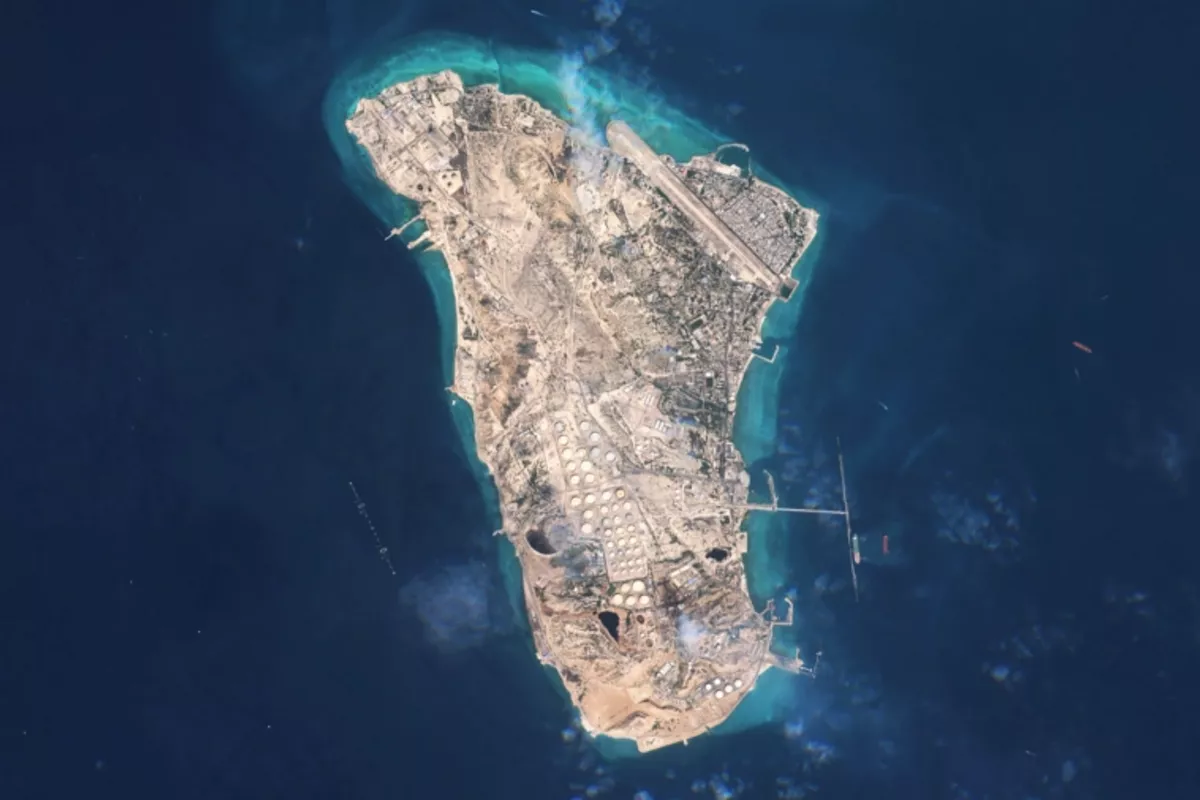
Trump said in an interview with the Financial Times that he could take Iran's Kharg Island "very easily," The Caspian Post reports, citing foreign media.
Kharg Island, located off the west coast of Iran, is a vital oil terminal for the Middle Eastern country and is being eyed by the Pentagon for ground operations, though the United States insisted it would stop short of a full-scale invasion.
When asked about the state of Iranian defense on the island Trump said "I don't think they have any defense.”
As a diplomatic effort being facilitated by Pakistan toward ending the war moved ahead, Trump said Iran had agreed to allow 20 oil tankers through the Strait of Hormuz starting March 30 as “a sign of respect.”
At the same time, with 2,500 U.S. Marines now in the region and a similar sized contingent on its way, he raised the idea of taking Iran's Kharg Island.
Trump also told reporters aboard Air Force One late on March 29 that the U.S. was negotiating “directly and indirectly” with Iran, though Iran has insisted that it has not been in any talks with Washington.
"We’re doing extremely well in that negotiation but you never know with Iran because we negotiate with them and then we always have to blow them up,” Trump said.
To get an amphibious invasion force to Kharg would mean transiting the Strait of Hormuz and most of the Persian Gulf. Experts say that holding the island would also be a challenge, because in addition to its missiles and drones, it would be well within artillery range from the Iranian mainland.
Tehran, meanwhile, attacked a key water and electrical plant in Kuwait, part of its campaign targeting the Gulf Arab states, and an oil refinery in northern Israel.
Sirens sounded at dawn near Israel's main nuclear research center, a part of the country that has been targeted repeatedly in recent days.
Later, a fire broke out at an oil refinery in the northern city of Haifa, one of only two in Israel, either from a missile strike or from debris falling from an interception. The blaze was quickly extinguished.
In the meantime, the Israeli parliament approved the 2026 budget early on March 30, providing for a significant increase in military spending as the country remains engaged in wars on multiple fronts.
Lawmakers passed the budget with 62 votes in favor and 55 against.
The vote averted an automatic government collapse and snap election that would have followed failure to pass the budget by March's end, under Israeli law.
The proposed total expenditure budget for 2026 amounts to approximately 850 billion Israeli shekels (NIS) or $270 billion.
"As part of the updated budget, and in light of Operation 'Roaring Lion', more than NIS 30 billion [about $10 billion] has been added to the ministry of defense budget, bringing it to over NIS 142 billion," the parliament said in a statement, using the name Israel has given to the war with Iran.