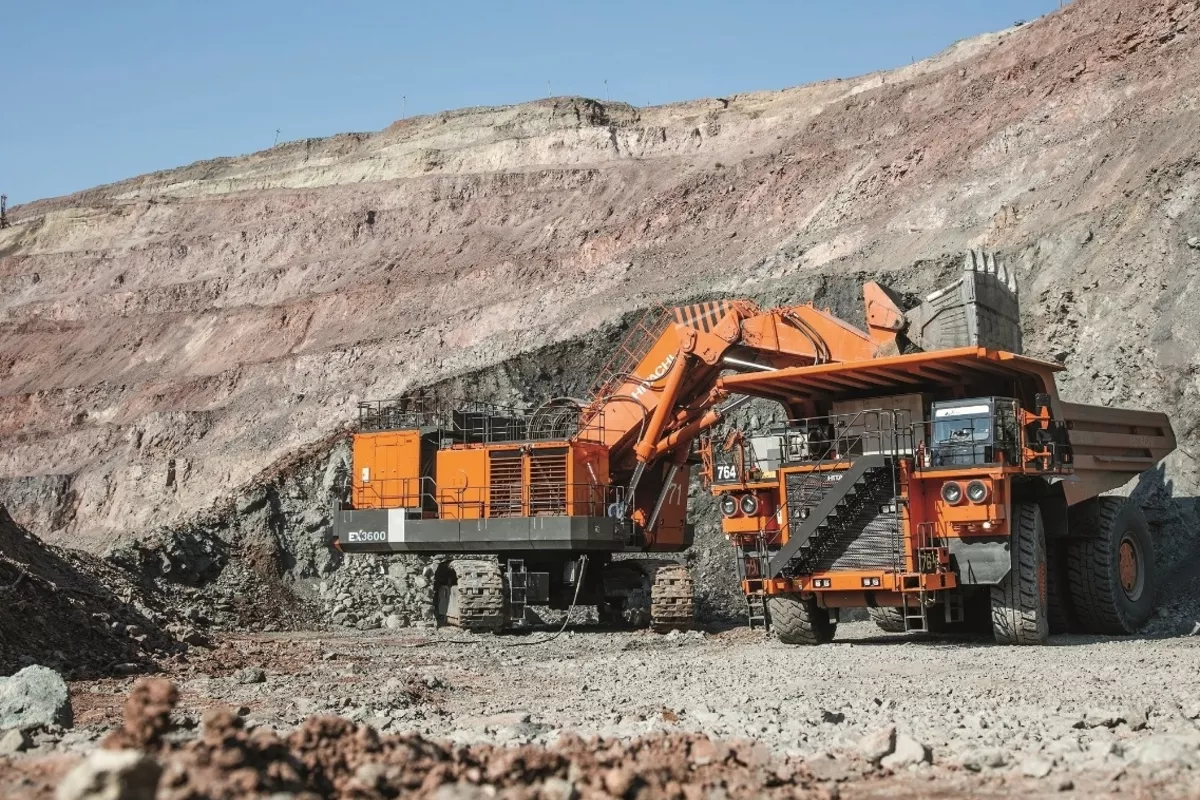
Photo: gov.kz
US and Central Asian officials will meet June 11-12 in the Kazakh capital Astana to explore deals concerning the mining and processing of critical minerals. The gathering marks a step forward for the C5+1 Dialogue, which strives to expand economic, educational and political ties linking the United States and Central Asia.
The meeting, officially titled the Astana Mining & Metallurgy Congress (AMM-2026), seeks to catalyze “the transition from the framework agreements reached at the November [C5+1] 2025 summit in Washington to concrete investment decisions,” according to a Kazakh government statement, The Caspian Post reports via Eurasianet.
The Trump administration is helping promote foreign investment in Central Asia’s mining sector, mobilizing government agencies, especially the Export-Import Bank of the United States and the US Development Finance Corp. (DFC), to help de-risk dealmaking. The US delegation at the Astana meeting will include the heads of the Ex-Im Bank and the DFC, along with top mining-sector executives including the founder of Ivanhoe Mines, Robert Friedland, and former Anglo American CEO Mark Cutifani.
Meanwhile, Kazakhstan is taking steps to facilitate investment by allowing investors to retain a majority share in projects. Kazakh officials point to a recently finalized tungsten deal as a role model, in which an American consortium known as Kaz Resources Inc. will develop major deposits in Kazakhstan, with the American entity retaining 70 percent of the shares in the project, while the Kazakh government retains the remaining 30 percent.
Since returning to power in early 2025, the Trump administration has made widening access to Central Asia’s mineral wealth a top diplomatic priority. China currently dominates the market on a wide array of critical minerals and rare earths.
“Kazakhstan is transitioning from the category of a neutral transit territory in Central Asia to the status of an active participant in reliable and resilient critical minerals supply chains,” the Kazakh government statement said.
“Kazakhstan’s trajectory in 2026 demonstrates a rare convergence: a structural crisis of the old export model, institutional realignment to international standards, and strong Western geopolitical demand for non-Chinese sources of critical minerals have aligned within the same time window,” it added.
Share on social media