Kazakhstan Pushes for New Energy Route via Caspian Sea

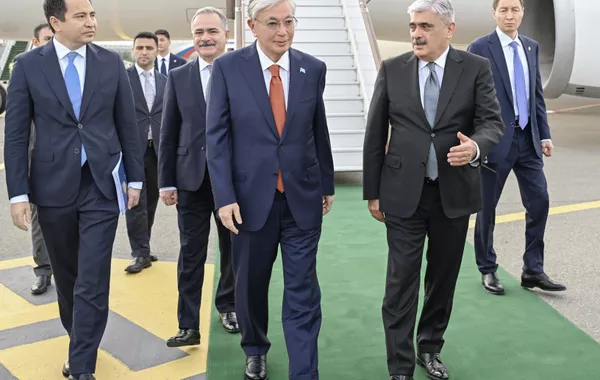
photo: Report.az

Kazakhstan Pushes for New Energy Route via Caspian Sea

Kazakhstan is showing strong interest in strengthening oil transportation via the Caspian Sea, as the country looks to diversify export routes and reduce dependence on a single pipeline system.

The issue was highlighted by Chairman of the Board of PetroCouncil.kz Assylbek Jakiyev during the second Caspian and Central Asia Oil Trading and Logistics Forum held in Baku, Azerbaijan, The Caspian Post reports via local media.

Jakiyev noted that around 80% of Kazakhstan’s oil exports currently go through a single pipeline, leaving the country exposed to geopolitical risks and external disruptions.

He pointed to recent events affecting infrastructure linked to the Caspian Pipeline Consortium as a reminder of this vulnerability.

Kazakhstan is considering two main alternatives:

Caspian Sea route via Azerbaijan (Middle Corridor) - the priority option

Export route to China - already supported by existing infrastructure

A pipeline built by China roughly a decade ago can transport up to 20 million tons annually, but current usage is significantly lower - between 3 and 5 million tons, due to operational constraints.

Jakiyev noted that Kazakhstan cannot independently invest billions of dollars into expanding Caspian infrastructure, prompting cooperation with European and American partners.

However, long-term uncertainty remains, as transportation costs vary significantly between routes through Russia and Azerbaijan.

Despite growing interest in diversification, officials stress that the final decision will depend on economics and long-term efficiency, especially once geopolitical tensions ease.

For now, Kazakhstan is positioning itself to strengthen multiple export corridors - aiming for greater resilience in an increasingly uncertain global energy market.

Related news

Kazakhstan Pushes for New Energy Route via Caspian Sea

Kazakhstan is showing strong interest in strengthening oil transportation via the Caspian Sea, as the country looks to diversify export routes and reduce dependence on a single pipeline system.