Kazakhstan Reveals Unique Bronze Age Andronovo Site Discovery
A rare and unusually complex Bronze Age site linked to the Andronovo civilization has been uncovered in Kazakhstan, offering archaeologists a unique combination of burial, ritual, and settlement structures in one location.
The discovery was made at the Alekseyevka archaeological site near the city of Rudny, which experts now describe as one of the most significant Andronovo-era monuments ever found in the region, The Caspian Post reports via Kazinform.
Researchers identified three distinct archaeological elements in a single complex: a burial ground, a sacrificial mound, and an ancient settlement. Specialists say this combination has not been recorded elsewhere in Kazakhstan, making the site exceptionally rare for the study of Bronze Age cultures.
The Andronovo culture, which dates back more than a century in archaeological research history, spans a vast territory from the Southern Urals through northern Kazakhstan and beyond. The term itself originates from discoveries made in 1914 near the village of Andronovo in Russia’s Chelyabinsk region.
A Chance Discovery That Changed Research History
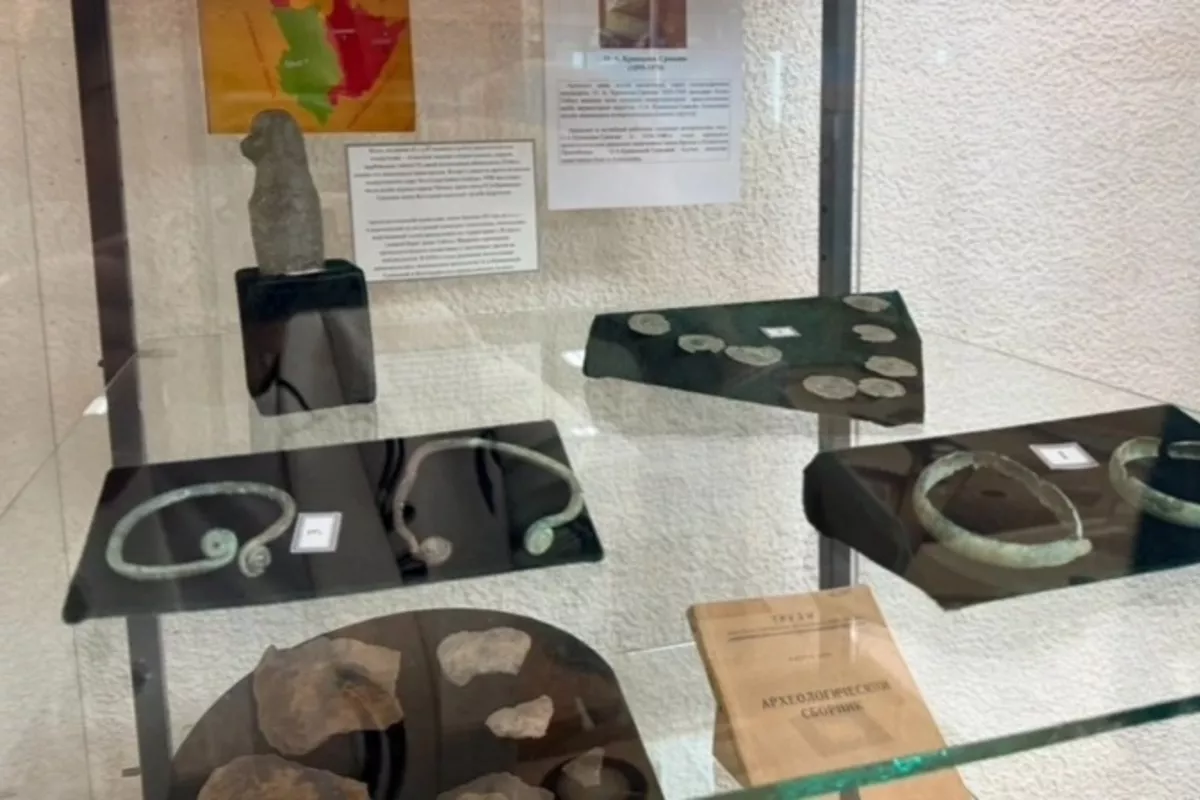
The Alekseyevka site was first identified in the early 20th century when a geology student noticed fragments of pottery and tools exposed along the Tobol River. Initial finds were later studied more systematically in the 1930s, when archaeologist Olga Krivtsova-Grakova led excavation campaigns at the site.
Her work revealed a rare combination of structures, including burials, a ritual mound, and remains of a settlement - something experts say is not found together elsewhere in known Andronovo sites.
Mysterious Burial of a “Tall Woman”
Excavations uncovered 21 graves, with one burial standing out in particular: a woman buried at the center of the cemetery. While most individuals of the period were relatively short, skeletal analysis suggested she may have reached nearly two meters in height.
Her burial also differed from others in orientation and ritual placement. She was interred on her right side, unlike the typical left-side burials, and was accompanied by eight ceramic vessels placed around her head and feet. Researchers believe her central position and grave goods indicate a high-status individual.
The woman’s skull was later reconstructed by anthropologists in Moscow, offering a rare glimpse into the appearance of people from the Andronovo era.
Massive Ritual Mound and Ancient Offerings
One of the most striking features of the site is a sacrificial mound reaching around nine meters in height. Archaeologists found more than 50 vessels around its perimeter, many containing traces of ritual meals made from both wild and domesticated animals.
Despite their simplicity, the pottery proved remarkably durable, with some artifacts surviving in near-perfect condition for decades after discovery.
A Site of National Importance
Although large-scale excavations ended in the late 1960s, Alekseyevka remains a key reference point for understanding Bronze Age societies in Central Asia. Experts even describe it as comparable in importance to Arkaim, another major Andronovo-related site.
Today, only fragments of the original mound remain, but a memorial marker now stands in its place, highlighting its archaeological significance and reminding visitors of the ancient civilization that once thrived there.