photo: Kazinform
Daniyar Turgambayev, chairman of the Forestry and Wildlife Committee of Kazakhstan’s Ecology and Natural Resources Ministry, has said that Kazakhstan is stepping up efforts to reintroduce tigers into the wild, with Russia set to train local specialists in managing human-tiger conflicts.
Turgambayev made these remarks at a press conference of the Central Communications Service, The Caspian Post reports via Kazakh media.
The tiger reintroduction program, one of Kazakhstan’s key conservation initiatives, was co-developed by the World Wildlife Fund (WWF) and United Nations Development Programme (UNDP). A 2017 memorandum between the WWF and the Ecology Ministry laid the groundwork for the program, followed by the establishment of the Ili Balkhash State Nature Reserve in 2018, covering 415,200 hectares.
Infrastructure has been built for forest restoration, wildlife protection, and monitoring, including enclosures for Bukhara deer and kulans to strengthen the ecosystem. From 2018 to 2023, over 200 Bukhara deer and 119 kulans were introduced into Kazakhstan. Tiger enclosures cover 3.5 hectares, with 1 hectare allocated for wild boars, alongside a modern veterinary station.
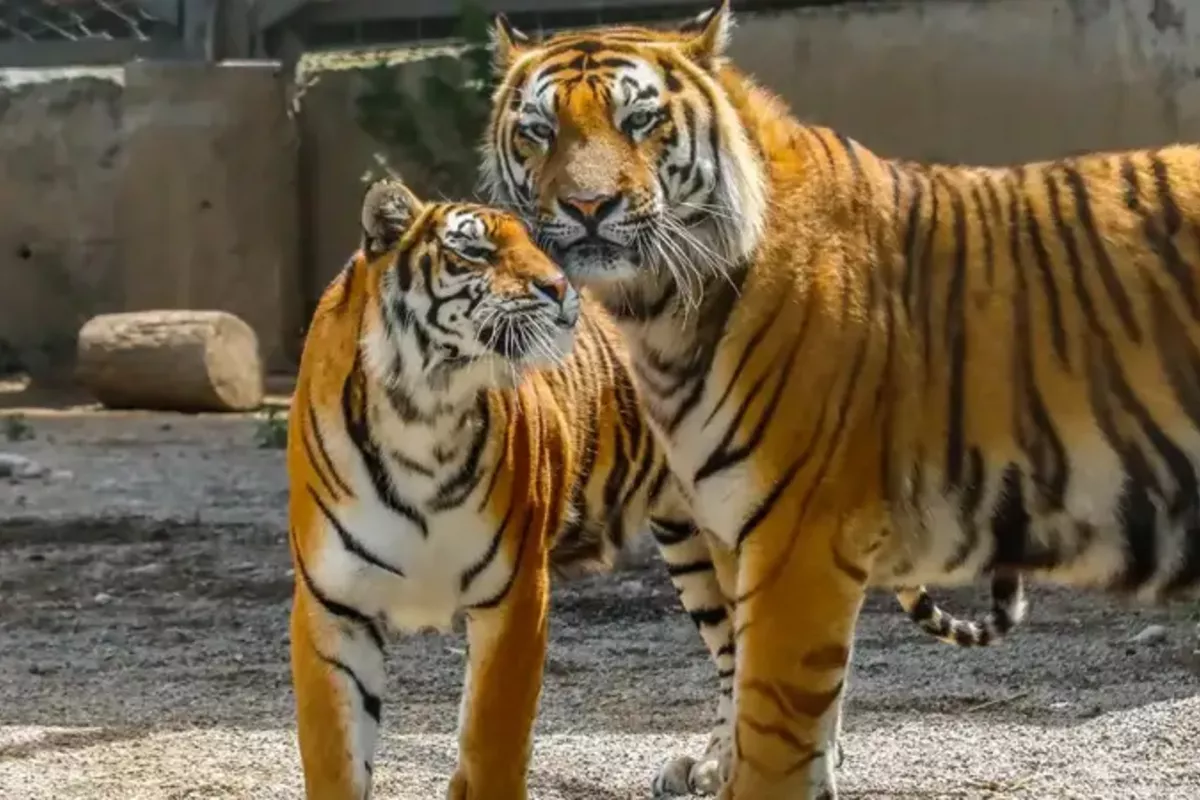
In autumn 2024, a male and female tiger arrived from the Netherlands’ Hoenderdaell Zoo. They are currently under expert observation, with plans for breeding and survival training; their offspring will eventually be released into the wild, while the parent tigers will remain for research and education.
Under the Kazakhstan-Russia Memorandum on Amur tiger reintroduction, a joint working group met twice in 2025 and agreed on training Kazakh specialists in human-predator conflict mitigation and bringing three to four Amur tigers from Russia in the first half of 2026.
Kazakhstan’s conservation efforts have also been highlighted in a documentary produced by the Kazakh President’s TV and Radio Complex, titled Zholbarys, focusing on the Turan tiger reintroduction project.
Share on social media