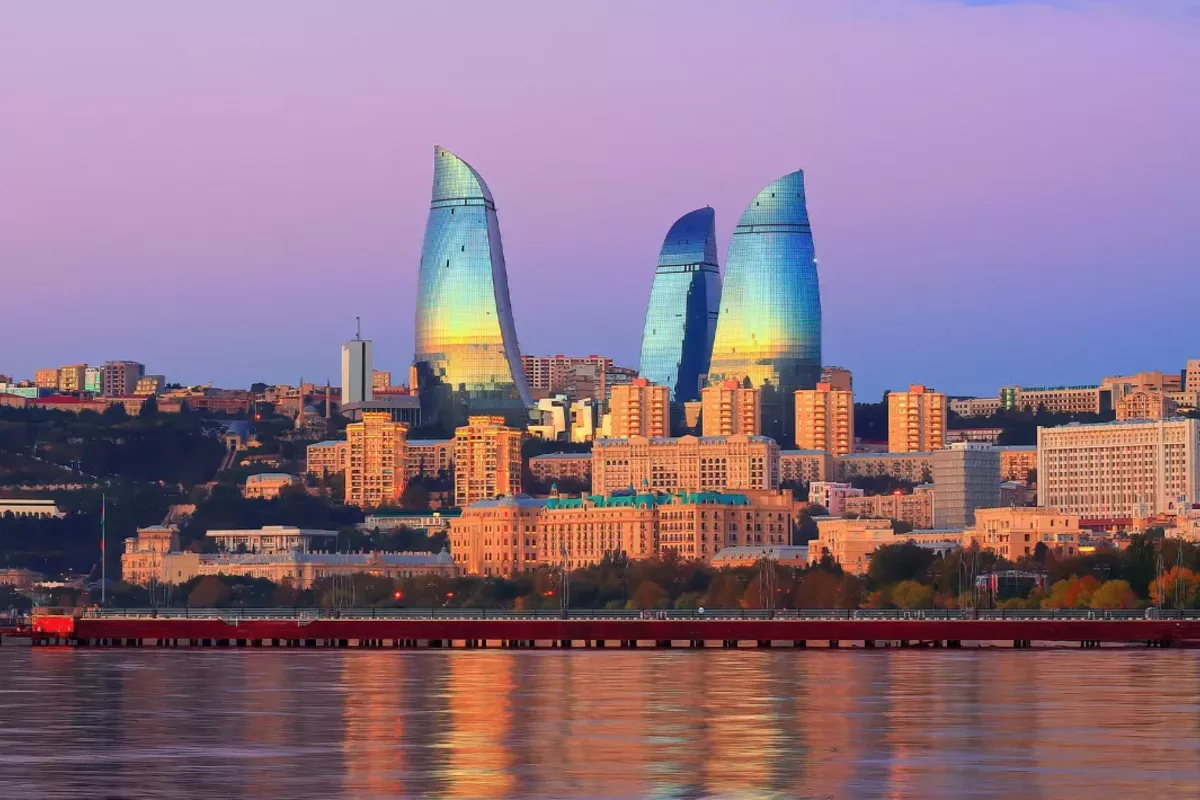
Azerbaijan’s foreign policy has entered a new phase. For much of the post-Soviet period, Baku was viewed mainly through the prism of the Karabakh conflict, energy exports, and its ability to balance between larger powers. Today, that perception no longer reflects the full picture. Azerbaijan has moved beyond the role of a regional actor and is increasingly positioning itself as a power center at the crossroads of Europe, Central Asia, the Middle East, Türkiye, Russia, China, and the wider Islamic world.
This transformation did not happen overnight. It is the result of a long-term strategy built around sovereignty, strategic autonomy, energy diplomacy, military strength, and multi-vector foreign policy. Azerbaijan has managed to turn geography - once a source of vulnerability - into one of its main strategic assets. Located between major political and economic spaces, the country has become a key link in energy routes, transport corridors, regional security discussions, and multilateral diplomacy.
The foundations of this approach were laid by National Leader Heydar Aliyev after his return to power in 1993. At a time when the newly independent state faced internal instability, occupation, economic hardship, and intense external pressure, Baku opted for a pragmatic course. It avoided joining military-political blocs, pursued balanced relations with competing centers of power, and used its energy resources to strengthen its international position.
Under President Ilham Aliyev, this model was expanded and adapted to a changing world. Azerbaijan’s foreign policy became more assertive, more confident, and more global in scope. The country no longer limits itself to responding to external developments. Increasingly, it seeks to shape them.
The clearest turning point came after the Second Karabakh War in 2020. Azerbaijan’s victory changed the regional balance of power and fundamentally altered the diplomatic agenda in the South Caucasus. For decades, a major part of Baku’s foreign policy had been focused on the restoration of territorial integrity and the prevention of attempts to legitimize the consequences of occupation. After the war, and especially after the full restoration of sovereignty in September 2023, Azerbaijan entered a different diplomatic reality.
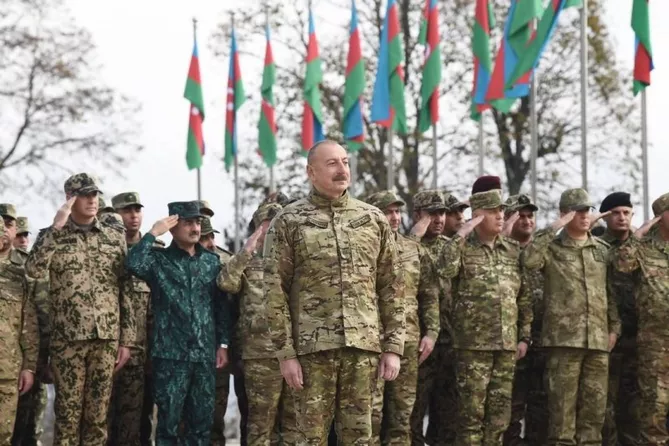
Photo: AZERTAC
The Karabakh issue no longer defines the entire foreign policy agenda. Instead, Baku is now focused on building a new regional order: advancing a peace treaty with Armenia, opening transport links, integrating the South Caucasus into wider Eurasian connectivity projects, and expanding Azerbaijan’s role in Central Asia, the Turkic world, the Islamic world, and global institutions.
This shift is important. Azerbaijan is not simply trying to consolidate the results of military victory. It is trying to translate that victory into a new political architecture. In this context, the peace agenda with Armenia has become one of the central priorities of Azerbaijani diplomacy. The Washington meeting on August 8, 2025, the signing of an agreement with Armenia, and the initialing of the peace treaty text marked a major stage in this process. For Baku, peace is not only a bilateral issue with Yerevan. It is a strategic condition for transforming the South Caucasus from a region of conflict into a region of connectivity.
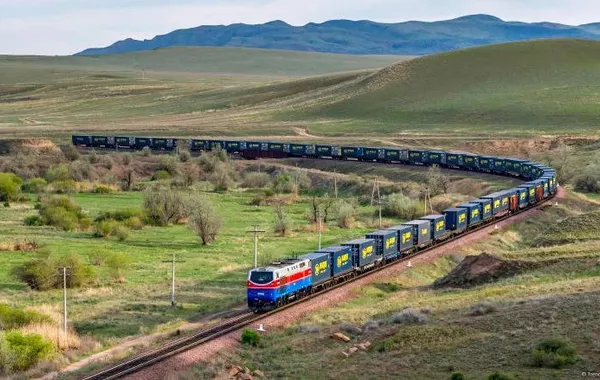
That connectivity agenda is already central to Azerbaijan’s international role. The Middle Corridor, linking China and Central Asia to Europe through the Caspian Sea and the South Caucasus, has gained new importance amid disruptions to traditional routes. Azerbaijan sits at the heart of this emerging transport architecture. Its investments in ports, railways, roads, and logistics infrastructure have made the country one of the key transit hubs between East and West.
Energy remains another pillar of Azerbaijan’s influence. In the wake of global energy disruptions and Europe’s search for reliable alternatives, Azerbaijani gas has gained greater strategic value. Baku has strengthened its role as a dependable energy partner for the European Union, while also avoiding the kind of political dependence that can limit diplomatic maneuverability.
European Commission President Ursula von der Leyen's visit to Baku once again demonstrated that energy cooperation between Azerbaijan and the EU has moved beyond a purely commercial relationship and acquired strategic significance.
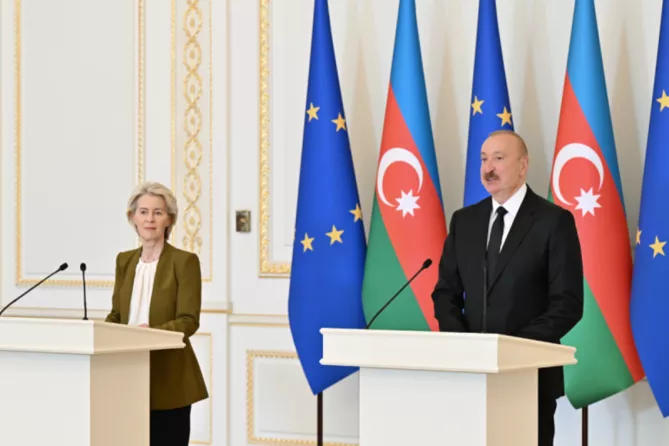
Photo: AZERTAC
Yet Azerbaijan’s rise cannot be explained by energy alone. The country’s broader success lies in its ability to combine economic resilience, military capability, diplomatic flexibility, and institutional engagement. This combination has allowed Baku to build working relations with actors that often stand on opposite sides of global political divides.
Azerbaijan cooperates closely with Türkiye, maintains constructive ties with the European Union, preserves channels with Russia, develops strategic interaction with the United States and Israel, and at the same time maintains dialogue with Iran and China. Few countries of Azerbaijan’s size are able to pursue such a broad diplomatic line without becoming hostage to one geopolitical camp. Baku’s strength lies precisely in its ability to avoid binary choices.
This multi-vector policy is not neutrality in the passive sense. It is active strategic balancing. Azerbaijan does not withdraw from global processes; it participates in them selectively and pragmatically, based on national interests. This has allowed the country to reduce external pressure, expand its diplomatic space, and position itself as a necessary partner for different actors.
The same logic explains Azerbaijan’s growing role in multilateral organizations. In 2025, 14 Azerbaijani candidates were elected to various positions in international structures. These roles covered areas such as sustainable development, tourism, migration, social policy, environmental issues, cultural heritage, and humanitarian cooperation. In 2026, this trend continued. In June alone, Azerbaijan secured representation in UN committees dealing with the elimination of discrimination against women, human rights, and the rights of the child. The country is also represented in the Committee on Economic, Social and Cultural Rights and the Committee on Migrant Workers.
As a result, Azerbaijan is represented in five of the 10 UN human rights treaty bodies. This is more than a symbolic achievement. Even at a time when the effectiveness of international organizations is widely questioned, representation in such bodies gives states an opportunity to influence discussions, defend their positions, build coalitions, and prevent decisions that may run counter to national interests.
A similar example can be seen in UNESCO. In November 2025, Azerbaijan was elected to the UNESCO World Heritage Committee for the 2025-2029 term. Five countries competed for the seat allocated to the Eastern European region. Azerbaijan received the support of 92 out of 160 states in the first round of voting and entered the committee. This result reflected not only diplomatic outreach, but also the country’s growing emphasis on cultural heritage as part of its international identity.
These victories in international institutions should not be dismissed as routine diplomatic successes. They indicate that Azerbaijan has managed to build a reputation as a reliable and constructive partner across different regions and political groupings. In multilateral diplomacy, reputation matters. Countries vote not only on the basis of immediate interests, but also on the basis of trust, predictability, and the ability of a candidate state to work within broader international frameworks.
Azerbaijan has also used the Non-Aligned Movement to expand its global profile. Baku’s chairmanship gave new momentum to the organization and helped return it to the center of international political discussion. Azerbaijan used this platform to raise issues that resonate strongly with many countries of the Global South, including inequality in international governance and the legacy of colonialism.
The Baku Initiative Group became one of the most visible outcomes of this agenda. By raising the issue of neocolonialism at a high international level, Azerbaijan demonstrated that it is ready not only to participate in existing institutions, but also to shape new debates. This approach has helped Baku extend its influence far beyond the South Caucasus and speak to a wider audience of states seeking a more balanced international order.
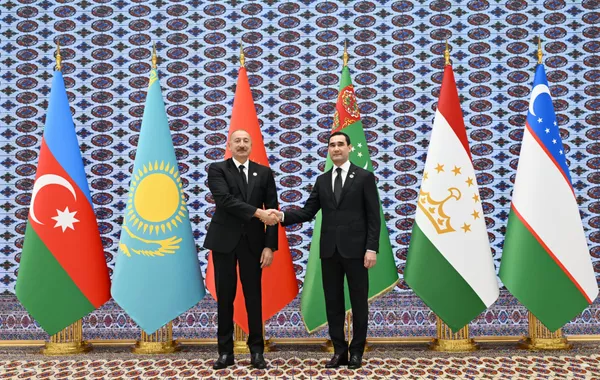
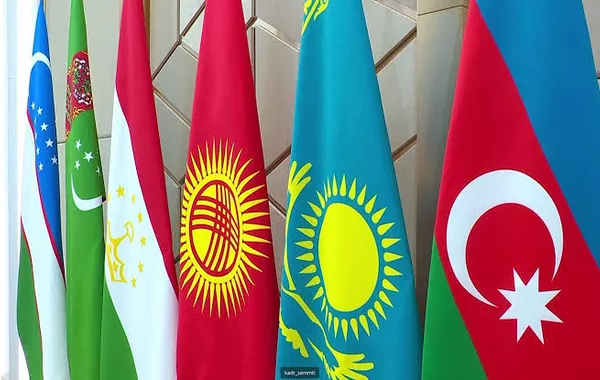
Another important dimension of Azerbaijan’s foreign policy is the Turkic world. The Organization of Turkic States existed for years as a framework with potential, but it is only in the recent period that it has begun to acquire real political and economic weight. Azerbaijan’s growing strength after the restoration of territorial integrity has directly contributed to this process.
Baku has helped give the Turkic agenda a more practical character. It is no longer limited to cultural or historical solidarity. It now includes transport connectivity, energy cooperation, security dialogue, economic integration, and political coordination. Azerbaijan’s role is especially important because it connects Türkiye with Central Asia and provides the geographic and political bridge necessary for a more coherent Turkic space.
At the same time, Baku has been careful to frame Turkic cooperation not as a confrontational bloc, but as part of a broader Eurasian architecture. This has helped reduce concerns in neighboring regions and made the project more acceptable to external actors. Once again, Azerbaijan’s diplomatic method is visible: promote strategic interests, but avoid unnecessary confrontation.
The scale of Azerbaijan’s diplomatic activity also reflects this wider ambition. According to the Ministry of Foreign Affairs, in 2025 alone Azerbaijan held political consultations with 52 states, signed 191 international documents with 41 countries, and expanded the geography of its strategic partnerships and bilateral cooperation. These figures show not only the intensity of diplomatic contacts, but also the diversification of Azerbaijan’s foreign policy agenda.
Photo: Getty Images
The deeper meaning of this transformation is that Azerbaijan is no longer building its foreign policy around a single issue. For decades, Karabakh was the central question. Today, Baku’s agenda is much broader: peace with Armenia, reconstruction of liberated territories, regional security, energy exports, transport corridors, Central Asian partnerships, Turkic cooperation, Islamic solidarity, relations with the West, dialogue with Russia and China, and active participation in global institutions.
This does not mean that Azerbaijan faces no challenges. A more active foreign policy also brings higher expectations and greater risks. Balancing relations with competing powers requires constant diplomatic precision. The peace process with Armenia remains sensitive. Regional connectivity projects depend not only on Azerbaijan’s will, but also on broader geopolitical conditions. International institutions can provide influence, but they can also become arenas of political pressure.
Still, Azerbaijan enters this new phase with several advantages: restored territorial integrity, economic resources, a clear strategic vision, strong state institutions, and a diplomatic culture based on pragmatism. These factors have allowed the country to move from defensive diplomacy to proactive diplomacy.
The central foreign policy priority for the coming period will be the consolidation of peace in the South Caucasus. If Azerbaijan and Armenia move from signed documents to practical normalization, the entire region could change. Transport links could reopen, economic cooperation could expand, and the South Caucasus could finally begin to function not as a geopolitical fault line, but as a corridor of opportunity.
For Azerbaijan, this would mark the completion of one historical stage and the beginning of another. The first stage was about survival, sovereignty, and the restoration of territorial integrity. The next stage is about influence, connectivity, and the shaping of a new regional order.
This is why Azerbaijan’s foreign policy should now be understood in broader terms. Baku is no longer merely adapting to the decisions of larger powers. It is increasingly becoming a state whose own decisions matter to others. That is the clearest sign of its transformation: Azerbaijan has moved from being a regional player to becoming a power broker with a growing role in the future of the South Caucasus and the wider Eurasian space.