Relations between Europe and Russia since the outbreak of the war in Ukraine have clearly revealed who is who within the European Union. For three years, the EU continued to receive Russian gas while preventing Kyiv from shutting down the pipeline running through Ukrainian territory. Ukrainian cities were being destroyed by Russian missile strikes. Ukrainian children were dying under bombardment, while Europe, despite loudly condemning Moscow, continued to purchase Russian oil and gas.
Over the course of three years of war, hundreds of billions of euros flowed into the Russian state budget. Thanks in part to its continued and highly profitable trade with the EU, Russia became the world's second-fastest-growing country in terms of personal wealth: average wealth per adult increased by 37 per cent between 2020 and 2025. This was reported by RIA Novosti, citing data from the UBS Global Wealth Report.
At the same time, the European Union seems to come up with yet another package of sanctions against Moscow almost every month. There are two possible explanations: either these measures are largely intended for public consumption while trade continues successfully behind the scenes, or Russia possesses far greater resources to withstand sanctions than many assume. There is good reason to believe the first explanation is closer to the truth.
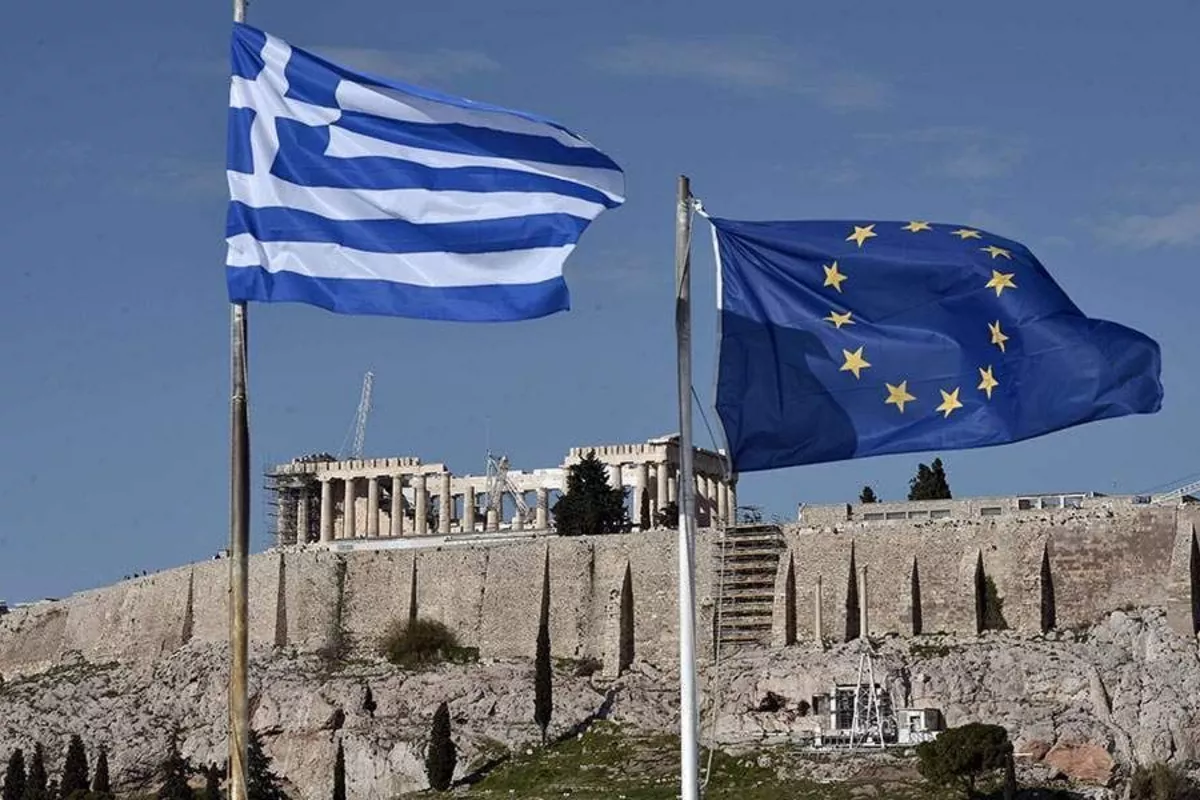
Greece provides one of the clearest examples.
Relations between Greece and Russia are currently going through a difficult period because of geopolitical disagreements. Yet this has had little effect on Athens' economic interests. One of the major developments in July 2026 was Greece's decision to block the adoption of the European Union's 21st package of sanctions against Russia in order to protect the interests of Dynagas, a Greek shipping company involved in transporting Russian liquefied natural gas.
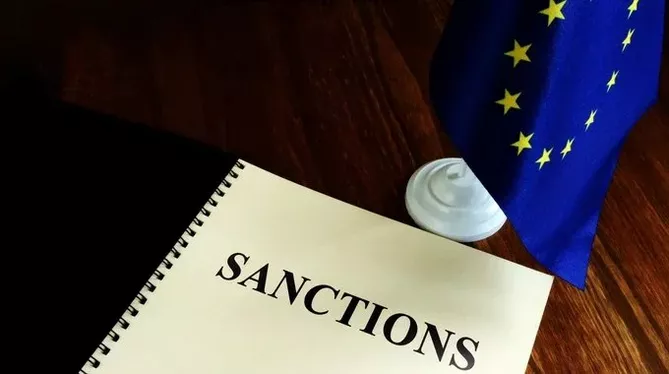
photo: getty images
The proposed sanctions included a ban on the transshipment of Russian LNG to third countries. Athens argued that such restrictions would effectively destroy Dynagas, a major Greek company operating a fleet of 27 LNG carriers. Greece's objections consequently stalled the entire sanctions package, as its adoption requires the unanimous support of all 27 EU member states.
Serbian President Aleksandar Vučić had previously opposed the package as well. In Serbia's case, however, the issue was not merely about private business interests. Serbia depends heavily on Russian fuel and imports, making any disruption to supplies a matter of national survival. Moreover, Vučić has always been consistent in his opposition to anti-Russian sanctions. The same cannot be said of several European countries, including Greece.
According to The Financial Times, Greek shipping companies earned at least $3.8 billion from transporting Russian oil over the past three years, despite efforts by the Group of Seven to restrict the Kremlin's oil revenues. The largest beneficiary was reportedly Dynacom Tankers, founded by Greek shipping billionaire George Prokopiou. Since 2023, Dynacom has earned approximately $915 million from transporting Russian oil.
The Financial Times also reported substantial earnings by other Greek carriers. Olympic Shipping and Management, part of the Onassis Group, earned at least $404 million, while the Athens-based tanker operators Stealth Maritime and Polembros Shipping each generated revenues exceeding $200 million. According to data from the analytical firms Windward and Vortexa, Greek companies transported nearly 15 per cent of all Russian crude oil exports in May 2026.
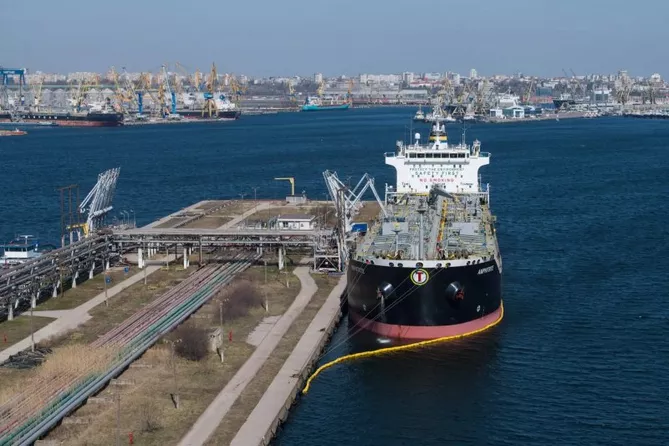
Credit: Nathan Laine/Bloomberg
Greek companies insist that they comply with the price-cap mechanism introduced as part of Western sanctions. Under this regime, Russian oil may be transported using Western services only when it is sold below a predetermined price ceiling.
Ukraine, unsurprisingly, has been deeply dissatisfied with this situation. In 2023, Kyiv placed several Greek tanker companies, including Dynacom, on its list of international sponsors of war. Ukraine, however, was left alone in its protest. It received no meaningful support and was eventually forced, under pressure from the Greek government, to remove the companies from the blacklist.
When their own interests are at stake, European states defend them with remarkable determination. The interests of Ukraine, the country subjected to aggression, are pushed into the background.
Greece, together with France and Italy, also succeeded in softening European visa restrictions on Russian citizens. Euronews previously reported that the EU was considering a less restrictive version of a proposed entry ban on Russian military personnel and former participants in the war against Ukraine after France and Italy opposed the original plan. The loss of Russian tourism revenue represents a serious economic disadvantage for parts of Europe, and whether a particular visitor participated in military operations appears to be of secondary importance.
The situation reflects the traditional European policy of double standards. There is nothing particularly new about the current arrangement. Unfortunately, Azerbaijan has a great deal to say - and to remember - on this subject.
Baku has repeatedly been subjected to criticism and threats because of its trade relations with Russia. The very actors whose economic activity contributes billions to the Russian budget have accused Azerbaijan of helping Moscow circumvent sanctions, re-export sanctioned goods and conduct shadow trade with Russia.
Such accusations tend to come in waves whenever Western actors are displeased with one decision or another taken by Baku. Most regrettably, Kyiv has sometimes become involved in these campaigns. While Azerbaijan has consistently supported Ukraine and sought to ease the consequences of the war, unfair accusations have nevertheless been directed at Baku and continue to surface from time to time.
One particularly unpleasant and revealing incident occurred two years ago, when, apparently influenced by anti-Azerbaijani circles within the European Union, the Ukrainian president accused Azerbaijan of intending to sell Russian gas to Ukraine under the guise of Azerbaijani gas.
A smear campaign was subsequently launched in leading Western media outlets. Following a meeting with European Union leaders in Brussels in December 2024, Ukrainian President Volodymyr Zelenskyy said that his country would no longer allow Russian gas to transit its territory.
"We do not want to play a game in which another country receives gas from Russia and then transits it. That would be the same as continuing to profit from this war and sending money to Russia," Euronews quoted the Ukrainian president as saying.
In effect, Baku was accused of something it had neither done nor intended to do. The proposal to export Azerbaijani gas through Ukrainian pipelines following the termination of Russian supplies did not originate in Azerbaijan. The idea of preserving gas transit through Ukraine's pipeline network came from the Europeans themselves, and Kyiv did not reject it, although one may ask whether it was genuinely in a position to do so.
It is also telling that Ukraine, through whose territory Russian oil and gas continued to flow to the European Union for three years, never dared challenge Brussels over the matter.
The large-scale and entirely open cooperation between Greek shipping companies and Russian suppliers, involving revenues worth billions of euros, recalls another highly questionable episode.
In May last year, the British authorities imposed sanctions on the Azerbaijani tanker Zangezur, two Azerbaijani companies and five businessmen accused of "participating in the supply of Russian oil to Europe through Azerbaijani infrastructure in circumvention of Western sanctions". The case was reported by JAMnews. The sanctioned entities were said to be "linked to oil supplies financing Russia's war in Ukraine".
Even assuming that such commercial operations took place, the relatively insignificant activities of an Azerbaijani company - operations that could hardly have had any meaningful impact on the Russian state budget - were deemed punishable. At the same time, dozens of Greek companies have spent the entire war generating billions of euros while helping replenish Moscow's wartime revenues.
Greece is a member of the European Union, which tirelessly works on ever more restrictions against Russia. Yet Athens continues its mutually beneficial business with Moscow without facing comparable criticism. Every action taken by Baku, by contrast, is examined under a microscope.
Nor has Armenia ever faced meaningful EU sanctions, or even serious criticism, despite the fact that the scale of re-exports and sanctions circumvention through Armenian territory has long been widely known.
Double standards are among the most disturbing features of contemporary European politics. In this case, however, the issue extends beyond political pressure on an independent state such as Azerbaijan. It concerns the financing of an occupying power.
Europe is effectively helping finance the war against Ukraine by allowing Moscow to continue its aggression despite the enormous human, political and economic consequences of the conflict. It is therefore difficult to dismiss those who argue that the war has dragged on for so long not solely because of Moscow's actions. Perhaps there are other interested parties as well - among those who shout "Stop thief!" louder than anyone else.