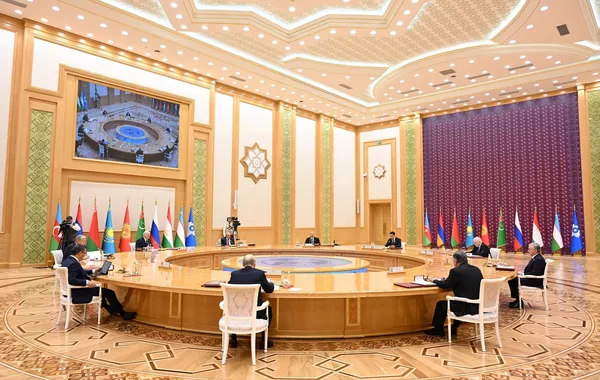
On 7-8 July 2026, a NATO summit was held in Ankara, attended by all member states of the alliance, including Greece.
Centrifugal tendencies have intensified within NATO in recent years. Alliance members such as Spain and Italy have openly opposed the war against Iran, while the United Kingdom simply stayed away from the conflict. Türkiye adopted a distinct position, and so on. In short, following the collapse of the Warsaw Pact and the Soviet Union, the very idea of collective security among Western countries has largely lost its meaning. Washington is now supported primarily by the former members of the socialist bloc.
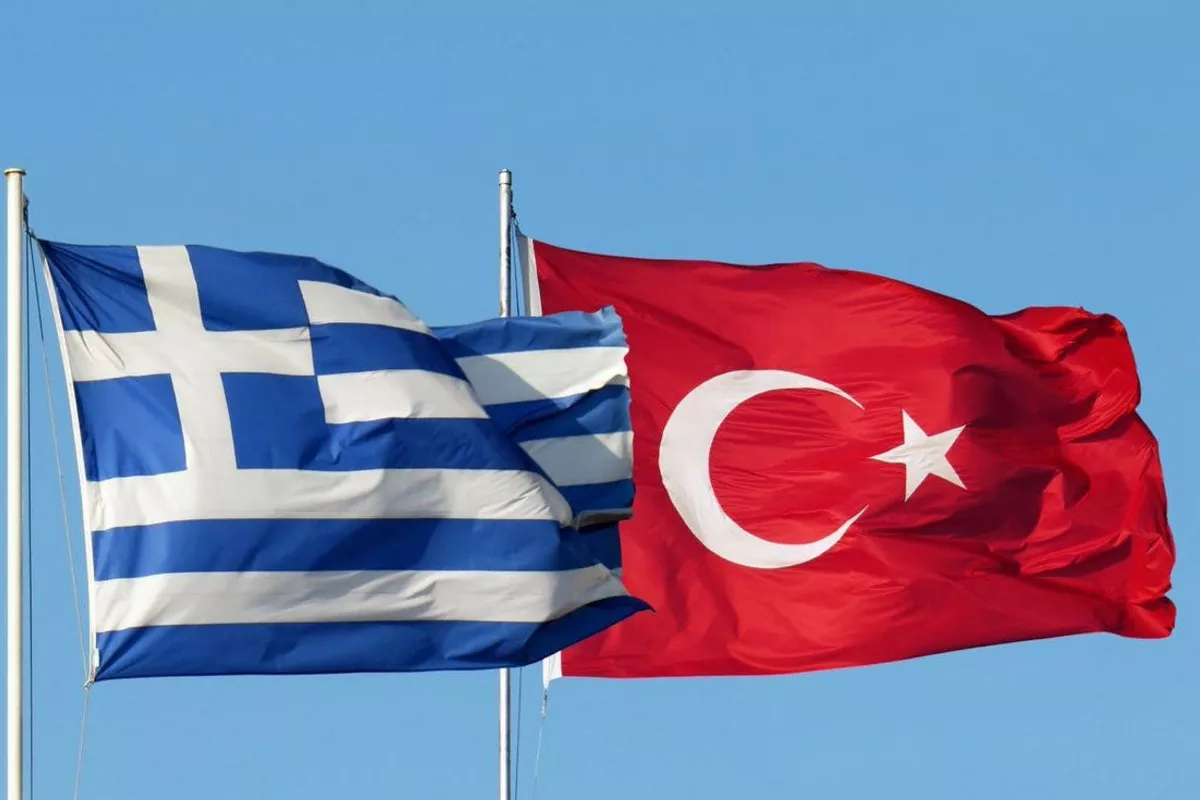
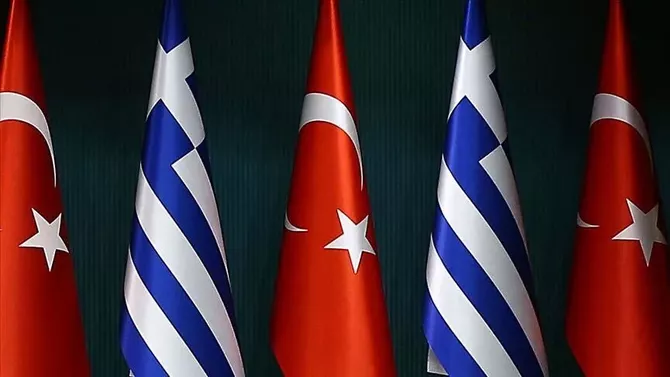
However, the greatest threat to the alliance's unity is the strained relationship between Türkiye and Greece. These tensions became particularly acute after Ankara's military intervention in the northern part of Cyprus on 20 July 1974.
Moreover, the idea of restoring Byzantium within its former borders continues to resonate in some circles in Greece. This aspiration gained particular momentum following the defeat of the Ottoman Empire after the First World War. Even then, however, the Greeks failed to achieve that objective.
Source: Anadolu Agency
Another major stumbling block between the two countries has been the substantial natural gas reserves discovered in the eastern Mediterranean during the 2000s and 2010s. In principle, these deposits should have united the states of the region so they could use the newly discovered hydrocarbons for their common benefit. In practice, most of them, including Greece, Cyprus, Israel, Egypt, Italy and Jordan, have done exactly that.
Türkiye, however, found itself excluded from this framework, partly because of Greece's territorial claims and partly because "President Recep Tayyip Erdoğan, through his aggressive behaviour, has alienated many of his allies and friends."
The situation is further complicated by the fact that Türkiye is a member of NATO but not the European Union, while Cyprus belongs to the European Union but not NATO. Greece, meanwhile, is a member of both NATO and the EU, creating overlapping and sometimes conflicting allegiances.
An attempt to untie this Gordian knot failed when Greece announced an energy agreement with Egypt and effectively laid claim to a vast maritime area. This came in response to a similar agreement between Türkiye and Libya. In this dispute, France sided with Greece.
Athens also announced the extension of its territorial waters off its western coast to 12 nautical miles, effectively warning Ankara that it could do the same in the eastern Aegean Sea. Türkiye has made it clear that it would never allow such a move.
The core of the dispute concerns the status of the Greek islands in the Aegean Sea. The latest trigger was reports that Greece was deploying a Patriot air defence battery on the island of Karpathos. Athens has been strengthening its air defences amid a sharp rise in tensions in the eastern Mediterranean following a strike on the British air base at Akrotiri in Cyprus. The planned deployment on the island was reported by the Anadolu news agency.
Ankara stated that the islands in the eastern Aegean and the Dodecanese archipelago retain their demilitarised status under the 1923 Treaty of Lausanne and the 1947 Paris Peace Treaty. Turkish Foreign Ministry spokesman Öncü Keçeli stressed that, according to Ankara, this status "is not open to discussion" and that Türkiye would not accept any attempt to present it with a fait accompli.
The Greek side rejected these claims. According to Ekathimerini, Athens stated that the country's defence policy could not be dictated by Türkiye and that Ankara's references to international treaties do not negate Greece's right to self-defence.
The current dispute is unfolding against the backdrop of broader military activity around Cyprus. According to Reuters, following the attack on the British base at Akrotiri, Western countries increased their military presence in the eastern Mediterranean. Greece deployed frigates, fighter aircraft and a Patriot air defence system to the region, while Türkiye announced the deployment of six F-16 fighter aircraft to northern Cyprus.
At present, this is not a direct crisis between the two countries but rather another escalation in the long-running dispute over the militarisation of the Greek islands off the Turkish coast. This is reflected in the latest statements by the Turkish Foreign Ministry. Ankara argues that some of the islands near its coast should remain demilitarised under international treaties, while Athens maintains that it has the right to strengthen its defences because of the region's persistent military tensions and the threat posed by Türkiye.
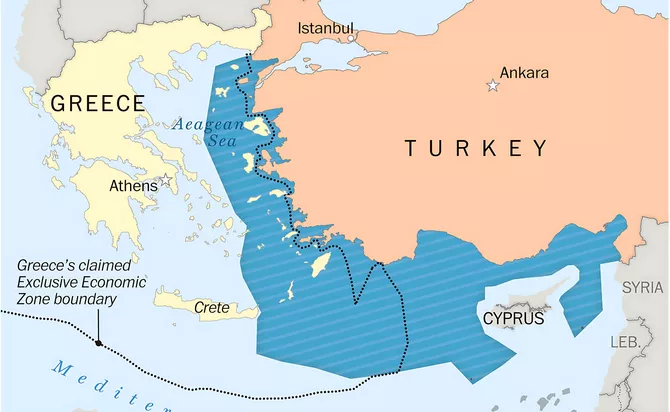
Source: The Foreign Policy Council
The dispute has dragged on for decades and has long since expanded beyond the interpretation of treaties alone. It encompasses issues of sovereignty over the islands, disputes over airspace, the delimitation of maritime zones, and military deployments in the eastern Aegean.
In 1996, the two countries came dangerously close to an open confrontation over the Imia/Kardak islets. The current dispute has flared up once again because the old conflict was never resolved. For Athens, deploying air defence systems on the islands is a matter of national security. For Ankara, it is another opportunity to argue that Greece is using the regional crisis as a pretext to alter the islands' status in its own favour.
It should be emphasised that this dispute is taking place between two NATO members and, as long as the alliance exists, the danger of war remains minimal. Nevertheless, both sides continue to rearm actively.
The Turkish armed forces number 355,000 personnel and could be expanded to 837,000 in the event of war, making them the strongest military in NATO after that of the United States. Türkiye's mobilisation potential amounts to eight million people.
The Greek armed forces consist of 140,000 active personnel and 221,000 reservists, meaning that in the event of war their total strength would amount to only 361,000 troops.
The Turkish military possesses more than 3,500 tanks, 3,000 artillery systems, over 10,000 mortars and 350 multiple-launch rocket systems. It also fields approximately 5,000 armoured fighting vehicles.
The Greek military is equipped with more than 1,600 tanks, 2,000 artillery systems, around 6,000 mortars and multiple-launch rocket systems, and roughly 2,500 armoured fighting vehicles.
At the same time, any large-scale war would have a negative impact on Türkiye's economy, which is already experiencing severe turbulence. Furthermore, NATO would not remain indifferent to such a conflict and would move quickly to contain it.
It should also be noted that France could directly support Greece. Under these circumstances, Türkiye is likely to continue balancing on the brink of war, flexing its muscles without crossing the line. This approach allows Erdoğan to appeal to domestic voters while avoiding a complete rupture with the West.
This is precisely why US goodwill is critically important to him, as was demonstrated at the NATO summit in Ankara. For the same reason, the conflict between Ankara and Athens is likely to continue smouldering without escalating into a full-scale military confrontation.
Ultimately, everything will depend on the actions of the current US administration, which has yet to define its role within the North Atlantic Alliance. If the United States concludes that NATO has become too costly, it could withdraw from the alliance without hesitation. In that event, the likelihood of a conflict between Athens and Ankara could rise to a critical level.