For Iran, 2025 has become a true stress test, perhaps the most serious in decades. For the first time in many years, the country found itself in a direct state of war with another state. Although the exchange of missile strikes with Israel lasted only 12 days, the scale of destruction was significant. A number of facilities linked to Iran’s nuclear program were damaged or destroyed, dealing a blow not only to Iran’s military and technical capabilities but also to one of the core pillars of its strategic positioning.
This clash further exposed the fragility of Iran’s economy, which had already been under chronic strain. Yet the real turning point came in September 2025, when the United Kingdom, France, and Germany activated the “trigger mechanism” under the Joint Comprehensive Plan of Action, leading to the automatic restoration of UN sanctions. In practical terms, Iran once again entered a phase of full-scale international isolation - this time under far worse internal conditions than a decade earlier.
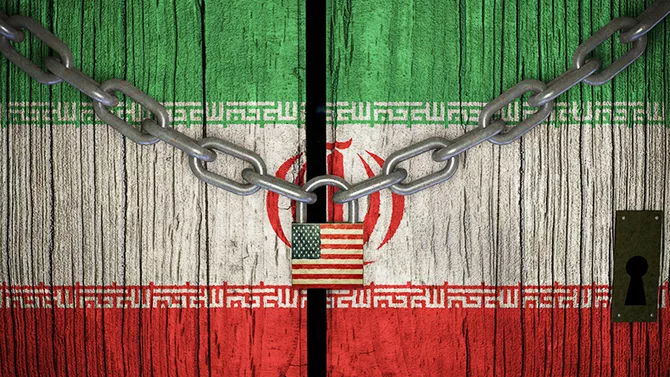
photo: CNN
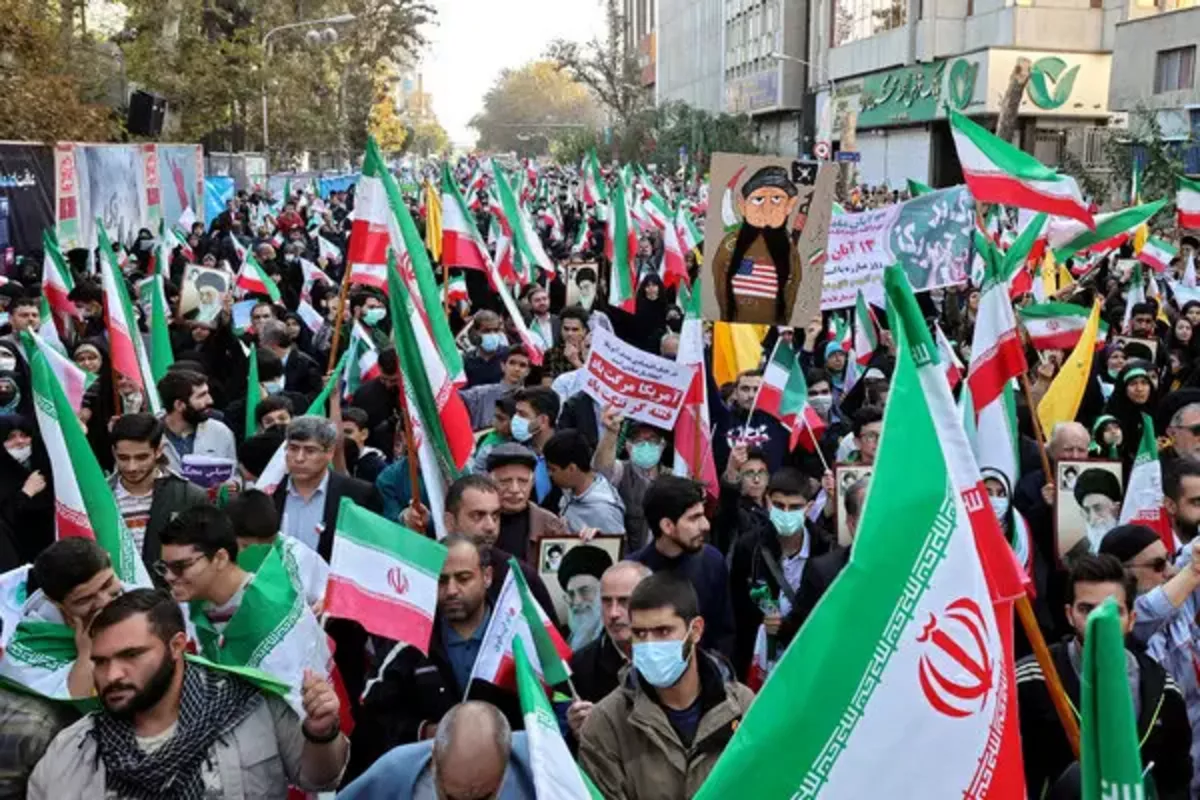
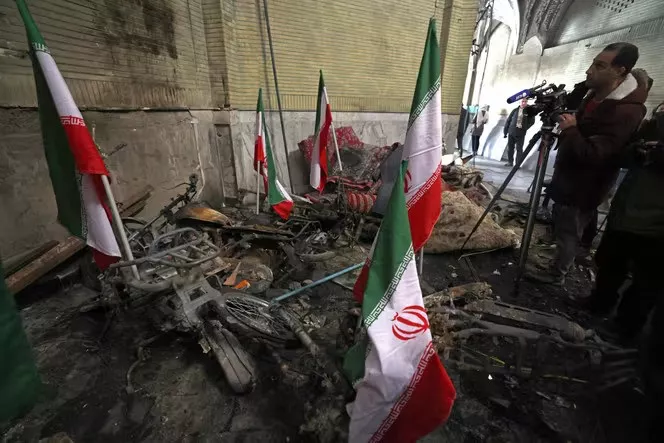
Against this backdrop, Iran was shaken by a wave of mass disobedience that by the end of the year evolved into large-scale unrest. The protests began with relatively peaceful demonstrations by street vendors following another sharp depreciation of the Iranian rial.
However, students, urban and rural intellectuals, national minorities, and broad segments of the population dissatisfied with the system in place since 1979 soon joined them.
Crucially, economic grievances quickly transformed into political demands. Calls for the overthrow of the regime and for the return of the heir to the last shah, Reza Pahlavi, became increasingly common. Pahlavi effectively emerged as a symbolic figurehead of the protests after releasing a video appeal urging Iranians to make a “historic choice.” The video garnered more than 80 million views, and in its closing segment he stated his readiness to return to Iran, expressing confidence that the victory of a “national revolution” was approaching.
Yet the gap between symbolism and real political capacity soon became evident. A meeting between U.S. President’s Special Envoy Steven Witkoff and Pahlavi demonstrated that Iran’s political opponents possess extremely limited independent resources and rely heavily on external backing. At the same time, Washington appeared to expect greater self-sufficiency from the opposition and showed little appetite for embarking on a large-scale military operation against Iran.
Source: lemde
As a result, protest activity gradually declined. Iranian authorities managed to regain control through familiar instruments: temporary shutdowns of the internet and mobile communications, disruption of protest networks, and arrests of key activists. Deprived of coordination, demonstrations once again became primarily socio-economic in nature rather than openly political.
As a result, protest activity gradually declined. Iranian authorities managed to regain control through familiar instruments: temporary shutdowns of the internet and mobile communications, disruption of protest networks, and the arrest of key activists. Deprived of coordination, demonstrations once again became primarily socioeconomic in nature rather than overtly political.
The human cost of this “stabilization” was immense. According to Iran’s National Security Council, 3,117 people were killed during the unrest. The U.S.-based Human Rights Activists News Agency (HRANA) reports an even higher figure - 4,519 deaths, including 4,251 protesters, 197 members of the security forces, 35 minors, and 38 bystanders. Iranian authorities, for their part, claim that “terrorist elements” were present among the protesters and place responsibility for the escalation on the United States.
Simultaneously, Tehran pursued cautious external maneuvering. With the mediation of Saudi Arabia, Oman, and Qatar, an interim understanding with Washington was reportedly reached, aimed at preventing new missile and air strikes on Iranian targets. Iran’s neighbors are deeply concerned that further escalation could spill over into their territories, especially given Tehran’s declared readiness to strike U.S. assets anywhere in the Middle East in response. As a compromise gesture, Foreign Minister Abbas Araghchi stated that Iran does not intend to execute detained protesters, allowing U.S. President Donald Trump to claim that, from Washington’s perspective, the situation in Iran had begun to improve.
Nevertheless, it would be a mistake to interpret the decline in street protests as evidence of genuine stabilization. The main reason for the downturn is not the disappearance of public anger but the continued strength of the state’s repressive apparatus combined with the fragmentation of the opposition. The scale of social dissatisfaction and the depth of the socioeconomic crisis suggest that the root causes of unrest remain fully intact.
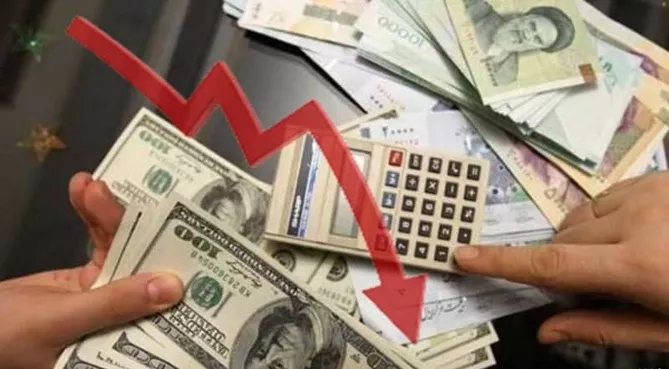
photo: NCRI
Iran’s medium-term trajectory will depend on several key factors: the effectiveness of economic management, the authorities’ ability to engage in dialogue with different social groups, and the broader foreign policy environment. In this sense, slogans in support of Pahlavi reflect not a consolidated monarchist alternative but rather the depth of disillusionment and the willingness of parts of society to reject any symbols associated with the existing system.
Particular attention should be paid to the role of national minorities, especially ethnic Azerbaijanis. Their relatively restrained participation in the protests runs counter to simplistic assumptions about the inevitable ethnicization of Iran’s crisis. Two factors are especially important here. The first is deep-rooted historical resentment toward the Pahlavi dynasty, which overthrew the Azerbaijani Qajar dynasty in 1925 and crushed the national liberation movement known as “21 Azar” in 1946. For this reason, many Iranian Azerbaijanis actively supported the overthrow of Shah Mohammad Reza Pahlavi in the 1970s and 1980s.
Second, Azerbaijanis are a state-forming people who regard Iran as their historical homeland. Despite playing a key role in the Constitutional Revolution of 1905 and the Islamic Revolution of 1979, they gained few tangible political dividends. Today, this community acts more pragmatically and is reluctant to engage in protests without a clear understanding of the potential consequences.
This is the central paradox of today’s Iran. Society demonstrates deep dissatisfaction with the existing system, yet sees no convincing alternative. The authorities retain the capacity to suppress unrest but increasingly lack the ability to offer a positive, mobilizing vision. As a result, Iran is entering a phase of prolonged structural instability - one that will require not cosmetic adjustments, but systemic change.