The current situation on Russia's fuel market suggests that the authorities have resorted to a series of extraordinary measures. This is not a single decision, but rather a comprehensive package of steps: the temporary relaxation of fuel-quality standards, the search for additional supplies from Belarus and Kazakhstan, the introduction of a support mechanism for imports from outside the Eurasian Economic Union (EAEU), rationing at filling stations, and efforts to contain panic buying.
One of the clearest signals is the effective move towards less stringent petrol-quality requirements - in other words, allowing the sale of Euro-3 fuel. This indicates that the state is prepared to temporarily relax existing standards in order to increase fuel supplies on the domestic market.
This move demonstrates that the problem is not simply one of price, but also of the physical availability of petrol. Had the issue been limited to pricing imbalances, the authorities could have confined themselves to adjusting the damper mechanism or using other financial instruments. By lowering fuel-quality requirements, however, the government is signalling a more serious challenge: the market needs additional supplies almost at any cost in order to prevent a large-scale fuel crisis.
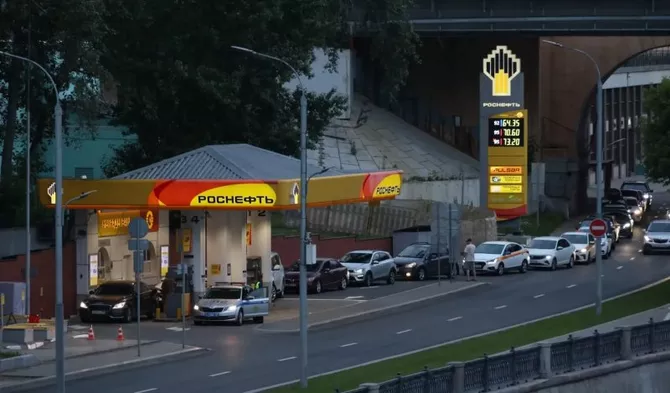
photo: Getty images
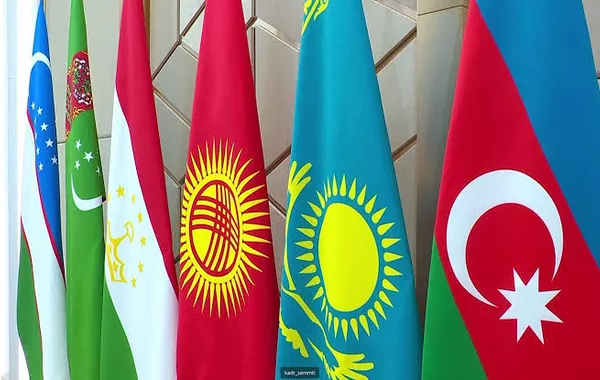
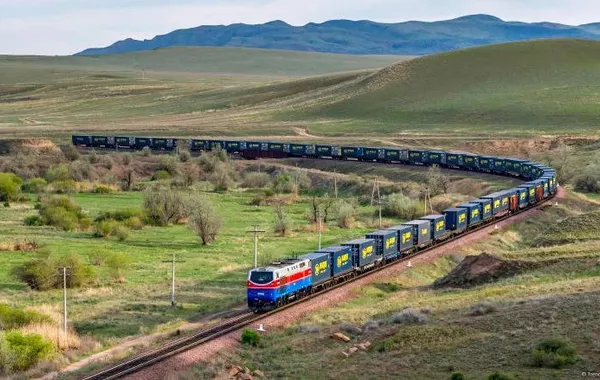
The most obvious source of additional supplies is the EAEU, primarily Belarus and Kazakhstan. From a regulatory, customs and geographical perspective, these imports are far easier than sourcing fuel from more distant markets. Belarus has traditionally possessed substantial oil-refining capacity and can be regarded as the nearest reserve supplier for the Russian market. Kazakhstan is also part of the common Eurasian economic space, making it another potentially convenient source of additional fuel.
However, neither Belarus nor Kazakhstan can cover Russia's fuel deficit indefinitely. Both countries have their own domestic demand, contractual commitments, logistical constraints and limits on available production. As a result, these supplies may ease the situation, but they are unlikely to resolve the problem entirely, particularly during the summer peak in consumption.
That is why the authorities are also looking beyond the EAEU. To encourage petrol imports from more distant countries, a new support mechanism has been introduced. The price indicator used to calculate the damper has been linked to the Indian market. This has led many analysts to conclude that Russia may begin importing petrol primarily from India.
The mechanism is straightforward. To make imports from distant markets commercially viable, the state will compensate companies for the difference between the calculated import price and the wholesale price on the domestic market. The calculation takes into account the indicative price of AI-92 petrol in India, maritime transport costs, transshipment at Russian ports, the dollar exchange rate and excise duties.
Credit: REUTERS/Sergey Pivovarov
For the state budget, this is an expensive measure, particularly given the existing deficit. However, the government's immediate priority is to ensure adequate fuel supplies on the domestic market and prevent a large-scale fuel crisis. As a result, the additional budget expenditure is being treated as a necessary, albeit temporary, measure.
Judging by the authorities' approach, their main focus is on July and August, the period of peak petrol consumption. Demand traditionally begins to ease in September as people return to cities, the holiday season ends and fuel consumption declines. The expectation is that by then Russia will be able to scale back large-scale imports or at least reduce their volume.
At the same time, an important logistical challenge remains. Geographically, petrol imported from India would be most conveniently delivered to Russia's Black Sea coast, where fuel consumption rises sharply during the summer months. It would make sense to unload shipments at Black Sea ports before distributing them further inland. The difficulty is that these ports have historically been designed to export petroleum products rather than import them. Russia has never previously needed to import petrol on such a large scale. As a result, it now faces the practical challenge of organising the transfer of fuel from tankers to rail transport before distributing it to regions experiencing the most acute shortages.
There is still little public information about exactly how this system will operate. What is already clear, however, is that logistics has become one of the government's main challenges. Buying fuel abroad is only part of the task. It must also be unloaded, redistributed and transported efficiently to the regions where it is needed most. Extending the damper mechanism to imported fuel will further increase pressure on the state budget. In practice, however, the authorities are trying not only to increase supplies but also to distribute the available fuel more evenly across the country. The objective is to prevent a complete breakdown in any one region by spreading shortages as evenly as possible.
Crimea and the so-called new regions face particularly difficult circumstances. There, the fuel shortage is compounded by logistical problems. Ukraine continues to target transport routes and infrastructure in an effort to disrupt supplies to the peninsula. At the same time, a significant proportion of fuel deliveries to Crimea has been made via the land corridor rather than solely across the Crimean Bridge.
Crimea also faces structural challenges of its own. The peninsula has no oil refineries, while its filling-station market is dominated largely by independent operators rather than major vertically integrated oil companies. As a result, shortages there are felt more acutely than in many other regions.
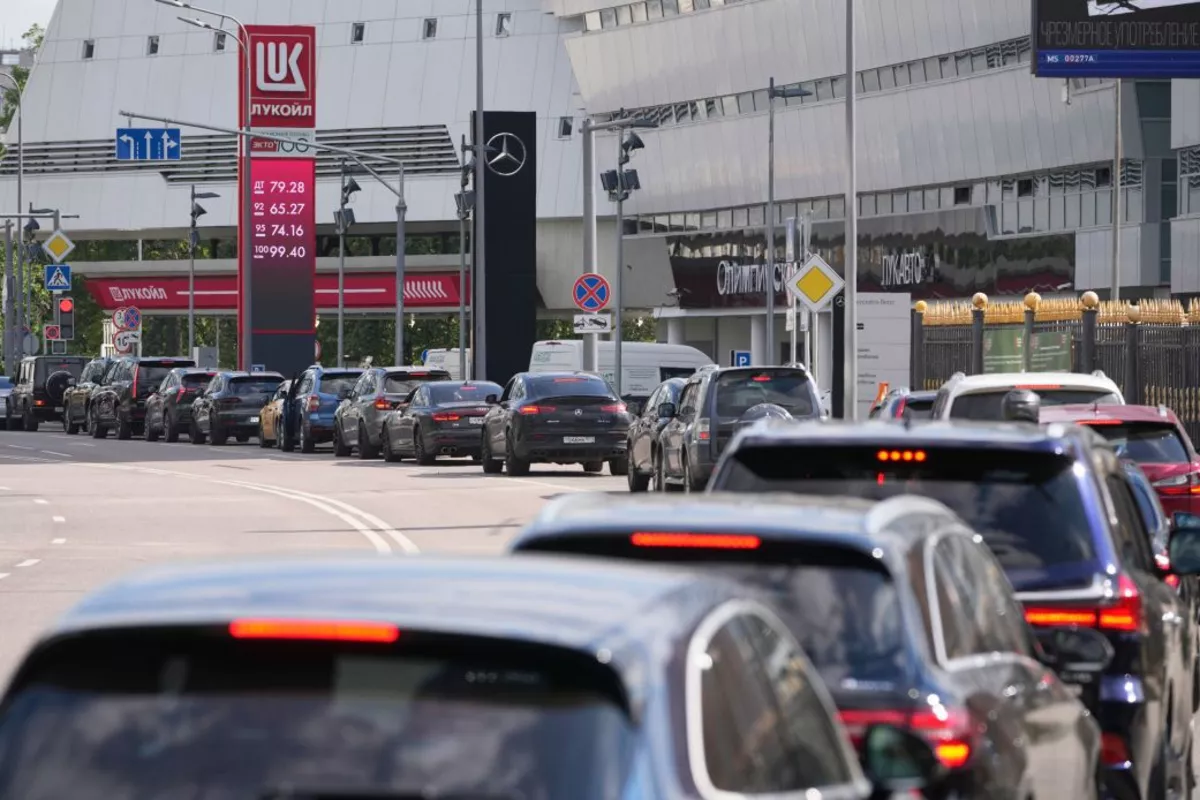
Elsewhere, the authorities are attempting to distribute available fuel more evenly. This explains the introduction of rationing measures in several regions, including limits on the amount of fuel that can be purchased per visit, restrictions on filling canisters, and priority supplies for certain categories of transport.
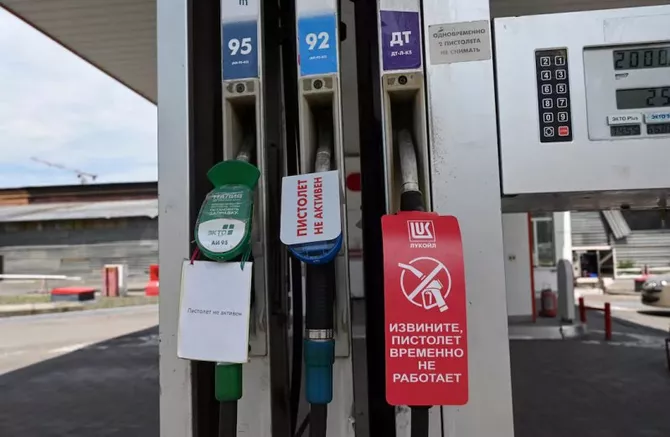
Such measures are undoubtedly inconvenient for motorists and have resulted in queues at filling stations. In some areas, independent stations have temporarily suspended sales, while elsewhere certain grades of fuel have become unavailable. All this has heightened public frustration and reinforced perceptions of a growing crisis.
On the other hand, rationing also helps curb panic buying. During shortages, consumer behaviour changes markedly. Whereas many motorists would previously have filled only half a tank, they now tend to fill their tanks completely. Many are also filling canisters and attempting to build up fuel reserves.
This only increases pressure on the market. The more people try to purchase fuel in advance, the more quickly supplies disappear from filling stations. That is why the authorities are trying not only to secure additional fuel supplies but also to limit panic buying. Their immediate objective is to buy time until seasonal demand declines and more refining capacity returns to operation.
People are undoubtedly trying to refuel in advance, which is precisely why rationing has been introduced. Even under these difficult conditions, however, fuel remains available, at least to some extent, across most of the country. While this creates inconvenience, it has not yet resulted in a complete breakdown of transport.
Moreover, the consumers most prone to panic buying have, in effect, already filled their canisters. As a result, panic-driven demand should gradually subside. This may ease the situation to some extent, although it will not fully resolve the problem. Nevertheless, the market is likely to remain under pressure until September. That is when seasonal petrol consumption traditionally begins to decline, as people return to cities, the summer holiday season ends and demand falls.
After that, the authorities should be able to gradually phase out some of the extraordinary measures currently in place. These include allowing the sale of lower-grade fuel, supporting large-scale imports from more distant markets, temporarily relaxing fuel-quality standards and introducing other emergency regulatory measures.
Overall, the authorities are attempting to keep the fuel market stable through a combination of administrative, budgetary and logistical measures. Their initial focus has been on securing additional supplies from neighbouring Belarus and Kazakhstan, before expanding imports from outside the Eurasian Economic Union (EAEU), including potentially from India. For now, the shortage remains under control, but the market continues to face considerable pressure. The government's primary objective is to buy time until the summer peak in fuel consumption passes and prevent the current shortage from developing into a systemic fuel crisis.