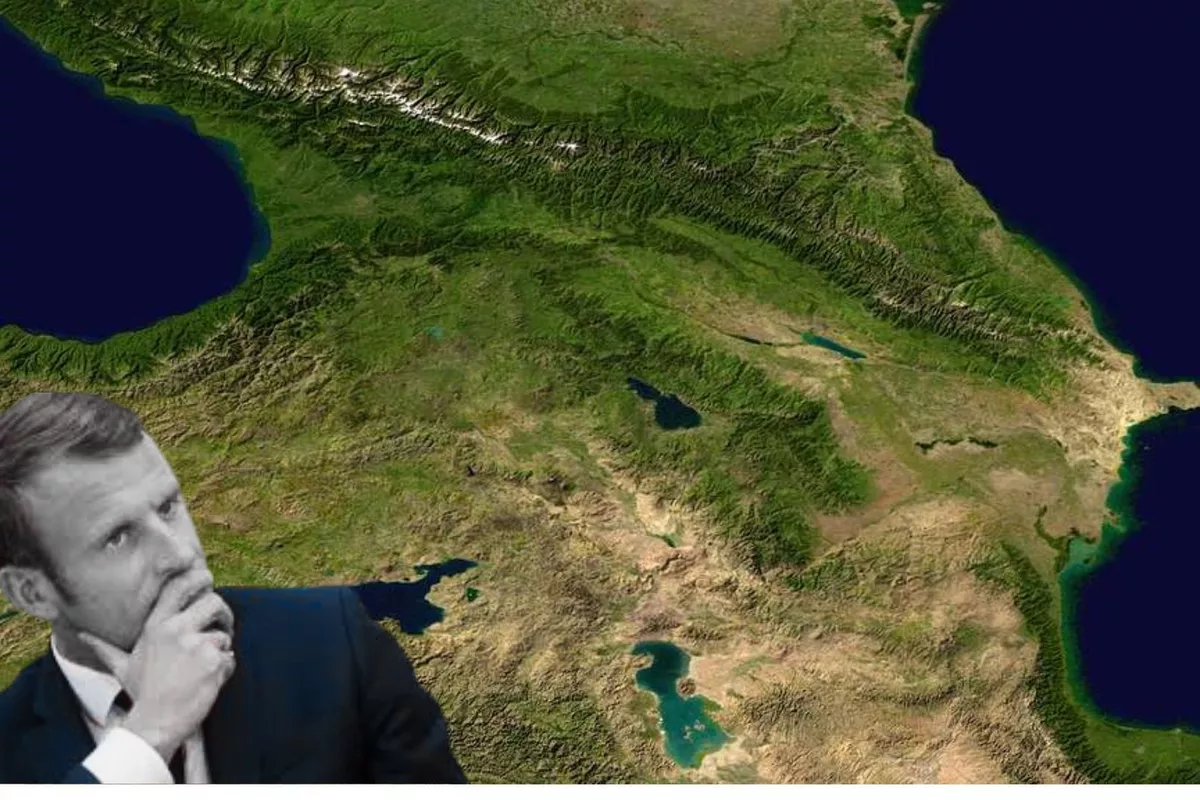
France’s position on the Karabakh issue increasingly appears less like a principled foreign policy stance and more like a continuation of political inertia that no longer corresponds to the new realities in the South Caucasus.
Against the backdrop of the peace process between Azerbaijan and Armenia - and Armenian Prime Minister Nikol Pashinyan’s own public statements about the need to close the chapter of the Karabakh movement - the activity in France of organisations that continue to promote the old political agenda around “Artsakh” raises legitimate questions. This concerns, in particular, the Association for the Support of Artsakh, which continues to enjoy broad opportunities for political, informational and legal activity on French soil.
The problem is not only that such activity is perceived in Baku as biased and anti-Azerbaijani. In the current context, it also contradicts the official line of Yerevan itself. Armenia’s leadership is increasingly open in acknowledging that the previous Karabakh agenda was part of a historical and political legacy from which Armenia is now trying to distance itself in order to normalise relations with Azerbaijan and strengthen its own statehood.
In the summer of 2025, Nikol Pashinyan stated that Armenia’s documented claims to Karabakh had been linked to a model of patriotism shaped during the Soviet period. According to him, Armenia began moving closer to genuine independence precisely at the current historical stage - following peace arrangements with Azerbaijan and the abandonment of possible claims to Karabakh. More recently, the Armenian prime minister again stressed that his government would oppose attempts to continue the Karabakh movement, referring also to the mandate given by Armenian society.
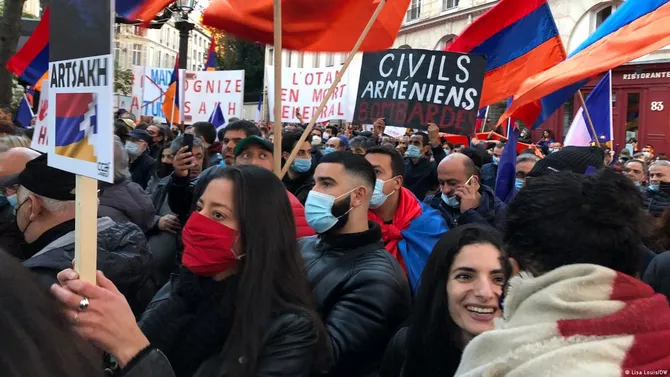
Photo: Deutsche Welle
This creates a paradoxical situation: parts of the French political class and public organisations associated with them are effectively continuing to support an agenda from which official Yerevan is trying to move away. In other words, Paris risks becoming an external actor defending yesterday’s political line more actively than Armenia’s own government is prepared to do.
The Association for the Support of Artsakh openly presents its work across several areas, from political activity to humanitarian and legal assistance, communications and media outreach. At the same time, it points to support from French political circles, including anti-Azerbaijani resolutions adopted by France’s National Assembly and events held in the French parliament with the participation of lawmakers linked to friendship groups with “Artsakh”.
Diaspora activism in itself is not unusual in European political culture. In France, as in other democracies, civic organisations have the right to express their views, promote the interests of their communities and participate in public debate. The real question is different: should the official policy of a state that aspires to be seen as a responsible international actor adapt itself to the hardest-line position of one pressure group?
This question becomes especially sensitive when such a position ignores the new political reality in the region. Azerbaijan has restored control over Karabakh; Armenia has recognised Azerbaijan’s territorial integrity; and the two countries have moved towards a peace agreement. Under these circumstances, attempts to revive old formulas do not bring the region closer to stability. On the contrary, they create additional irritants.
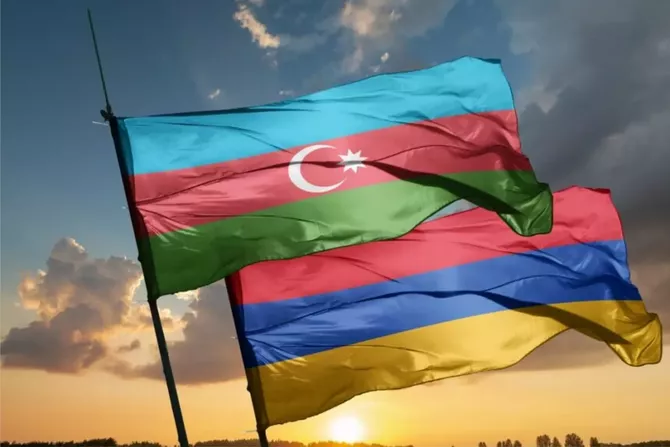
Source: Caspian Post
The reaction of some French-Armenian media outlets to the recent statement by European Commission President Ursula von der Leyen after her talks with Azerbaijani President Ilham Aliyev was also telling. Some commentators criticised von der Leyen for describing Azerbaijan as a reliable partner of the European Union and for not using language related to allegations of “ethnic cleansing” or the issue of Armenian detainees held in Baku.
Yet this is precisely where the difference lies between emotional diaspora-driven rhetoric and institutional European policy. Unlike some political circles in France, Brussels has to proceed not only from historical sympathies or domestic political calculations, but also from the real balance of interests. Azerbaijan is an important partner for the EU in energy, transport, regional security and connectivity. Moreover, Baku and Yerevan themselves are now at the centre of a process that could bring one of the longest-running conflicts in the post-Soviet space to an end.
This does not mean that humanitarian questions, the rights of displaced people or the fate of detainees should be ignored. On the contrary, sustainable peace is impossible without attention to sensitive issues. But these matters should be addressed through international law, direct dialogue and responsible diplomacy - not through one-sided political campaigns that exclude the position of the other side from the outset.
France certainly has an interest in maintaining close relations with its Armenian community, which plays a visible role in the country’s domestic political life. But the foreign policy of a major European state cannot be determined entirely by the logic of diaspora pressure. This is especially true at a time when Armenia itself is trying to move out of a historical deadlock and build more pragmatic relations with its neighbours.
In this sense, Paris’s position looks increasingly detached from the regional dynamic. Instead of supporting the normalisation process between Azerbaijan and Armenia, France risks encouraging forces that remain interested in preserving the conflict as a political resource. For the South Caucasus, this is not merely a symbolic issue. Any attempt to return the conflict agenda to the international debate complicates the process of restoring trust, opening communications and building a new security architecture.
Azerbaijan, for its part, has repeatedly made clear that it does not intend to respond to external pressure related to the Karabakh issue. For Baku, the question is closed in terms of territorial sovereignty. Any further discussion can only take place in the context of citizens’ rights, humanitarian mechanisms and regional peace - not through the logic of separatism or attempts to reopen the issue of sovereignty.
That is why Ursula von der Leyen’s remarks carry particular significance. By congratulating President Ilham Aliyev on the progress achieved towards a historic peace agreement with Armenia, the European Commission president effectively outlined the approach that European capitals should now follow: support for peace, connectivity, confidence-building and the creation of conditions for shared prosperity.
Paris would do well to take this signal seriously. France can still play a constructive role in the South Caucasus, but only if its policy is based on new realities rather than old conflict narratives. Peace between Azerbaijan and Armenia requires caution, balance and political responsibility. Continuing along the old path will not strengthen France’s position. It will only make Paris a less convincing actor in the regional process.