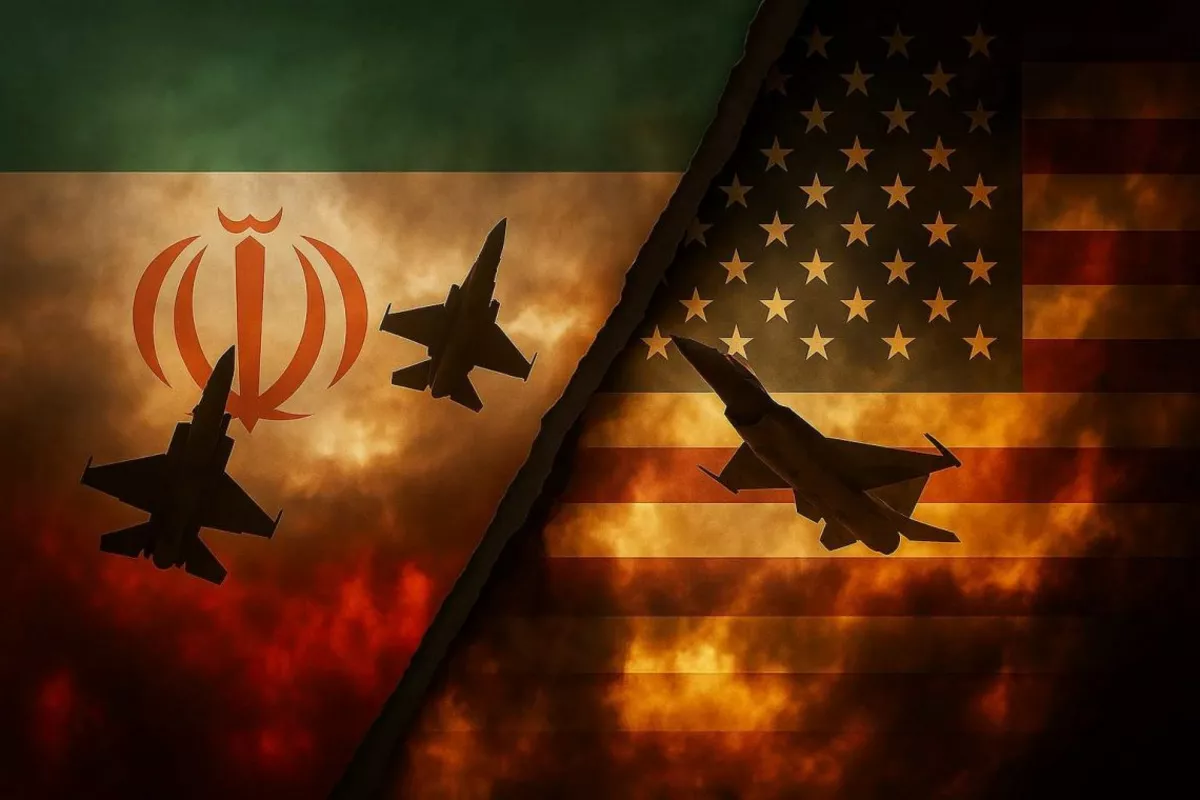
So, the situation around Iran is developing in full accordance with the style of theatrical productions by the great director of comedies, thrillers, and action films, Donald Trump.
Donald constantly reports that American troops are being increasingly concentrated near Iran’s borders and are ready for decisive action. At the same time, he informs the world that negotiations between the United States and Iran are already underway. As announced, on February 6 there will be even more direct negotiations in Istanbul.
It must be acknowledged that the announcement of Istanbul as the venue for negotiations between Iran and the United States came as a surprise. Istanbul is in Türkiye, and Türkiye is in no way an ally or partner of Iran.
However, this apparent strangeness in choosing Istanbul as the venue quickly found a logical explanation. Just a few days before the talks, it was announced that Iran had asked the United States to move the negotiations to Oman, and Washington generously agreed. There were reports that the United States initially resisted changing the venue, but, taking into account insistent requests from the leaders of Arab countries, it ultimately consented.
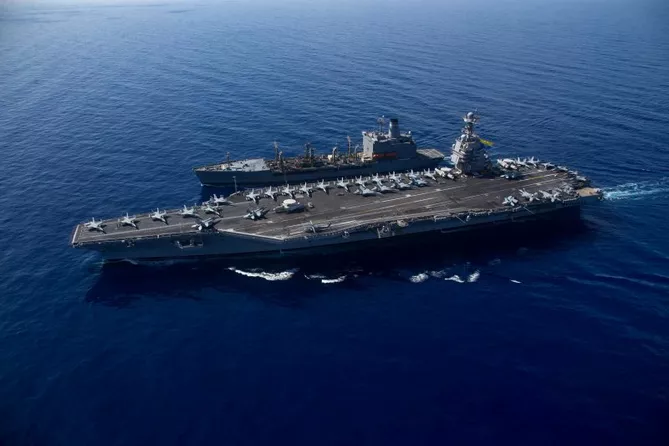
Photo credit: Reuters
Here, I can assume that another important factor behind the U.S. agreement to hold negotiations in Muscat is the presence nearby of an American military flotilla, which Trump calls an “armada off the coast of Iran.” The idea is simple: when Iranian representatives fly to Muscat over the Strait of Hormuz, they will see American aircraft carriers near their shores. This, in theory, should make them more compliant during the negotiations.
As for the composition of the participants, this issue apparently has not yet been resolved. The question is whether representatives of Arab states in the region will participate in the negotiations in any capacity at all. Recent statements by Iran indicate that it categorically insists on a bilateral format - only Iran and the United States - despite indications that participation by other Middle Eastern states may initially have been envisaged.
Several factors suggest that such discussions may indeed have taken place.
First, Qatar has good relations with Iran. It also serves as a mediator and venue for negotiations between parties to conflicts in Gaza and Syria. This means that Qatar could plausibly act as a neutral participant in the talks.
In addition, Oman could play a similar role, as Iran maintains fairly good relations with Muscat. These ties primarily involve cooperation in banking and finance, which is particularly important for Iran under the current sanctions regime.
It would, of course, be interesting to see Saudi Arabia and the UAE participate as well. However, certain complications arise here. Relations between Iran and both Saudi Arabia and the Emirates cannot be described as friendly; more accurately, they are tense. This is due primarily to a fundamental religious divide: Iran is Shiite, while Saudi Arabia and the UAE are Sunni. This has long been a source of conflict in their relations, including in direct and indirect military confrontations.
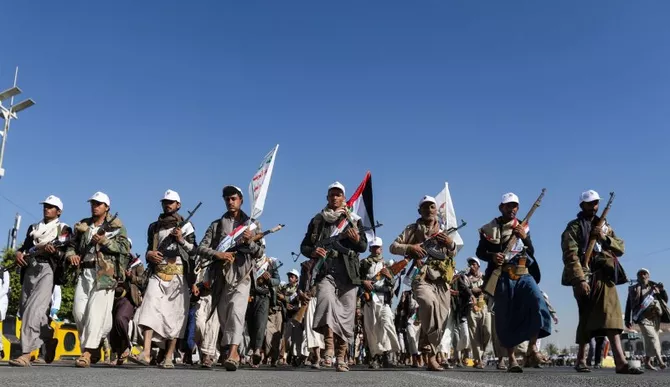
Photo credit: Reuters
This is most evident in Yemen, where Iran fully supports the Houthi rebels, who launched a civil war against the country’s internationally recognized government. For several years, Yemen has been torn apart by civil war. Iran actively supplies the Houthis with resources, while the UAE and Saudi Arabia are effectively fighting them using their own combat units.
There are also unresolved territorial disputes between Iran and the UAE. These concern islands in the Arabian Gulf (also often called the Persian Gulf). At present, the islands are under Iranian control, although the UAE considers them its sovereign territory.
What is particularly noteworthy, however, is that against the backdrop of these tensions, Iranian President Masoud Pezeshkian called UAE President Sheikh Mohammed bin Zayed just a few days ago. This suggests that the situation ahead of the negotiations - and their potential outcome - is so dangerous for Iran that Tehran is willing to take unconventional steps and establish contacts to warn regional states of the risks they face should the talks fail. Specifically, a failure caused by what Iran would view as unacceptable, ultimatum-style demands from the United States and Israel.
So what will be the subject of these negotiations, and what outcomes are possible?
A great deal has already been published about the demands the United States, represented by Trump, is making of Iran, as well as about Tehran’s reaction and how it intends to defend its interests. What, then, is on the agenda?
The United States has put forward four main demands.
First, the winding down of Iran’s nuclear program and the transfer of its enriched uranium outside the country.
Second, the dismantling of Iran’s missile program and a complete renunciation of ballistic missiles.
Third, the cessation of support for Iranian “proxies,” such as Hezbollah and Hamas.
In addition, Trump recently introduced a new demand: changes in Iran’s domestic policy, including amnesty for protest participants and the cancellation of death sentences. It should also be noted that these demands reflect the position and interests of Israel, which is actively coordinating with Washington.
Iran, however, is prepared to negotiate with the United States only on certain aspects of its nuclear program. This is unsurprising, as the missile program remains Tehran’s primary military deterrent. Iran is also unlikely to abandon support for its regional partners - the so-called proxy forces - since the creation of the “Axis of Resistance,” also known as the “Shiite Axis,” is central to Iranian foreign policy in the Middle East and the Persian Gulf.
It is equally clear that Iran’s leadership will not agree to changes in domestic policy, as this would be seen as capitulation under external pressure and a rejection of its ideological principles.
This assessment is reinforced by a statement from Russia’s Foreign Ministry, which described the U.S. conditions for reaching a deal as tantamount to an ultimatum.
At the same time, Iran is demonstrating its readiness to confront the United States, to continue strengthening its armed forces, and to use them if necessary. Recent statements by Iran’s military brass illustrate this posture.
Iranian Armed Forces Chief of Staff Major General Abdolrahim Mousavi stated that Iran’s revenge for recent unrest remains unresolved.
“The slightest mistake will give us full justification to act, and the world will see a different face of a strong Iran,” he said.
Mousavi warned that in such a scenario “no American would be safe,” and that a regional conflict would engulf the United States and its allies. He dismissed talk of a naval blockade against Iran, calling the country “powerful, vast, and impossible to besiege.”
What does all this mean? It means that the prospects for meaningful negotiations between the United States and Iran are extremely slim.
The probability that Iran will completely abandon uranium enrichment is effectively zero, even though Tehran has signaled a willingness to reduce enrichment from 60 percent to 20 percent.
Likewise, it is highly unlikely that Iran would agree to transfer its enriched uranium abroad for storage in third countries.
Finally, Iran will never agree to curtail or abandon its ballistic missile program. Its achievements in this area are significant, including successful satellite launches into Earth orbit.
There is also active cooperation between Russia and Iran in missile development. While this cooperation officially concerns space launch vehicles, it is obvious that such technology can be adapted for military purposes.
The conclusion is clear: Iran will not accept the agreements being demanded of it. This, in turn, raises the likelihood that the United States will act on its threats, making the probability of war extremely high.
Yet one more factor deserves attention.
It appears that Trump is not primarily concerned about Iran acquiring nuclear weapons. While this is unquestionably critical for Israel’s security, once Iran crosses that threshold, Israel would likely respond with a nuclear strike. Even if such a strike did not completely destroy Iran, it would weaken it to the point where it could no longer pose a serious threat to Israel.
Information regarding Israel’s own nuclear capabilities should be taken seriously. This includes the historic statement by former Israeli Prime Minister Golda Meir: “Israel has never confirmed that it has nuclear weapons. But if necessary, we will use them immediately.”
Moreover, an Iranian nuclear arsenal would not pose a direct threat to the United States. First, Iran’s potential capabilities are incomparable to those of the United States. Second, the development of the U.S. Golden Dome missile defense system would reduce the likelihood of successful strikes on American territory to near zero. Any U.S. retaliatory strike, by contrast, would devastate Iran.
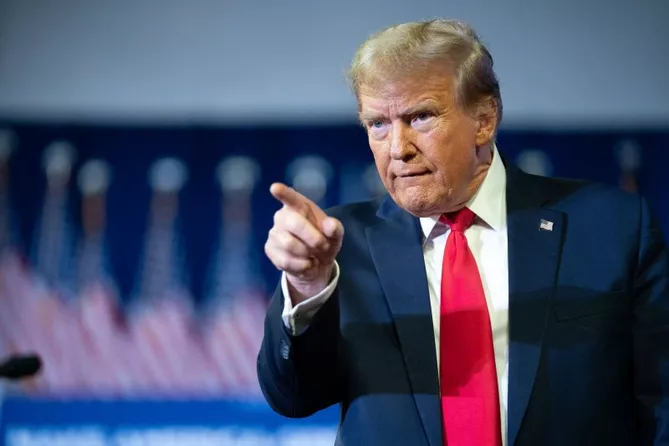
Photo credit: The New York Times
This raises a fundamental question: what does Trump actually want from Iran?
The answer appears straightforward. Trump seeks a complete transformation of Iran’s power structure and foreign policy - one that would grant the United States access to and control over Iran’s oil resources, much as occurred in Venezuela.
This is the direction in which U.S. aircraft carriers in the Persian Gulf, Iran’s internal opposition, figures such as Witkoff and Kushner, and Israel’s Prime Minister Benjamin Netanyahu will push.
The only question is whether they will succeed in time.
Iran is not a country that will surrender.
And that means war in the region - severe, and soon.