Several of Russia’s wealthiest individuals, including some with close ties to President Vladimir Putin, have moved billions of dollars out of the country over the past year amid growing concerns about the economy and the state budget.
According to six wealthy Russians and other people familiar with the views of several of the country’s billionaires, high-profile asset seizures have increased fears among members of the Russian elite that the government could confiscate their wealth or that they could lose control of their fortunes, The Caspian Post reports, citing Bloomberg News.
Some billionaires have recently transferred additional assets abroad, driven by concerns about the banking sector, according to several people familiar with the moves and documents reviewed by Bloomberg News, including corporate filings and property purchase records.
Over the past year, some of Russia’s richest individuals have shifted their investment portfolios, with the trend accelerating in recent months, toward cryptocurrencies, gold, foreign real estate, and private investment funds, particularly in the Gulf region, according to people familiar with the decisions. They were granted anonymity because they were discussing private financial arrangements that are not publicly disclosed.
Kremlin spokesman Dmitry Peskov did not respond to a request for comment.
For decades, Russia’s billionaire elite was welcomed in Western countries, building reputations through major business deals, luxury property purchases, and extravagant lifestyles. However, after Putin ordered the full-scale invasion of Ukraine in February 2022, relations between Russia and the United States and Europe deteriorated to their lowest point since the Cold War. International sanctions forced many Russian tycoons to move assets back to Russia and re-register their companies domestically, while many saw their overseas holdings frozen.
Inside Russia, however, wealthy business figures faced different risks. Since 2024, authorities have increased high-profile asset seizures targeting several tycoons, including individuals who attempted to preserve links with the outside world through dual citizenship or who had previously held government positions. The slowdown of the Russian economy since 2025 has further reduced profits and limited domestic opportunities to preserve and expand wealth.
Although the scale of unofficial capital outflows is difficult to measure, including opaque cryptocurrency transfers that do not appear in official statistics, a conservative estimate suggests that tens of billions of dollars have left Russia outside official channels so far this year, according to two people familiar with the investment decisions of several Russian billionaires. They said the amount represents an increase compared with last year.
Many wealthy Russians have continued searching for investment opportunities abroad despite the challenges created by the war and sanctions. Capital flight has remained a recurring issue throughout the conflict, with Russia’s central bank previously stating that, under one broad measure, around $250 billion left the country during the first year of the war.
President Putin is seeking ways to increase government revenue after finance officials warned that military spending related to the war in Ukraine is becoming unsustainable. He has aimed to preserve defense spending by reducing costs in other areas of government expenditure. While many Russians face economic difficulties, the country’s billionaires have increased their wealth over the past year, creating additional pressure on them to contribute more to state finances.
Some business leaders became more concerned following a private meeting with Putin in March, during which billionaire Suleiman Kerimov suggested that attendees should make significant contributions to the state in recognition of how their businesses were built during the 1990s. Putin welcomed the initiative.
After the meeting, Peskov denied that the president had directly asked tycoons to make contributions, following Kerimov’s offer to provide a large sum to the state.
One businessman said he had begun moving funds to countries including Cyprus and the United Arab Emirates because of concerns about increasing government pressure on wealthy business figures. Two others said they were continuing to invest in the UAE, Turkey, and Saudi Arabia at levels similar to previous years, while another said he had started investing in Africa.
A person familiar with the financial arrangements of wealthy Russian clients said interest in keeping capital outside the country has increased since 2024 because of growing pressure from authorities at home.
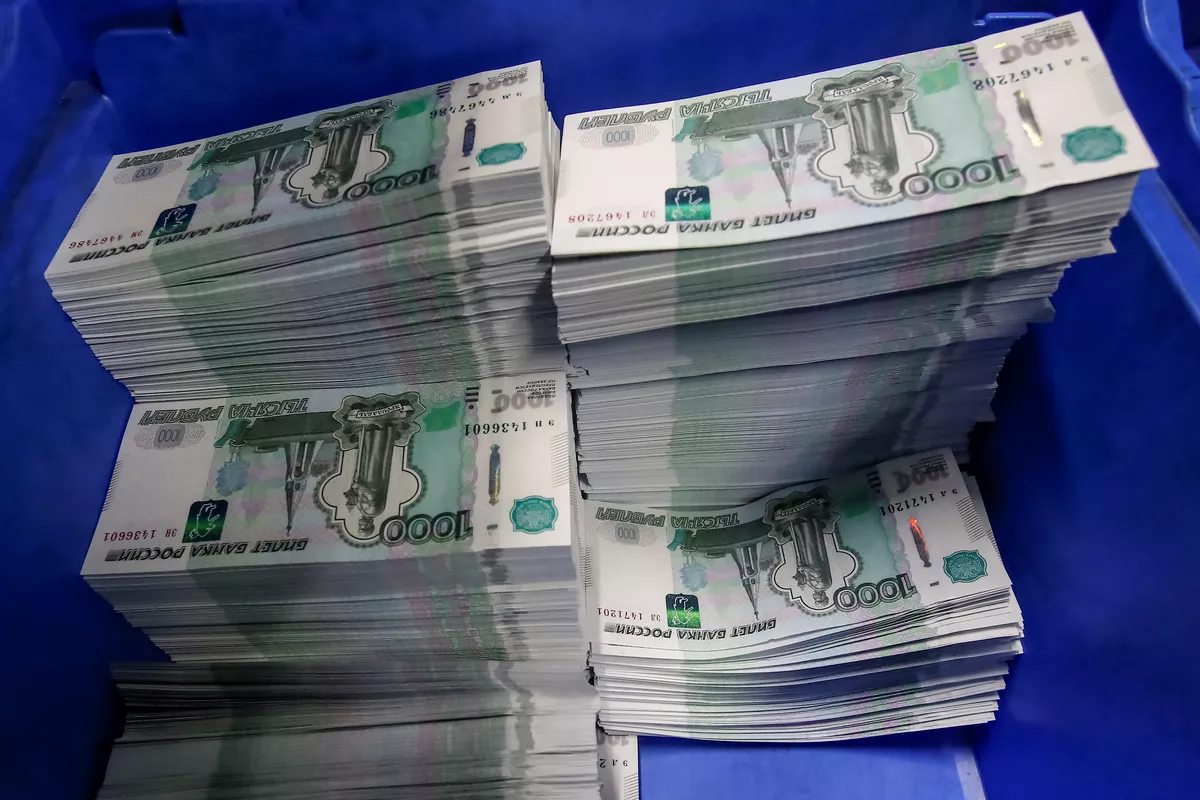
Russian prosecutors last year secured the transfer of assets worth more than 4 trillion rubles ($51.5 billion) back to state ownership, according to Prosecutor General Alexander Gutsan, who made the statement in March. Among the business figures who have lost assets to the state are Vadim Moshkovich, founder of Ros Agro Plc, one of Russia’s largest agricultural companies; Konstantin Strukov, who controlled one of the country’s largest gold mining firms; and Dmitry Kamenshchik, who lost control of Moscow’s Domodedovo Airport.
Dubai’s luxury property market has seen additional high-end purchases by Russian buyers, while Russians are also increasingly investing in real estate in Türkiye and Monaco, according to several people familiar with the transactions.
Methods of transferring wealth abroad have changed as Russians seek new ways to avoid both Western sanctions and increased scrutiny from the Kremlin. Dubai’s position as a cryptocurrency hub has helped members of the Russian elite move funds between jurisdictions. Other informal financial routes have also become more popular in Armenia, Kazakhstan, and Kyrgyzstan, where the A7A5 stablecoin is used.
The token was developed by A7, a cross-border payments company owned by Moldovan fugitive banker Ilan Shor and the heavily sanctioned Russian state-owned lender Promsvyazbank.
According to the company’s website, it can facilitate same-day payments to any country worldwide. In September, Promsvyazbank Deputy Chairman Mikhail Dorofeev said A7 had processed 7.5 trillion rubles (approximately $96 billion) in transactions during the first half of 2025, according to Russia’s RBC news service.
Concerns over the condition of Russia’s banking sector have increased since last summer, when banking officials warned about rising levels of debt on financial institutions’ balance sheets and said the outlook was worse than publicly acknowledged.
In May, the pro-Kremlin Center for Macroeconomic Analysis and Short-Term Forecasting warned that it had identified signs of a potential systemic banking crisis.