Photo credit: Xinhua
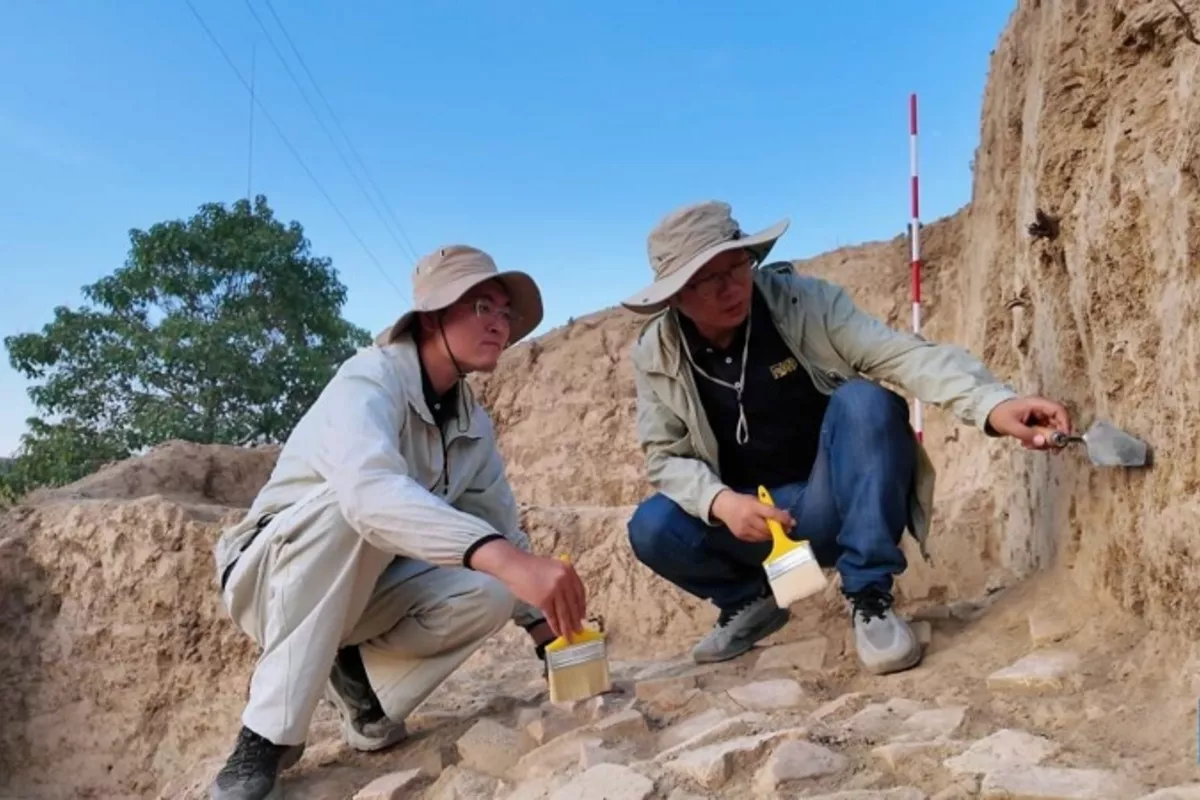
Archaeologists from China and Uzbekistan have uncovered early city walls and structures at the ancient Silk Road hub of Kuva, shedding fresh light on the history of this key settlement.
The discovery reveals construction and modifications spanning from the 3rd century BC to the 10th century AD, The Caspian Post reports via Chinese media.
Located in Uzbekistan’s Fergana Valley, the Kuva site covers roughly 110,000 square meters and was a vital center on the ancient Silk Road. Historical records link it to the Han Dynasty envoy Zhang Qian and the ancient state of Dayuan, highlighting its connections with China over two millennia ago.
A joint team from China’s Luoyang Institute of Archaeology and Uzbekistan’s Fergana State University has been excavating the site since 2023. According to Liu Bin, head of the Chinese team, they have uncovered remains of a palace, city gates, walls, streets, house foundations, and workshops. In 2025, their work focused on the northern gate and nearby moat area.
The findings show that the city walls were repeatedly modified using adobe and mud bricks, demonstrating continuous use and adaptation over more than a millennium. Liu emphasized that the evolving construction techniques reveal the city’s vitality and provide insights into architectural practices, material choices, and cultural influences across different eras.
Excavations have also explored the eastern part of the palace complex, uncovering foundation trenches and a surrounding moat. The team plans systematic digs in 2026 to map the full layout and functional zones of the ancient city, offering a deeper understanding of this historic Silk Road hub.
Archaeologists’ recent discoveries in the region, including coins from the reign of Mengu-Timur in Atyrau, further highlight Central Asia’s rich archaeological heritage.
Share on social media