Central Asia Drives China’s $213B Infrastructure Boom
South China Morning Post highlights that China’s global infrastructure push reached new heights in 2025, with a record $213 billion in new deals, driven in large part by metals and energy projects across Central Asia. The surge highlights Beijing’s growing strategic footprint in the region, where investments in mining, logistics, and industrial infrastructure are reshaping local economies while securing vital supply chains.
China’s ambitious Belt and Road Initiative gained further traction in 2025, with a record $213.5 billion of new deals signed as projects in metals, mining, fossil fuels and new technologies surged.
The value of new deals confirmed under China’s global infrastructure strategy rose 75 per cent last year compared with 2024, with a notable pivot towards investment in Africa and Central Asia.
China has now logged a cumulative $1.4 trillion of investment and construction contracts with 150 countries under the Belt and Road Initiative since its launch in 2013.
The country put a particular focus on energy last year, with deals in that sector accounting for 43 per cent of China’s total engagement, up by more than 10 percentage points from a year earlier.
It was both the “greenest and dirtiest” year on record for belt and road energy deals, the institute said. While investment in clean energy such as solar and wind rose to record levels, deals in fossil fuels also jumped nearly threefold year on year to reach $71.5 billion.
China’s focus shifted from energy generation towards fossil-fuel exploitation, processing facilities and pipeline projects, the report noted. Fossil fuel-related projects accounted for more than 74 per cent of China’s overseas energy engagement last year, the highest proportion since 2014.
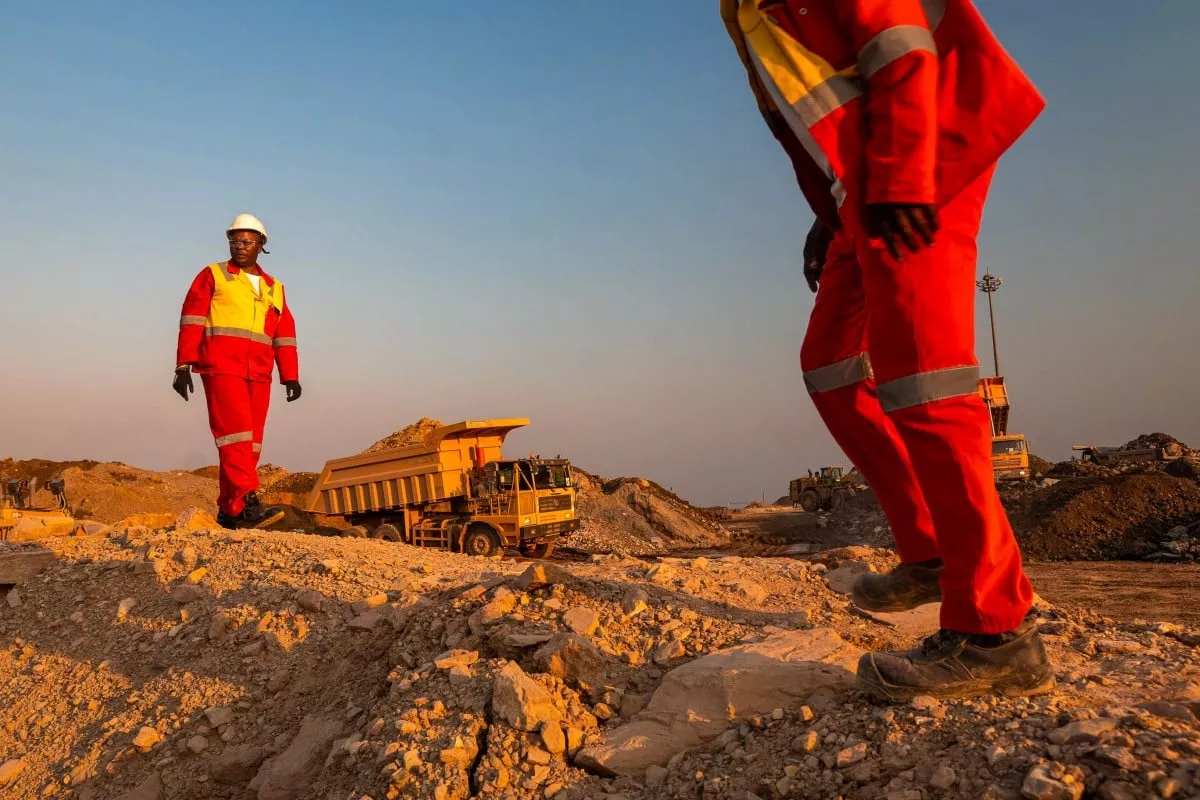
Mining and minerals were other major growth areas. China’s engagement in metals and mining rose to a record $32.6 billion in 2025, with about 60 per cent of those deals concentrated in Kazakhstan - a Central Asian nation holding reserves of 15 rare earth elements.
China’s recent focus on copper, with investment related to the metal surging in the second half of 2025, was likely driven by rising demand for data centres from artificial intelligence companies.
Belt and road projects in technology and manufacturing also hit a record high last year, with total deals rising 27 per cent year on year to $28.7 billion. Lithium batteries and semiconductors were among the main growth drivers.
In terms of geography, China pivoted noticeably towards Africa and Central Asia: investment in the regions nearly tripled and quadrupled, respectively, last year. A reason for Africa’s strong engagement may be US tariffs, which are lower in some parts of Africa compared to Vietnam.
Chinese metals producer Boway Alloy, for example, scrapped plans to build a plant in Vietnam and instead invested in Morocco, which benefits from a 10 per cent US tariff rate.
The Belt and Road Initiative has traditionally been associated with large-scale transport projects such as railways, airports and highways, often built by Chinese firms for local use.
However, transport-related deals declined to $13.3 billion last year. Transport accounted for just 6.2 per cent of China’s total belt and road engagement, down from 12 per cent in 2024 and well below a peak of 28 per cent in 2018.
China’s belt and road deal-making could rise even further in 2026 despite, or because of, global economic headwinds driven by US-led trade impositions.
Global trade volatilities and uncertainties can spur investments in supply chain resilience and exploration of new markets by Chinese companies.
But it is also possible that China’s belt and road engagement will moderate in 2026 with fewer “megadeals” signed, though plenty of projects will still be confirmed in areas requiring significant investment, such as energy, mining and manufacturing, according to the report.