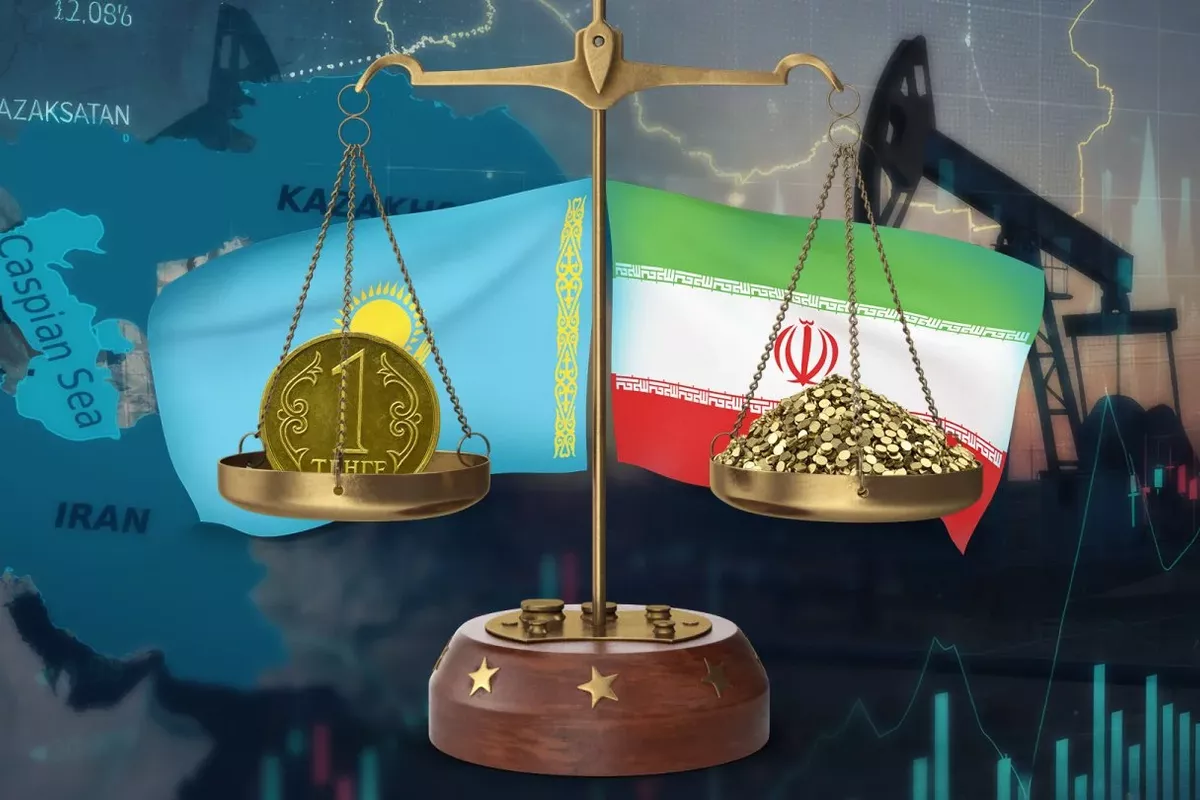
In a recent analytical piece for Orda.kz, journalist Alexander Zhdanov explores whether Kazakhstan might one day experience economic and social instability similar to what Iran faces today.
In recent months, the crisis in Iran has most often been portrayed through the lens of runaway inflation and the sharp collapse of the national currency, the rial. While these trends have persisted for more than a year, by early 2026 they escalated into the largest protests the country has seen in decades. Yet soaring prices and currency depreciation are not root causes - they are symptoms of deeper structural problems. Since 2018, Iran has entered a state in which its national currency formally exists but no longer performs its core economic functions. What lessons can Kazakhstan draw from this experience? How relevant is the trajectory of its Caspian neighbor for our own economy, and what do raw-material dependence and subsidies have to do with it? The Caspian Post reports via Orda.kz.
2018: The Year Iran Switched to Survival Mode
The turning point for Iran’s economy came in 2018, when the United States withdrew from the nuclear deal and reinstated sanctions. Oil export revenues fell sharply, access to global financial markets was restricted, and the national currency came under intense pressure. An economy that had long masked structural weaknesses with hydrocarbon income and broad subsidies suddenly lost its external lifeline. From that moment on, the priority shifted from development to basic stabilization.
Inflation has not dropped below 40% annually since then. Under such conditions, money ceases to function as a reliable store of value, and incomes steadily lose purchasing power.
The rial’s depreciation was equally dramatic. In 2018, one tenge was worth around 100 rials; by February 2026, it exceeded 2,400 rials. A widening gap between the official exchange rate and the market rate further eroded trust - not only among citizens but also among potential investors, whose presence was already limited.
Subsidies Instead of Structural Reform
Facing currency collapse and soaring prices, Iranian authorities expanded a vast social support system. Subsidies for fuel, electricity, and basic goods, along with direct cash transfers and food coupons, became key tools for cushioning the blow of inflation. However, this model functioned more as a temporary support mechanism than as a sustainable solution.
Rather than stabilizing inflation or restoring currency confidence, the government focused on compensating citizens so they could get through the next month. In 2025, authorities expanded an electronic food coupon system that provided up to five million rials per person - just over five dollars - to low- and middle-income citizens. The funds could be spent only on a limited list of essential goods at fixed state prices, including meat, poultry, eggs, milk, oil, rice, and sugar.
At the start of 2026, amid intensifying protests, authorities promised additional monthly payments equivalent to seven dollars. The goal was to reduce social tension. Yet demonstrations continued and were eventually suppressed at the cost of significant casualties. According to numerous reports, security forces used lethal force against those they believed were involved in unrest.
This experience holds particular relevance for Kazakhstan, where subsidy mechanisms are also widely used - from support for producers and agriculture to price stabilization efforts in retail markets. Subsidies themselves are not inherently harmful; in the short term, they can mitigate social shocks. The problem arises when they become a long-term substitute for structural reform.
Currency as a Symptom, Not the Cause
Despite state support measures, real incomes in Iran continued to decline, poverty increased, and reliance on government transfers deepened. Attempts to analyze the situation solely through economic indicators prove insufficient. Ultimately, the crisis appears rooted not only in economics but also in politics.
Political analyst Almas Aubekirov argues that the situation in Iran reflects systemic exhaustion of its political model rather than purely economic mismanagement.
“The fall of the rial, inflation, and rising social discontent are not independent causes but manifestations of a deeper crisis of trust between society and the state, exacerbated by prolonged sanctions and confrontational foreign policy,” he notes.
Aubekirov said that sanctions are not merely an external shock but a consequence of Iran’s chosen development model, in which foreign policy mobilization and the image of a permanent external enemy serve as pillars of legitimacy. As this model began to lose effectiveness, economic instability transformed from a temporary crisis into a systemic threat.
Unlike more flexible authoritarian systems, Iran’s theocratic structure leaves little room for institutional adaptation. Attempts at reform inevitably clash with the ideological foundations of power.
A Warning, Not a Universal Template
Iran’s case should not be viewed as a universal scenario for resource-rich developing countries. The republic’s highly ideological state structure plays a defining role in its trajectory, distinguishing it from most emerging economies.
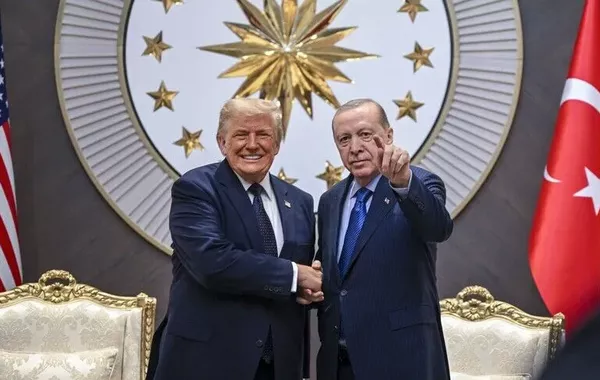
For Kazakhstan, the implications are both economic and geopolitical. Global interconnectedness means that active trade and joint projects with heavily sanctioned states carry tangible risks. Statements by U.S. President Donald Trump about potential 25% tariffs on Iran’s partners underscore the sensitivity of such ties.
According to Kazakhstan’s official statistics for January-November 2025, trade turnover with the United States reached $2.82 billion, compared to approximately $396 million with Iran - a nearly sevenfold difference.
This does not negate Iran’s importance as a partner, particularly in discussions surrounding a maritime logistics hub on the Caspian Sea or potential energy cooperation. However, it does explain why Astana approaches cooperation with caution, balancing strategic interest with pragmatic risk assessment.
Iran’s experience serves less as a prediction and more as a warning: when structural weaknesses, political rigidity, and external isolation converge, economic indicators such as currency depreciation become not just financial data points but signals of systemic strain.