Russia Sounds Alarm on the Expansion of Daesh in Afghanistan
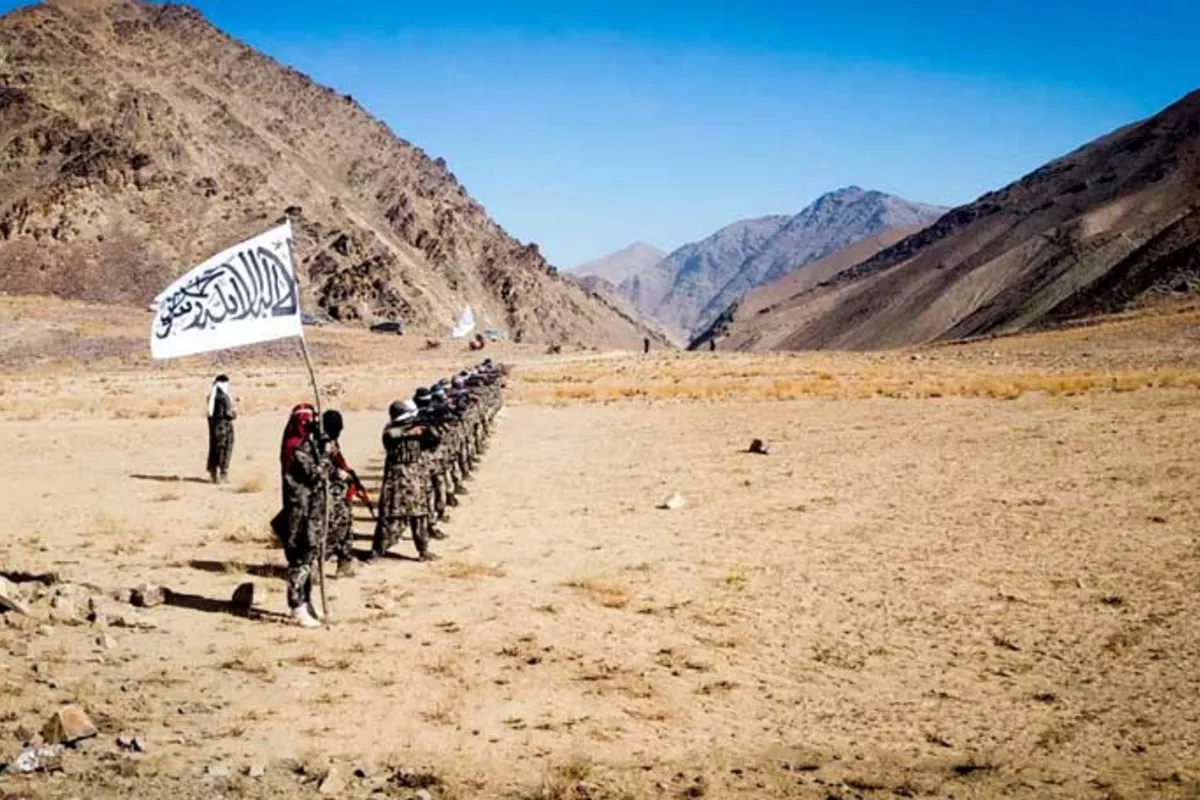
The more recent threat that Russia gave to a committee meeting held on the security council by the UN has brought back the debate of the shifting security status in Afghanistan, a region that hoped the withdrawal of foreign military occupation by foreign powers would have been soon replaced by panic. Vassily Nebenzia, the Permanent Representative of the Russian Federation to the United Nations, conducted a keen analysis of the situation in Afghanistan by indicating that Daesh is not simply surviving in Afghanistan but also actively building its systems of actions. His words refer to a larger concern that has been voiced by numerous states in the region: that the blank space created by political uncertainty and absence of institutions is giving the extremist groups a rare opportunity to take root.
The speech of Ambassador Nebenzia was very explicit and imperious. This is based on Russia; the constitutive strategy of Daesh is both opportunistic and exploits the dynamics of the situation in Afghanistan, which is fragmented in terms of power, and lastly, attempts to assert its own position as a center of power. This is not the first time that Moscow has given such warnings, but its recent intervention is a pointer to the fact that the problem is maturing at a pace that is exceeding the expectations. The ability of Daesh to exploit the situations of instability is not a secret, but the current trend in the region of Afghanistan shows that it is a planned strategy of extending influence on other countries and establishing itself as a transnational movement that is able to outwit the institutions of the weak states, The Caspian Post reports via foreign media.
Among the most dangerous elements that Nebenzia raises, there is the fact that the group continues to receive foreign funding and battle-trained individuals. The presence of the battle-tough militants in Syria and Iraq migrating to Afghanistan is a hazardous overlap of the regional conflict. These are not mere battlefield-trained fighters but ideologically networked and operationally trained fighters who have been trained in some of the most inhuman theaters of insurgency in the Middle East. Their arrival enhances the growth of Daesh in the territory of Afghanistan, bringing the degree of threat to the entire region up. Russia remains adamant about the fact that this trend is not a solitary incidence but a trend that is swiftly increasing, and therefore that influx of this stature would be a direct threat to Central Asia as well as the rest of the world.
What is even worse is that the alienated Western weapons could have found their way down the streets without being under the rightful control. The chaotic departure out of Afghanistan left behind the stores of the sensitive military equipment, and Russia has been raising concern after concern that the contents may easily fall into the hands of the extremist groups. When Daesh has access to hi-tech weaponry, the operational capabilities of the group are going to increase significantly, with the stakes being raised by the neighbors of Afghanistan that have already enjoyed the benefits of porous borders and the fast movement of militant groups. The risk of the occurrence of such types of weapons as the tool of misuse is another unstable element that affects the existing security calculus within the region and is the reason why Moscow tries to influence the situation and start bilateral prevention.
Pakistan has been the vocal actor in the region on the ramifications of a resurgent militancy of the uncontrolled territory in Afghanistan. On the other side of the border, Islamabad has continuously threatened that the lax atmosphere is a fertile breeding ground for extremist networks that directly operate in actions against Pakistan. The security of the country has raised the alarm about the increased presence of Daesh in the country as a larger trend, which has been characterized by splinter groups and other related groups who are looking to take advantage of the instability of Afghanistan to execute their activities in the region. This has not meant that Pakistan and Russia are politically coordinated, but they have a similar assessment, which is that they are all exposed to the outcome of the deteriorating security situation.
The problem itself is now boomeranging in Central Asia as well. Spillover of the terrorist activity is not a hypothetical scenario to Russia, and it is emerging as a reality. Moscow believes that the region is in a very delicate situation, as the areas are close to each other, and the already dormant extremist groups can be rejuvenated by the Daesh links. This analysis supplements the Pakistan argument that the stakeholders within the region cannot laze around and get prepared to tolerate the emergence of extremist ecosystems. The threat is not only confined to Afghanistan, but it is dynamic and regional and even interwoven.
To this Nebenzia has exacted far-reaching and comprehensive action such as is beyond the rhetoric vows. He emphasized the necessity to eliminate terrorist networks before they gain the status of centers of power, and it is significant that the territory of Afghanistan is not turned into a platform to strike at any nation. This comes as an expected long-held expectation by the government of Pakistan and other governments in the region to have verifiable actions, which are undertakings that can be done on the ground. They are convinced that guarantees must be demonstrated by results that can be verified, particularly in situations where militants enjoy a relative degree of freedom.
The same opinion was echoed by Sandra Jensen, who is a Denmark Deputy Permanent Representative and who emphasized the fact that the international community cannot rest with guarantees on an environment where humanitarian and security are so much at stake. The same position has been taken by Pakistan several times, where counterterrorism commitments are urged to be translated into implementing systems and travel bans on extremists. Without actual responsibility, the states of the region are concerned that the potential of Daesh to transboundary cross borders, exploit local grievances, and exploit the gaps in governance will only continue to expand.