The Times of Central Asia (TCA) has published an analytical article, entitled "The New Silk Road to the Sea - Connecting Central Asia to Karachi and Gwadar."
The Caspian Post republishes the article.
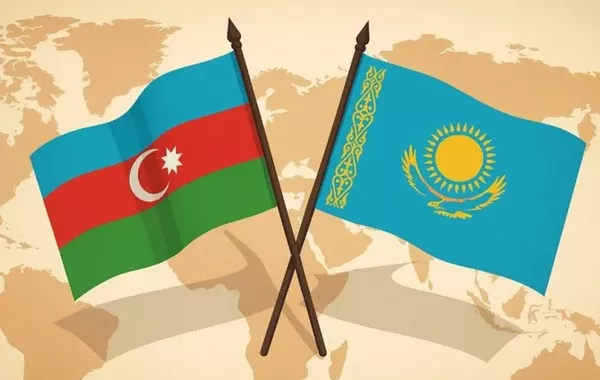
A historic shift is quietly but decisively reshaping the economic geography of Eurasia. On 5 February 2026, Pakistan and Kazakhstan agreed to elevate their bilateral relationship to a Strategic Partnership during the state visit of President Kassym-Jomart Tokayev to Pakistan- the first such visit by a Kazakh head of state in 23 years. This moment marked far more than a diplomatic renewal; it signaled a potential turning point in regional connectivity, one that could unlock long-suppressed economic potential across Central Asia and South Asia by overcoming longstanding geographical and logistical barriers.
For decades, Central Asia’s landlocked status has imposed structural constraints on its economic growth. High transit costs, dependence on distant or politically sensitive routes, and extended distances to global markets have eroded competitiveness and limited diversification. These challenges were not the result of a lack of resources or ambition, but of geography itself. However, geography need no longer be destiny. Through strategic foresight-particularly under President Kassym-Jomart Tokayev-Kazakhstan and the wider Central Asian region have begun to convert constraint into opportunity by redefining connectivity.
President Tokayev has consistently emphasized connectivity as the cornerstone of Kazakhstan’s long-term economic and strategic vision. During his engagements with Pakistan’s leadership, he demonstrated a clear understanding that sustainable prosperity for Central Asia depends on reliable, cost-effective access to warm-water ports. This conviction underpinned the decision to elevate Pakistan-Kazakhstan relations to a Strategic Partnership, recognizing Pakistan not merely as a bilateral partner, but as a gateway to global markets via the Arabian Sea.
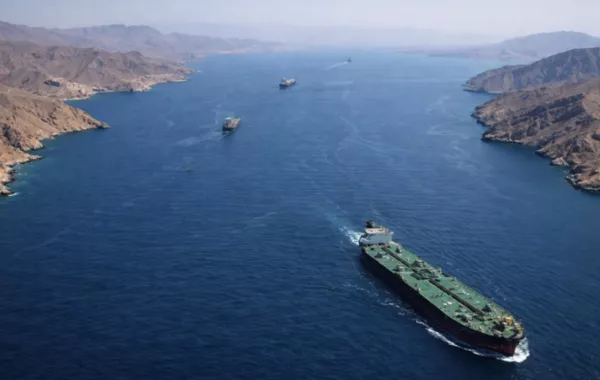
From a financial and logistical perspective, the implications are profound. Karachi and Gwadar are among the closest seaports to much of Central Asia, significantly closer than many traditional routes to global markets. Every additional kilometer of overland transit results in higher freight costs, longer delivery times, and reduced margins. By connecting Central Asia to Pakistani ports, Kazakhstan and its neighbors stand to substantially lower transportation costs, enhance export competitiveness, and attract greater foreign investment into manufacturing, mining, agriculture, and value-added industries.
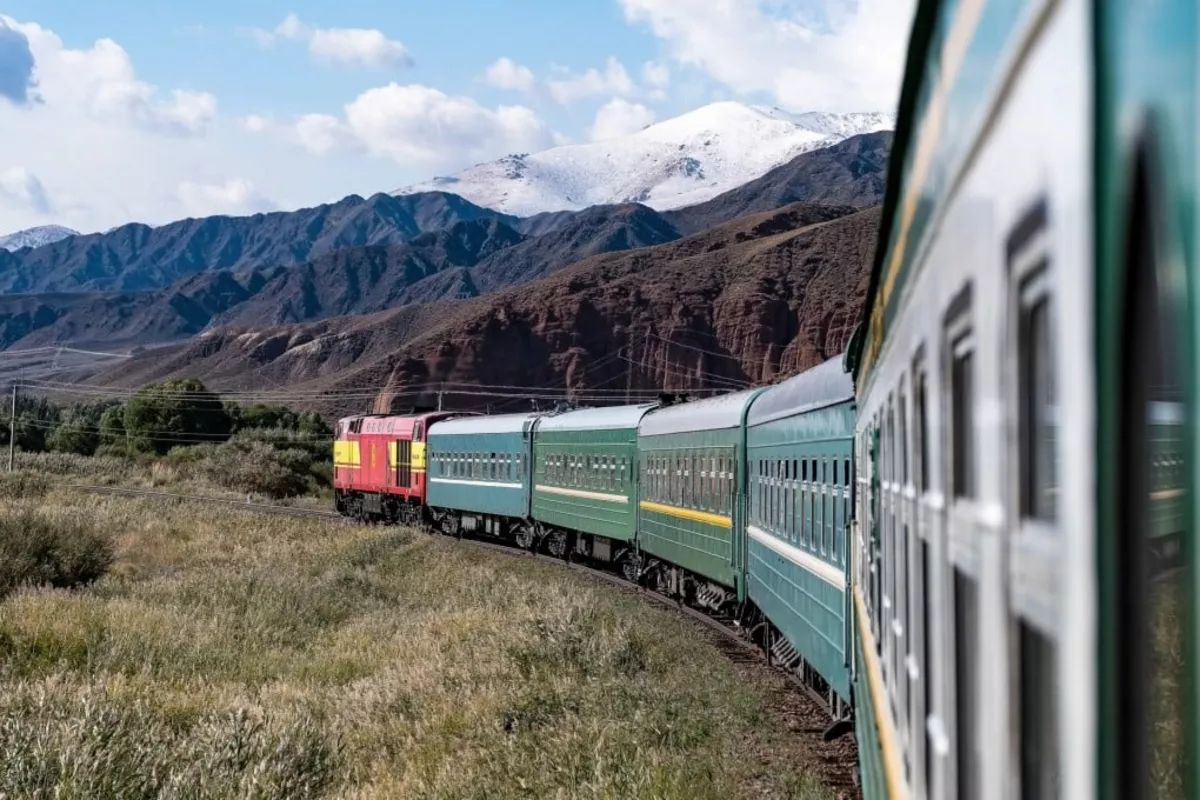
The most immediate and strategically sound connectivity model emerging from this partnership bypasses the troubled terrain of Afghanistan, long viewed as a chokepoint for regional trade. Under this framework, goods could move seamlessly from Karachi through Pakistan’s railway network to Haripur, then onward via the Karakoram Highway into China. From there, the cargo would seamlessly integrate with the China-Kazakhstan railway system through the established Dostyk-Alashankou corridor. This route is not theoretical; it builds on existing infrastructure, proven logistics, and political stability across all participating states.
Financially, this corridor offers predictability-an essential ingredient for trade and investment. Reduced insurance premiums, fewer delays, and stable regulatory environments translate into lower transaction costs. For Central Asian exporters, particularly Kazakhstan, this means improved access to South Asian, Middle Eastern, and African markets. For Pakistan, it positions Karachi and Gwadar as indispensable nodes in Eurasian supply chains, generating port revenues, transit earnings, employment, and industrial growth.
At the same time, Kazakhstan’s leadership has demonstrated pragmatic flexibility by supporting additional connectivity options. Regional discussions have included the possibility of linking the Quetta-Chaman railway with Uzbekistan, with Russia expressing intent to technically support the design of the Trans-Afghan railway. This proposal aligns with the broader Uzbekistan-Afghanistan-Pakistan railway project, a 573-kilometer initiative connecting Tashkent to Kabul and onward to Peshawar via Termez and Mazar-i-Sharif.
This project, though traversing Afghan territory, is designed to dramatically improve regional logistics efficiency. Estimates suggest it could reduce cargo transportation time and costs by 30 to 40%-an extraordinary gain in trade economics. Russia’s technical support adds engineering credibility, while Central Asian participation underscores a shared belief that long-term regional stability is best achieved through economic integration rather than isolation.
Importantly, the China-linked corridor and the Trans-Afghan railway should be viewed not as rivals, but as complementary pathways within a diversified connectivity architecture. President Tokayev’s approach reflects an understanding of risk management: multiple routes create resilience. In a world of geopolitical uncertainty, redundancy in supply chains is no longer a luxury-it is a necessity.
This emerging network of railways, highways, and ports is not merely about moving goods; it is about restructuring economic relationships. For Central Asia, improved access to Pakistani ports enables industrial diversification beyond raw material exports. For Pakistan, it opens vast Central Asian markets to its manufacturers, agribusinesses, and service providers. For South Asia and Central Asia together, it creates a shared economic space where growth in one region reinforces prosperity in the other.
What makes this transformation particularly significant is the leadership driving it. President Tokayev has placed connectivity at the center of Kazakhstan’s national strategy, recognizing that infrastructure is the foundation upon which economic sovereignty is built. His engagement with Pakistan reflects a forward-looking diplomacy that prioritizes tangible outcomes over rhetoric. It is this clarity of vision that allows Central Asia to overcome the structural disadvantages of being landlocked.
Pakistan, for its part, has begun to reimagine its own geography-not as a peripheral state, but as a central connector between regions. By aligning its infrastructure planning with Central Asian needs, Pakistan positions itself as a bridge between Eurasia and the Indian Ocean. The Karachi-Haripur-KKH-China-Kazakhstan corridor is a manifestation of this shift, grounded in economics, logistics, and mutual trust.
The elevation of Pakistan-Kazakhstan relations to a Strategic Partnership thus represents the convergence of geography, leadership, and economic logic. It reflects an understanding that prosperity in the 21st century will belong to regions that connect rather than compete, integrate rather than isolate. Central Asia’s historical barriers-distance, landlocked geography, and fragmented routes-are being systematically dismantled through vision and cooperation.
As these corridors take shape, the benefits will extend beyond trade statistics. They will foster people-to-people contact, technology transfer, energy cooperation, and regional stability. They will give Central Asia greater strategic autonomy and South Asia deeper economic integration with Eurasia. Above all, they will demonstrate that with leadership-such as that shown by President Tokayev-geography can be transformed from a constraint into a catalyst for shared prosperity.
This is not merely the opening of a new trade route; it is the beginning of a new Eurasian chapter, one in which Central Asia finally overcomes its logistical barriers and reclaims its historic role as a crossroads of global commerce, connected directly to the world through Pakistan’s ports and sustained by strategic partnership, economic realism, and long-term vision.