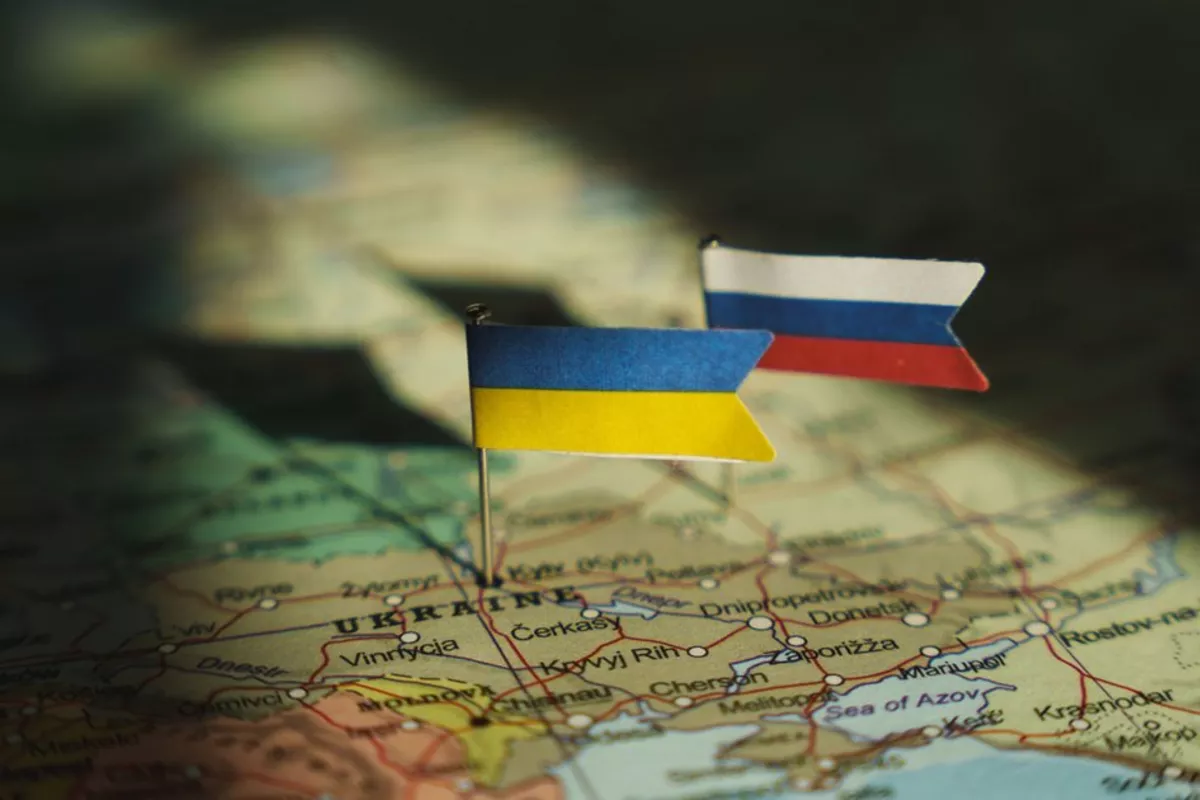
More than two years into Russia’s full-scale invasion of Ukraine, diplomatic efforts to end the war continue to move in fits and starts. A fresh round of negotiations is now on the horizon after Ukrainian President Volodymyr Zelensky confirmed that he has accepted a U.S. proposal to hold new talks aimed at finding a pathway toward ending the conflict.
According to reports, the upcoming discussions-expected to take place next week-are likely to focus on one of the most sensitive and politically explosive issues in the war: territory. While it remains unclear whether Russia will agree to participate in talks hosted in the United States, the renewed diplomatic push underscores growing international efforts to explore options for de-escalation and, potentially, a negotiated settlement.
This article examines what is currently known about the planned talks, the background of previous negotiation efforts, the proposal reportedly under discussion, and the broader prospects for peace between Ukraine and Russia-including the role of trilateral diplomacy in Abu Dhabi.
A Difficult Agenda: Territory and the Donbas Proposal
At the center of the anticipated negotiations is a U.S.-backed proposal that reportedly envisions the creation of a free economic zone in eastern Donbas. The Donbas region-comprising Donetsk and Luhansk oblasts-has been a focal point of the conflict since 2014 and remains one of the most contested areas in the war.
The idea of a free economic zone is said to involve special governance and economic arrangements that could serve as a buffer mechanism between Ukrainian and Russian-controlled territories. Proponents argue that such a zone could:
-
Reduce immediate military tensions
-
Encourage economic stabilization
-
Create a transitional framework for longer-term political negotiations
However, President Zelensky made clear that the proposal is far from universally welcomed. “Neither side is thrilled with the idea of a free economic zone-neither the Russians nor we,” he said, adding that Ukraine and its partners have agreed to revisit what such a model might look like during the next meeting.
The statement reflects a broader reality: any discussion involving territorial arrangements carries enormous political risks. For Ukraine, sovereignty and territorial integrity remain foundational principles. For Russia, territorial claims-especially after its declared annexations-have become deeply embedded in domestic political narratives.
Previous Negotiation Efforts: From Early Contacts to Stalled Dialogues
Efforts to negotiate an end to the war have unfolded in several phases since Russia’s full-scale invasion began in February 2022 under President Vladimir Putin.
Early 2022: Initial Contacts
In the first weeks of the invasion, Ukrainian and Russian delegations held several rounds of talks in Belarus and later in Türkiye. Mediation efforts by Turkish officials led to meetings in Istanbul, where draft frameworks reportedly addressed issues such as:
-
Ukrainian neutrality
-
Security guarantees
-
Ceasefire mechanisms
Although those early discussions generated tentative outlines, negotiations ultimately collapsed amid escalating fighting and growing mistrust. Accusations of war crimes, battlefield shifts, and shifting military calculations further hardened positions on both sides.
Humanitarian and Grain Deals
Even as broader peace talks stalled, narrower agreements occasionally emerged. One of the most significant was the Black Sea Grain Initiative, brokered with support from Türkiye and the United Nations, which allowed Ukrainian grain exports through the Black Sea despite ongoing hostilities. Though the agreement later broke down, it demonstrated that limited, issue-specific diplomacy remained possible even during intense conflict.
Prisoner Exchanges and Indirect Contacts
Throughout the war, both sides have conducted prisoner swaps and indirect communications through intermediaries. These exchanges suggest that while comprehensive peace talks have been elusive, channels of communication have never fully closed.
The Role of the United States
The renewed diplomatic effort follows increasing U.S. engagement in shaping potential frameworks for negotiation. Washington has provided extensive military and financial assistance to Ukraine, while also signaling openness to diplomatic pathways-provided that any settlement respects Ukraine’s sovereignty.
The proposed meeting next week is reportedly part of a broader U.S. effort to test whether conditions might exist for renewed dialogue. However, a key question remains: will Russia agree to participate in negotiations hosted in the United States?
Moscow has previously expressed skepticism toward U.S.-led formats, arguing that Washington is not a neutral party. The venue and format of talks could therefore become as contentious as the agenda itself.
Trilateral Diplomacy: Abu Dhabi’s Emerging Role
Beyond U.S.-led initiatives, alternative diplomatic channels have gained attention-including trilateral discussions reportedly taking place in Abu Dhabi.
The United Arab Emirates has increasingly positioned itself as a facilitator of dialogue in global conflicts. Abu Dhabi has hosted sensitive discussions on prisoner exchanges and humanitarian coordination involving Ukraine and Russia. While not publicly framed as full peace negotiations, these trilateral contacts have provided:
-
Neutral ground outside Western or Russian territory
-
Quiet diplomatic channels
-
A venue for confidence-building measures
Such formats can serve as precursors to more formal negotiations. They also allow parties to test proposals informally before committing to public positions.
The emergence of Abu Dhabi as a diplomatic venue reflects a broader shift in global mediation, with Gulf states playing more prominent roles in conflict resolution efforts beyond their immediate region.
Is Peace Possible? Key Obstacles and Opportunities
The possibility of peace between Ukraine and Russia depends on several interlocking factors.
1. Territorial Questions
Territory remains the single most difficult issue. Ukraine has consistently stated that it will not recognize Russia’s annexation of its regions. Russia, meanwhile, has framed these territories as permanently integrated. Any compromise would require complex arrangements, possibly including:
-
Demilitarized zones
-
International monitoring missions
-
Long-term transitional governance models
-
Referenda under international supervision
Each option carries legal, political, and security complications.
2. Security Guarantees
For Kyiv, security guarantees are non-negotiable. Ukrainian officials have repeatedly emphasized that any settlement must include robust, enforceable guarantees to prevent renewed aggression.
Past discussions have considered models involving:
However, such arrangements are politically sensitive and could be perceived by Moscow as strategic encroachment.
3. War Fatigue and Economic Pressures
As the war continues, both Ukraine and Russia face mounting economic and social pressures. International sanctions on Russia remain extensive, while Ukraine’s economy relies heavily on external support. War fatigue among global stakeholders may increase diplomatic momentum-but it could also reduce political appetite for high-risk compromises.
4. Domestic Political Constraints
Leadership on both sides must navigate domestic expectations. In Ukraine, public opinion strongly supports territorial integrity and accountability. In Russia, official narratives emphasize strategic necessity and national interest.
Negotiators will have to balance diplomatic flexibility with internal political realities.
The Free Economic Zone: A Transitional Idea?
The reported proposal for a free economic zone in Donbas appears to reflect an attempt to move beyond binary territorial claims. While details remain unclear, such a framework could theoretically include:
-
Special tax and trade arrangements
-
Joint administrative mechanisms
-
International oversight
-
Phased reintegration plans
However, skepticism is widespread. Zelensky’s comment that neither side is enthusiastic suggests the idea may be exploratory rather than imminent.
Free economic zones have historically been used to stabilize contested areas, but they rarely resolve sovereignty disputes on their own. Their success depends heavily on trust, enforcement, and long-term political will.
What Happens Next?
Several immediate questions will shape the trajectory of the upcoming talks:
-
Will Russia agree to participate in negotiations in the United States?
-
Will trilateral channels such as those in Abu Dhabi continue in parallel?
-
Will the focus remain narrowly on territorial arrangements, or expand to broader ceasefire frameworks?
If the next round of talks proceeds, observers expect them to test whether incremental steps-such as localized ceasefires, humanitarian corridors, or economic arrangements-can build toward larger agreements.
Even limited progress could signal that diplomacy remains viable. Conversely, failure to agree on procedural issues could deepen mistrust and prolong the stalemate.
A Long Road Ahead
The announcement of another round of negotiations does not guarantee a breakthrough. Previous attempts at dialogue have faltered amid shifting battlefield dynamics and entrenched positions. Yet the fact that talks are being planned at all suggests that diplomatic channels remain open.
Peace between Ukraine and Russia would require addressing core issues of sovereignty, security, and accountability-while also managing geopolitical tensions involving global powers.
The reported trilateral discussions in Abu Dhabi and the upcoming U.S.-proposed meeting illustrate a multi-track approach to diplomacy. Whether these efforts converge into a formal peace process or remain exploratory depends on political will, strategic calculations, and developments on the ground.
For now, the world watches as negotiators prepare for another attempt to bridge one of the most consequential divides in contemporary international politics.