Armenian Lobby’s Washington Strategy Runs Into Headwinds
On June 24, an international conference titled “The Right of Return and Self-Determination: Double Standards and Selective Approaches,” organized by the Baku Initiative Group, was held in the building of the U.S. Congress. For the first time, the issue of the return of Azerbaijanis was raised within the walls of Congress, and this event can be regarded as an important contribution to the international recognition of the ethnic cleansing of Azerbaijanis by Armenia.
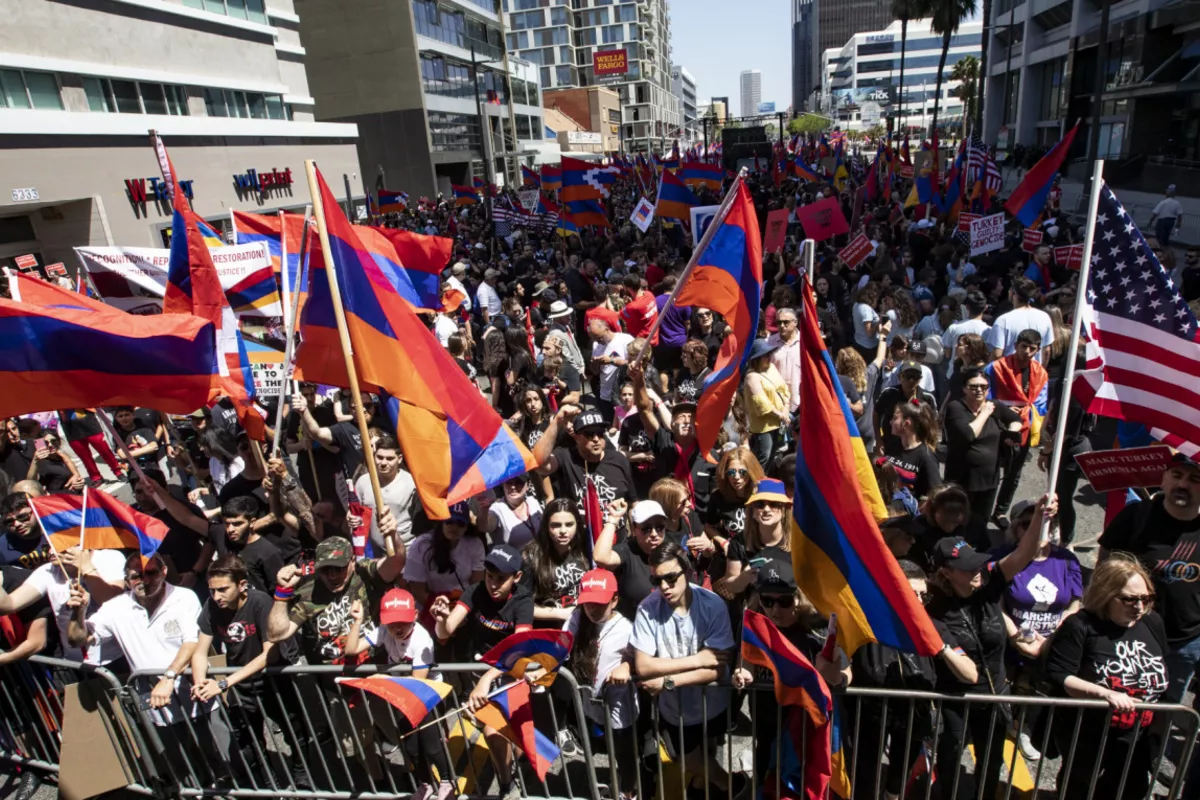
Even at the announcement stage, this conference made the Armenian lobby and diaspora nervous. In an attempt to somehow offset the impact of the BIG event, ANCA hurriedly organized, one day before the conference and in the same Congress building, so-called hearings titled “1000 Days: Release Armenian Hostages Now.” The hearings were attended by diaspora-backed members of Congress from both parties, as well as other questionable figures. Among the participants were many familiar faces - regulars at Armenian gatherings. Brad Sherman, Judy Chu, Laura Friedman, Jim Costa, and Armenian National Committee of America chairman Aram Hamparian all took the microphone.
If one compares the scale of the event that ANCA had advertised with what actually took place, the difference is striking. The diaspora had claimed that nearly the entire Congress, along with analysts and experts of every kind, would gather for the hearings. But something, as they say, went wrong.
Judging by the photos published on X, the hearings looked more like a flash mob. This impression was reinforced by a crowd of young diaspora volunteers wearing ridiculous T-shirts with the faces of Armenian criminals printed across their stomachs. The photos of these criminals could have been hung on the wall or placed on posters, but the organizers apparently decided that if the heads of Arayik, Ruben, Bako and others appeared on T-shirts, it would attract more attention to their fate.
After the event, lobbyists, fulfilling their obligations to the diaspora, posted about the issue on social media. The well-known Adam Schiff tried every possible rhetorical trick, painting a picture of “Azerbaijan’s crimes.” What is noteworthy, however, is that his provocative posts attracted little interest from his own followers. With 3.3 million followers on X, Schiff’s rantings were viewed by only 17,000 people. ANCA’s own post, meanwhile, received only a few hundred views. This does not point merely to the weakness of the propaganda machine, but to the low level of public interest in the topic itself. Talk about “prisoners of war,” “victims of repression,” “prisoners of conscience” and similar nonsense no longer captures public attention. The Armenian issue is fading from the space of American public interest. It had previously been kept there artificially, and now no method seems capable of restoring its former relevance.
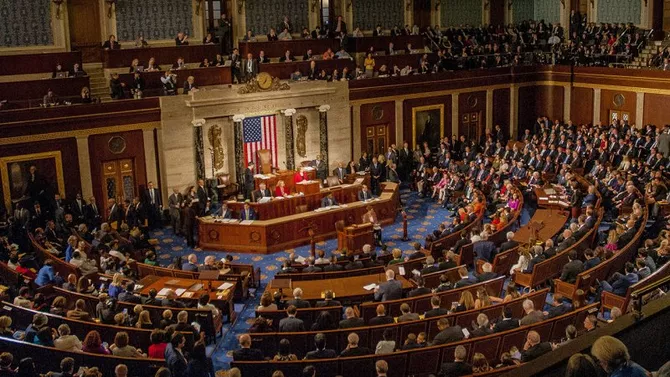
Photo: Getty Images
ANCA, led by Hamparian, had hoped to create a major splash on the eve of the BIG conference. But the costs clearly did not pay off.
Nevertheless, this latest provocation by the diaspora should not be ignored. The narratives voiced at the hearings, along with the slander and open insults directed at Azerbaijan, cannot remain unanswered.
Judy Chu, after figures such as Robert Menendez - now serving a sentence - left the stage, has become one of the lobbyists’ key voices alongside Sherman. Chu represents the Democrats.
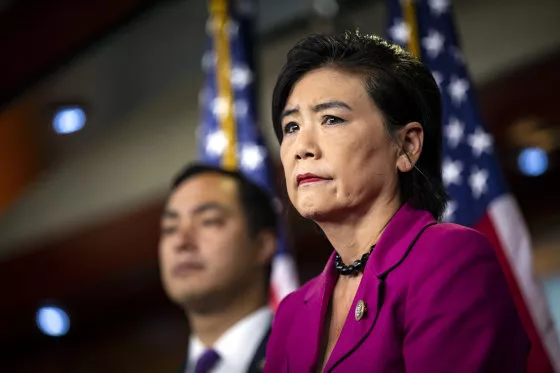
Photo: Getty Images
In her speech, she did everything she could to smear Azerbaijan, accusing our country of “ethnic cleansing,” “torture” and other horrors. She also nostalgically recalled her illegal trip to occupied Karabakh, after which she was placed on Azerbaijan’s blacklist. Today, she proudly claims that she was blacklisted for “defending human rights.” But this is, of course, nonsense. This lady was declared persona non grata for illegally crossing Azerbaijan’s border and unlawfully entering the country’s internationally recognized territories without permission from Baku. And Baku had warned the lobbyists against making that trip.
But Chu and Pallone proudly and “bravely” traveled to the occupied territories in September 2019 - just one year before Armenia’s defeat and the liberation of Azerbaijani lands. They managed, so to speak, to breathe the mountain air and enjoy Karabakh lamb just in time.
Pallone does not hide the fact that not only Baku, but also the U.S. State Department, had warned against the trip. But diaspora honorariums outweighed common sense. After that visit, Chu and Pallone undoubtedly became even more valuable in the eyes of Armenian circles. Now, having become inadmissible to Azerbaijan and with Yerevan itself losing interest in lobbyists, these figures are forced to justify the diaspora’s trust “remotely” - by appearing at such hearings and reading texts prepared by Hamparian’s office.
The lobbyists in Congress are now experiencing a period of joyful anticipation. They are waiting for the adoption of Sherman’s amendment on “prisoners of war.” Let us recall that this draft requires the U.S. administration to have no dealings with Azerbaijan until Armenian criminals are released. Moreover, it demands American oversight of Baku’s compliance with these requirements and the continuation of pressure on Azerbaijan through Section 907.
This proposal is to be considered by the Rules Committee. But if we remember that the same committee rejected a similar amendment in September last year, the lobby has little reason for optimism.
At the conclusion of her inspired speech, Judy Chu declared that “the prisoners are not forgotten, their families are not forgotten, and the people of ‘Artsakh’ are not forgotten. We will not stop raising our voices until every prisoner is released and the Armenian people can live in peace, security and dignity.”
No one can forbid Madam Chu from raising her voice in support of Vardanyan and other criminals convicted by a Baku court. But to expect this support to influence the will of the Azerbaijani side is unserious. The criminals will continue to serve their sentences. As for the Armenian people, no one is preventing them from living in security - except the lobby and diaspora, which spare no expense in trying to prevent peace from taking root in the South Caucasus.
By Samir Muradov