Geopolitical Significance of Türkiye-Azerbaijan Energy Alliance
Within the context of Türkiye’s national energy strategy, the relations it has developed with Azerbaijan go beyond a conventional trade agreement to constitute the construction of a geo-economic integration centered on Ankara.
In the current climate, where the global energy architecture is undergoing structural upheavals and supply chains are being reconfigured, Türkiye is rising far beyond the role of a mere ‘transit country’ or ‘bridge’ to become a ‘hub’ that shapes the rules of Eurasian energy geopolitics. The energy partnerships established with Azerbaijan form the most solid foundation and strategic complement to this vision, which Ankara has built with a long-term strategic vision. The infrastructure initiatives, whose foundations were laid with the Baku-Tbilisi-Ceyhan (BTC) pipeline and which have reached an intercontinental dimension through the Southern Gas Corridor, confirm that Türkiye is the sole strategic gateway opening up the Caspian Basin’s resources to global markets. This equation, in which Türkiye plays a central role, not only constitutes one of the greatest supporters of regional stability but also acts as an asymmetric power element that counterbalances external interventions, The Caspian Post reports via Politics Today.
Türkiye’s Geopolitical Leverage in Europe’s Energy Security
The radical disruptions in Europe’s energy supply chains, triggered by the Russia-Ukraine War, have elevated Türkiye’s indispensable role in global energy security to an existential level. In this crisis environment, the security of Europe’s energy supply has become directly dependent on Türkiye’s diplomatic and infrastructural capabilities. The Trans-Anatolian Natural Gas Pipeline (TANAP), which forms the backbone of the Southern Gas Corridor, and its European extension, the Trans-Adriatic Pipeline (TAP), position Türkiye as the system’s primary controller and distributor in the delivery of Caspian gas to the West. The planned phased increase in TANAP’s capacity to over 30 billion cubic metres and the integration of new fields in the Caspian Sea into the system mean that Europe’s energy strategy will run directly through Ankara. Through these projects, Türkiye is not only contributing to the energy security of the European continent but is also gaining a very powerful geopolitical lever.
The Hormuz Crisis and Ankara-Centered Stability for Neighboring Countries
Türkiye’s pipeline diplomacy, which has demonstrated the country’s capabilities and maturity in energy geopolitics, is also the only rational way out for regions such as the Middle East and the Eastern Mediterranean, where border disputes and political deadlocks are rife. In particular, the crises that have erupted recently around the Strait of Hormuz and the Red Sea clearly demonstrate the structural fragility caused by excessive reliance on maritime chokepoints in global energy trade. These routes, through which approximately one-fifth of global oil supplies and a significant portion of liquefied natural gas (LNG) trade pass, are extremely vulnerable to asymmetric attacks by non-state actors and the risks of regional conflict.
This situation, which constantly generates a geopolitical risk premium in global markets, makes secure land-based alternatives for the transport of Middle Eastern hydrocarbons to the West an existential necessity. It is precisely at this point that the seamless pipeline infrastructure established by Türkiye with Azerbaijan offers a tried-and-tested, ready-made integration model for Gulf resources as well. In response to the high-cost and high-risk nature of maritime routes, Türkiye is building a reliable land-based bridgehead connecting the Gulf directly to Europe through projects such as the Development Corridor, which runs via Iraq. Ankara’s vision could enable Middle Eastern resources to be channelled to global markets via Türkiye’s secure transmission network, bypassing fragile chokepoints such as the Strait of Hormuz.
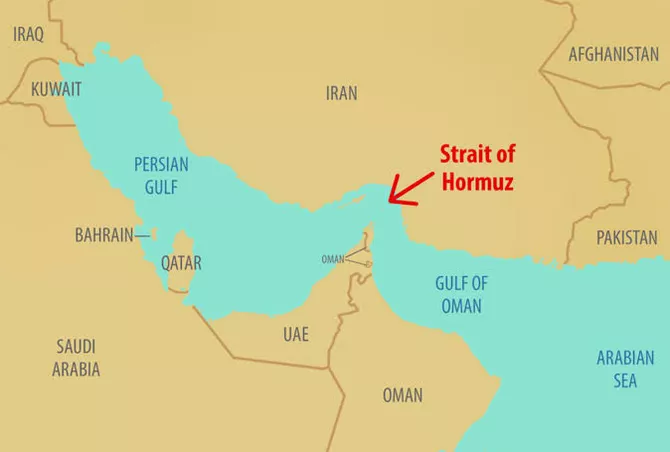
photo: energynow.com
A similar situation applies to the Eastern Mediterranean. It has become clear that all alternative routes-such as EastMed, which have sought to bypass and exclude Türkiye from the commercialization and delivery of the region’s hydrocarbon resources to Western markets-have failed from technical, political and financial perspectives. The flexibility of Türkiye’s onshore infrastructure is positioning Ankara as one of the key decision-makers and a distribution hub for the integration of resources from the Middle East and the Eastern Mediterranean into global markets, following on from Caspian resources.
Türkiye as a ‘Green Energy Hub’ Beyond Fossil Fuels
In the wake of wars and supply crises, Türkiye has emerged as the most reliable hub to which global players are turning in their search for dependable suppliers. However, the future of this geopolitical capacity built by Ankara is not limited to conventional hydrocarbon resources or existing natural gas pipelines. In this new order, where the energy transition is gathering momentum, Türkiye is also systematically implementing its strategy to transform itself into a regional clean energy hub in line with carbon-neutral targets.
The renewable energy potential of the Caspian region - comprising not only the Caspian Sea’s 157 gigawatt technical wind energy potential but also the ‘green energy’ capacity of the Karabakh and Eastern Zangezur regions - can only be integrated into global markets via Türkiye’s national grid and transmission infrastructure. Plans to transport the renewable energy to be generated - in the form of electricity and green hydrogen - to Europe via the Nakhchivan corridor and Türkiye could completely change the rules of the game. Adapting existing natural gas infrastructure-particularly TANAP-to facilitate hydrogen transport in the future will transform Türkiye from a traditional natural gas trading hub into one of the key players shaping the clean energy markets of the future.
The Shift from Physical Transportation to Setting Commercial Rules
All these physical infrastructure and green transition projects lay the groundwork for Türkiye’s strategy to evolve beyond its ultimate vision in energy geopolitics-that of being a ‘bridge country’-and become a price-setting hub. Ankara is crowning the physical network it has established through pipelines and electricity grids with the aim of creating an international trading centre where energy prices are set. In this regard, the natural gas trading centre being established in Thrace and initiatives to deepen national energy markets are transforming Türkiye from merely a transit route for energy flows into a financial magnet where regional market conditions are shaped. The fact that critical suppliers such as Azerbaijan are adding volume and depth to this trading hub not only strengthens Ankara’s hand in global markets but also compels neighbouring countries to integrate into the market architecture established by Türkiye in energy trade.
Within the context of Türkiye’s national energy strategy, the relations it has developed with Azerbaijan go beyond a conventional trade agreement to constitute the construction of a geo-economic integration centred on Ankara. Türkiye, which has served as a shield against Europe’s crises and assumed a rule-setting role in the balance of power in the Eastern Mediterranean under the traditional concept of energy security, is also striving to utilise its vast infrastructure advantage in integrating with the renewable energy revolution. As the energy architecture of the future is redesigned in line with the goals of a ‘carbon-neutral economy’, Türkiye, with its autonomy, strategic vision and strong alliances, will continue to be one of the indispensable centres of gravity in the global energy order for decades to come.