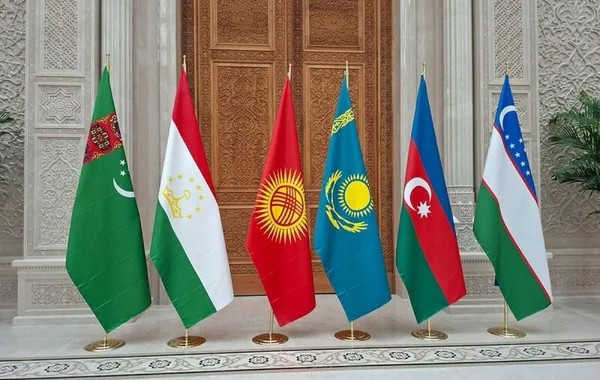
As the Iran-Israel-US war may soon come to a definitive end, the potential repercussions of the conflict have so far largely been examined through the lens of West Asian politics. But beyond that region, in Central Asia, Iran’s northern neighbors have also been watching the confrontation with deep concern. For Kazakhstan, Kyrgyzstan, Tajikistan, Turkmenistan and Uzbekistan, Iran is far from peripheral; it serves as a strategic gateway to global markets.
Through initiatives such as the Belt and Road Initiative, the Ashgabat Agreement and the Southern Corridor, landlocked Central Asian states have invested heavily in securing access to the Indian Ocean through Iranian territory and diversifying trade routes beyond Russian-controlled corridors and Chinese infrastructure. In this context, southern connectivity is not merely an economic project but a structural pillar of Central Asian governments’ multi-vector foreign policies. Any instability in Iran may put those interests directly at risk, with major repercussions.
Diversifying Options
Iran occupies a pivotal place in Central Asian foreign policy strategies, which are designed to balance relations with world powers to safeguard sovereignty, security and economic development. By leveraging Chinese investment, maintaining security ties with Russia and expanding economic engagement with the west, Central Asian governments seek to avoid overdependence on any single actor. Yet diplomacy alone cannot sustain multi-vectorism-it must be underpinned by secure and functional transport corridors. Without a stable and commercially integrated Iran, the southern alternative would remain theoretical rather than operational.
These calculations have been made more urgent by the Russia-Ukraine war. As sanctions and geopolitical tensions have disrupted the Northern Corridor through Russia and Belarus, the route that once carried a significant share of China’s Europe-bound trade has become far less predictable. In response, Beijing has increasingly looked for alternative pathways that can move goods to Europe with fewer political risks and strategic uncertainties. Central Asia and the South Caucasus have emerged as key transit spaces within the so-called Middle Corridor, relying on multimodal transport across the Caspian and Black Seas.
However, the structure of China-EU trade-dominated by high-value, containerized goods-naturally favors uninterrupted overland logistics. At the same time, the Donald Trump administration’s securing of exclusive development rights for the so-called “Trump Route for International Peace and Prosperity” (TRIPP) in the Caucasus provides the US with strategic leverage over freight flows along the Middle Corridor. Against this backdrop, Beijing has strong incentives to reinforce the Southern Corridor via Iran. To hedge against geopolitical vulnerabilities in the Caspian transit chain, China requires reliable, politically insulated routes that bypass potential chokepoints and reduce exposure to external pressure.
In May 2025, the first regular China-Iran freight service via Kazakhstan and Turkmenistan began operations with the ability to make stops in Kyrgyzstan and Tajikistan. Existing routes, including the International North-South Transport Corridor (INSTC) and the Kazakhstan-Turkmenistan-Iran railway, already recorded a 53% rise in freight volumes during the first ten months of 2025, underscoring growing reliance on southern transit options.
The Southern Corridor is poised to become fully rail-based with the completion of the China-Kyrgyzstan-Uzbekistan segment and Iran’s rail link to the Turkish border, eliminating current multimodal bottlenecks such as ferry crossings over Lake Van near Türkiye’s frontier with Iran. Ongoing upgrades at the Sarakhs border terminal and along the Sarakhs-Razi line are expected to significantly expand capacity, reinforcing the China-Central Asia-Iran-Türkiye-EU network.
Uzbekistan has emerged as a principal driver of this southern branch of the East-West corridor. If completed by 2030, the China-Kyrgyzstan-Uzbekistan railway could shorten transit distances by roughly 900 km (559 miles) and cut delivery times by up to a week, positioning the Southern Corridor as the most direct overland link between East Asia and Europe.
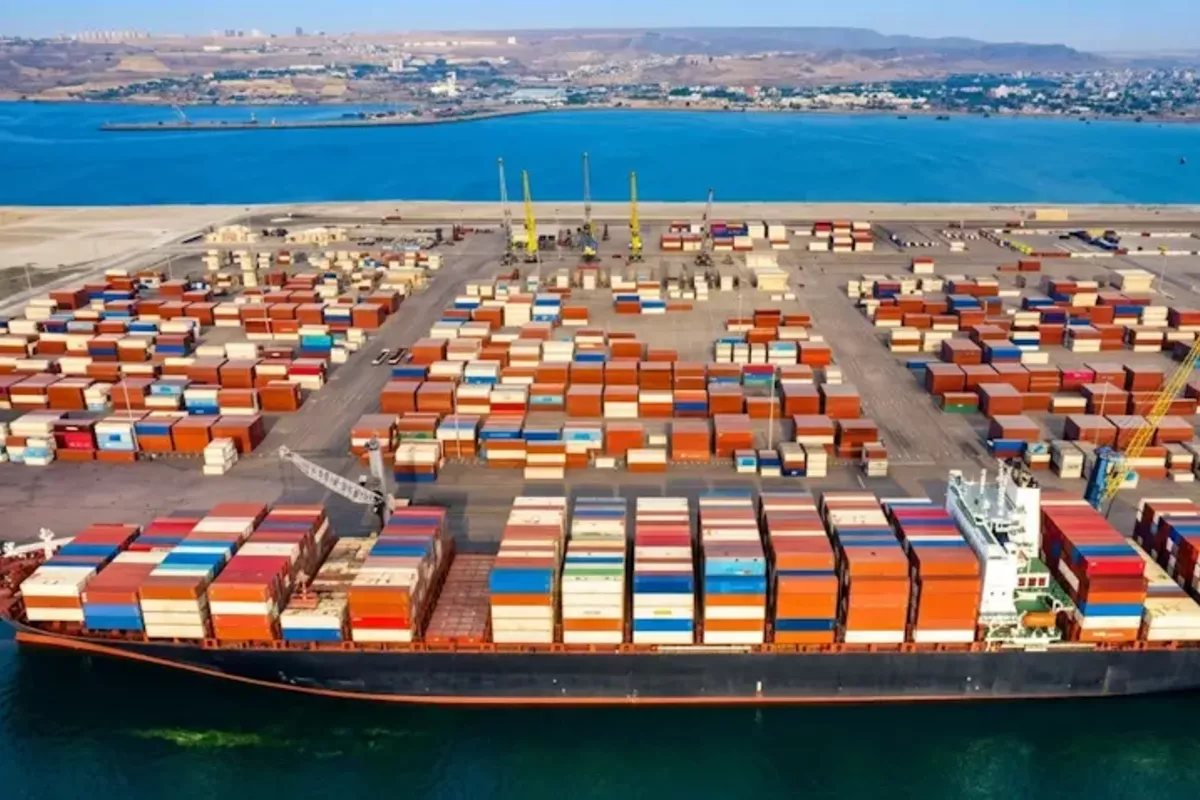
Beyond Europe-bound trade, southern diversification also extends to maritime access. In May 2024, India and Iran concluded a 10-year agreement to operate and further develop the Chabahar Port. However, a combination of US sanctions and tariff threats have reportedly compelled India to rethink its involvement in the project. This is even though Chabahar represents a strategically significant southern outlet to the Indian Ocean that, while integrated with the INSTC, technically bypasses both Chinese and Russian transit routes. Astana and Tashkent have since entered negotiations to join the Chabahar transit framework, underscoring growing regional interest in institutionalizing this alternative corridor.
Strategic Drift and Security Spillovers
Should a resumption of the Iran-Israel-US war unleash widespread chaos, the strategic consequences would extend beyond delayed cargo flows. In the absence of a functioning southern alternative, Central Asian states will find themselves drifting toward deeper economic dependence on both China and Russia-not by choice but by structural necessity.
Beijing’s influence would likely expand not through overt pressure but since Chinese-backed infrastructure and financing would become indispensable. At the same time, constrained southern access would reinforce reliance on Russian transit networks and security frameworks, particularly for trade still moving northward or westward through Russian territory. In other words, the fewer reliable corridors exist, the more entrenched these two powers become in shaping the economic and strategic landscape of landlocked Central Asia.
Beyond economics, instability in Iran would also weaken border controls and create openings for narcotics trafficking and transnational militant networks-including the Balochistan Liberation Army (BLA) and the Islamic State-Khorasan Province (ISIS-K). The BLA has carried out attacks in Iran and Pakistan, while ISIS-K has also actively targeted Tajikistan, Turkmenistan and Uzbekistan, and repeatedly called for the overthrow of secular governments across Central Asia.
Although Central Asian states have experienced relatively few terrorist attacks on their soil, the region has been a disproportionate source of recruits for Sunni militant groups in Iraq and Syria. ISIS-K propaganda has explicitly threatened the leaderships of Tajikistan and Uzbekistan while criticizing the Afghan Taliban’s engagement with Central Asian governments.
Any destabilization-or worse, disintegration-of Iran would risk creating precisely the kind of permissive environment these militant groups seek: a territorial space from which to consolidate, recruit and project violence. Such a development would endanger Central Asian states directly as well as threaten strategic infrastructure, trade corridors and energy routes linking the region to global markets. In turn, heightened insecurity could accelerate ideological radicalization among vulnerable populations, compounding the long-term risks to regional stability.
Ultimately, the trajectory of a potential resumption of an Iran-Israel-US war will shape far more than the balance of power in West Asia. For Central Asia, the stakes are structural: the viability of multi-vector diplomacy, the diversification of trade corridors and the containment of transnational security threats all hinge in part on Iran’s stability and integration. A war that destabilizes or fragments Iran would narrow Central Asian governments’ strategic choices, deepen their dependence on larger powers, and heighten security vulnerabilities along their southern flank.