Hong Kong Leader’s Visit to Central Asia Yields Deals, but Falls Short of Expectations
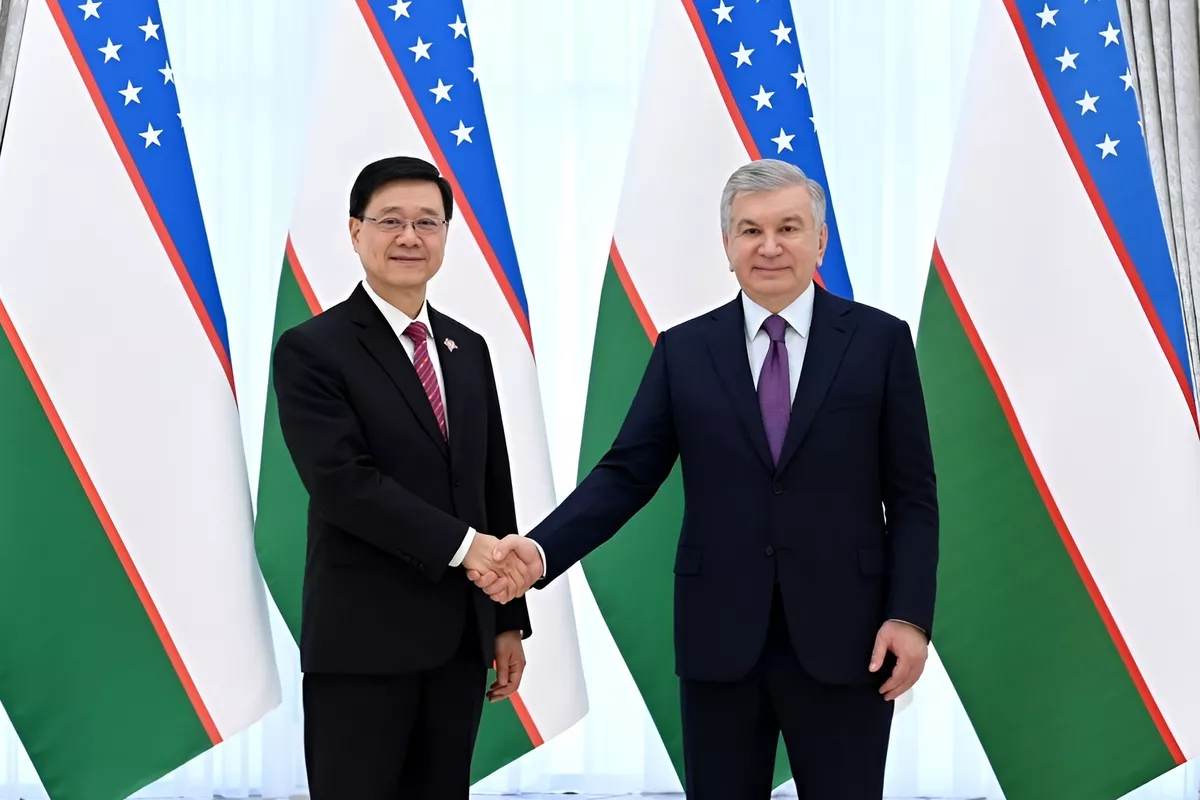
The Chinese-dominated territory of Hong Kong signed 61 agreements with Kazakhstan and 35 with Uzbekistan worth collectively $1.65 billion during a visit to the two Central Asian states by the territory’s chief executive, John Lee Ka-chiu. Details regarding the deals have not been revealed.
Despite the multiple agreements, the visit appeared to fall short of expectations. Notably, Kazakhstan announced at the start of the Hong Kong delegation’s visit that the total value of all potential projects under discussion exceeded $100 billion. At the end of the visit, however, the Kazakh government’s announcement on the results omitted placing any value of the contracts that were actually signed. The Hong Kong leader’s announcement suggests that the total fell short of the Kazakh government’s ambitions, The Caspian Post reports via Eurasianet.
Kazakhstan
Kazakhstan has signed an agreement for an additional transit of 2.5 million tons of Russian oil to China. The deal is projected to earn Astana approximately $250 million over 10 years, reports NationalBusiness.kz citing Kazakhstan’s Energy Ministry.
Officials agreed to simplify procedures for truck-borne trade during a recent meeting of the China-Kazakhstan Joint Committee on International Road Transport held in Beijing. The agreement will enable the transition to an unlimited format for exchanging international transport permits, eliminating the need for quantitative quotas for Kazakh and Chinese long-haul truckers, reports Kapital.kz, citing the press service of the Ministry of Transport. There are also plans to introduce a payment option for toll roads using the WeChat Pay service by the end of June.
A new TIR Green Corridor at the Alashankou border crossing between China and Kazakhstan has been launched to reduce waiting times at the border, reports IRU.org.
Kazakhstan has launched a pilot online marketplace project utilizing China’s existing digital grain trading platform, allowing for joint digital trading of agricultural commodities, reports Kazakhstan’s Ministry of Agriculture.
Direct air service has been launched between Astana and Guangzhou by Air Astana, reports Exclusive.kz, citing the airline’s press service. During the summer season, the airline’s Kazakh-China flights are expected to reach a record high of 51 per week.
An agricultural drone manufacturing facility, operated by China’s Avatar Agricultural Technology Development, has launched in the Turkestan Region, reports DigitalBusiness.kz.
Kyrgyzstan
The Kyrgyz capital, Bishkek, and the Chinese city of Zhengzhou signed an agreement establishing sister-city relations, according to KirTAG.
Upgraded infrastructure at the Torugart-1 coal deposit in Kyrgyzstan’s Naryn region was commissioned and launched, according to 24.kg. The project was jointly carried out by China’s Dun-Sen International Trade and Energy Company LLC and Kyrgyzkomur OJSC.
In Naryn, city officials want to work with a Chinese company, China Transinfo, to install video surveillance cameras capable of facial recognition as an ostensible safety measure, reports Open.kg.
Tajikistan
Tajik and Chinese officials agreed to expand technical and educational cooperation between Dushanbe and cities in China in the field of agricultural development, reports Avesta.
Uzbekistan
An Uzbekistan-China Interregional Forum held in the Chinese city of Xi’an yielded preliminary agreements involving potential investments valued at $3.5 billion. Much of that total is reportedly earmarked for making infrastructure improvements in the Uzbek capital, Tashkent, including rapid transit, housing and drainage systems. The deals also include three contracts covering the export of Uzbek jewelry to China, worth $150 million; cotton yarn for $5 million; and silver concentrate worth $1 million. An Uzbek government statement offers contradictory information about the funding of the projects. It mentions that the $3.35 billion in “investment contracts” envisions turnkey project delivery, with the Chinese contractors assuming responsibility for the entire project lifecycle, from initial design and physical construction to securing the necessary capital, “without the use of [Uzbek] state budget funds and state guarantees.” But goes on to add that “payments [to Chinese partners] will be made in stages over the long term, funded by the creation of new revenue sources for the city budget.”