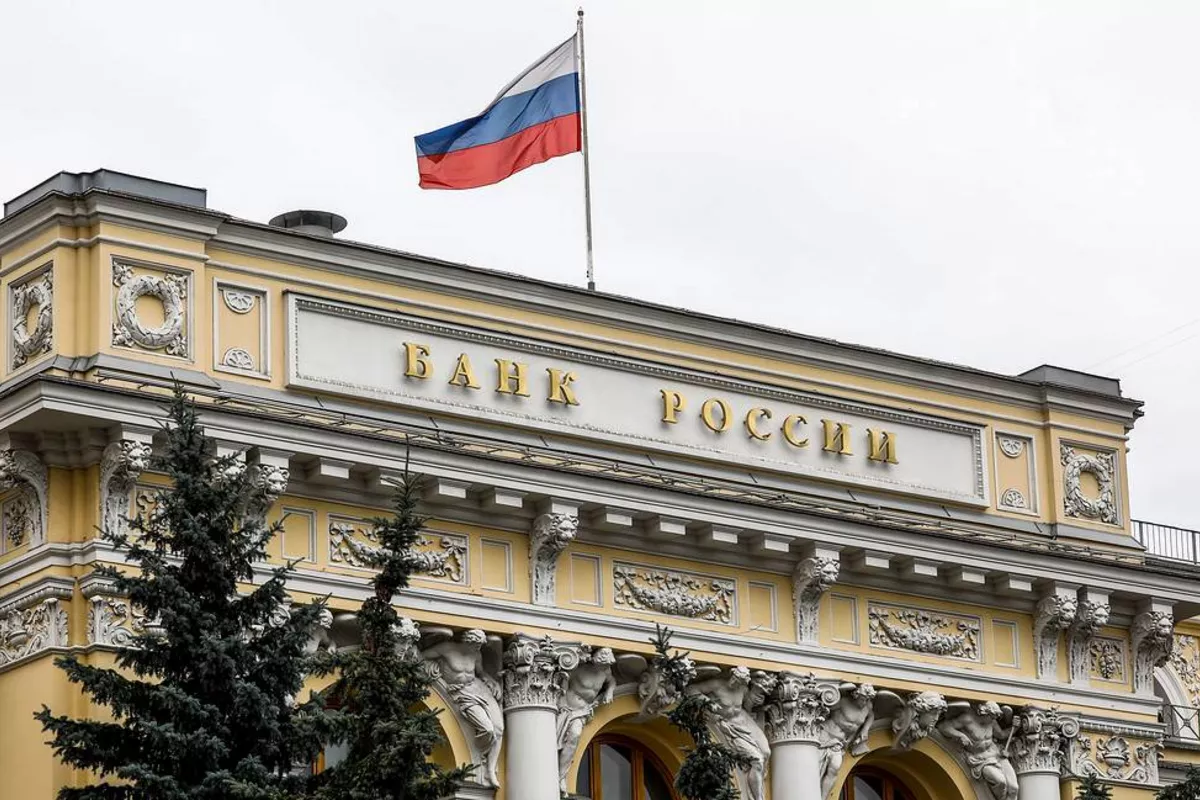
Russians can now make purchases and send money using a new form of the national currency that promises free transactions for consumers but, unlike money in a conventional bank account, is held directly on a platform operated by the country's central bank.
Russia on Tuesday began the large-scale rollout of its digital ruble, which can be used for transfers between individuals and businesses, payments to and from the government, purchases and refunds.
The digital ruble is the third form of Russia's national currency, alongside cash and money held in conventional bank accounts.
For consumers, its use is voluntary. They can open a digital-ruble account through the mobile application of a participating bank, transfer money into it and use the funds to pay for goods and services or send money to other people.
But what exactly makes a digital ruble different from the rubles already sitting in a bank account, and why is Russia introducing it?
Is the digital ruble a cryptocurrency?
Although both exist digitally, the digital ruble differs fundamentally from cryptocurrencies such as Bitcoin.
It is issued exclusively by the Bank of Russia, cannot be mined and does not operate as a decentralized currency.
The digital ruble is also legal tender in Russia, while cryptocurrencies do not have that status as a means of payment in the country.
Unlike cryptocurrencies, whose value can fluctuate sharply, one digital ruble is always worth one conventional ruble. It can be converted into money in a conventional bank account and ultimately withdrawn as cash.
The key difference from conventional bank money lies in where it is held.
Conventional account balances are held by commercial banks. Digital rubles are held in accounts on the Bank of Russia's platform, while participating commercial banks provide customers access to those accounts through their existing mobile applications.
The digital ruble is therefore not a new currency or an investment asset. It is a new digital form of the existing Russian currency.
How would an ordinary person use it?
A consumer first opens a digital-ruble account through the mobile application of a participating bank. There is no need to download a separate digital-ruble application.
Money can then be transferred from a conventional bank account into the digital-ruble account and used for purchases or transfers to other people.
Individuals can add up to 300,000 rubles (about $3,700) a month to their digital-ruble accounts from conventional bank accounts or electronic-money balances. There is no corresponding limit on digital rubles received from other people.
One of the main incentives for consumers is cost.
Transfers between individuals are free, as are consumer payments and other operations with digital rubles.
There is a trade-off, however. Digital rubles do not earn interest, and the Bank of Russia does not offer deposits or loans in the currency.
They also do not come with the rewards programs commonly offered by commercial banks and card providers.
In other words, the digital ruble is designed to be spent and transferred rather than saved or invested.
Its use is voluntary. Russians are not required to open a digital-ruble account, and accounts will not be created automatically.
What changes for businesses?
The Bank of Russia says businesses will benefit from the lowest payment costs on the market and faster settlement. Fees for business operations will also be waived until the end of 2026.
The rollout, however, is more complicated for businesses because Russia is introducing mandatory acceptance in stages.
From Sept. 1, 2026, retailers and service providers covered by the first phase and with annual revenue above 120 million rubles ($1.38 million) must allow customers to pay in digital rubles.
From Sept. 1, 2027, the requirement expands to businesses with annual revenue above 30 million rubles ($350,000). A year later, it will expand to businesses with annual revenue of more than 20 million rubles ($230,000).
Outlets with annual revenue below 5 million rubles ($57,600) will be exempt from the requirement, as will those operating in areas without internet access.
For companies that must accept the new form of payment, the transition involves opening a digital-ruble account through a participating bank, integrating the necessary payment infrastructure and enabling customers to pay using the universal QR code.
The system could eventually offer businesses something that conventional payments cannot easily provide - programmable transactions. Smart contracts can automatically execute a payment once a specified condition is met, such as confirmation of a delivery.
The Bank of Russia is also working on a separate platform that would allow market participants to develop their own commercial smart contracts.
Why does Russia want a digital ruble?
Unlike funds held in a commercial bank account, digital rubles sit on a platform operated by the Bank of Russia, creating a centralized record of transactions.
That gives authorities greater ability to trace payments and monitor how certain funds are used, potentially making it harder to divert budget money or use it through gray schemes.
The system can also support programmable transactions, allowing payments to be linked to specific conditions on how or when they are executed. For example, smart contracts could automatically trigger a payment once specified conditions are met.
That could give the state greater oversight over the use of certain funds, particularly public money, but it does not mean all digital rubles held by consumers will come with restrictions on how they can be spent.
The Bank of Russia has repeatedly said that consumers will continue to be able to use cash and conventional bank money.
The international dimension also offers another key benefit to Moscow.
Could it help Russia make payments abroad?
Potentially, but not yet for ordinary users.
Russia has explored ways to connect digital financial infrastructure with other countries, an issue that has gained significance as Russian banks and businesses face restrictions in traditional international payment channels.
A central bank digital currency could eventually provide another mechanism for cross-border settlements if Russia's system is connected with compatible platforms abroad.
But international digital-ruble payments remain under development and are not a feature that Russian consumers can begin using with Tuesday's rollout.
For now, the digital ruble remains primarily a domestic payment system.
Its short-term success will ultimately depend not on whether Russians can use it, but on whether they see a reason to do so.
The Bank of Russia is betting that free transactions, growing merchant acceptance and new programmable payment functions will give them one.
Find the original article here