The South Caucasus is entering a period of accelerated geopolitical change. The weakening of traditional centers of power, the restructuring of global logistics routes, Europe’s energy crisis, and shifts in the balance of influence between East and West are creating a strategic environment where decisions are being made faster than ever.
Against this backdrop, Azerbaijan, Türkiye, and Armenia are, for the first time in decades, moving away from a logic of confrontation toward pragmatic dialogue.
To explore how unique this emerging “window of opportunity” is, who is shaping the South Caucasus agenda today, and whether Baku can become a key architect of a Turkic and Eurasian security system, The Caspian Post spoke with Hüsamettin İnaç, Turkish political scientist and professor.
- Mr. Inaç, today we are witnessing a rapid rapprochement between Azerbaijan, Türkiye, and Armenia. Can it be said that the current global crisis - the weakening of regional power centers, primarily Iran - has opened a unique “window of opportunity” in which a new architecture for the South Caucasus is taking shape? And how historically limited do you believe this window is in terms of time?
- Recently, as experts and political observers from different countries have repeatedly and almost unanimously emphasized, Azerbaijan, Armenia, and Türkiye have indeed entered a phase of rapid advancement of new political processes based on trade and economic cooperation as well as energy geopolitics. This progress is truly impressive.
What is especially important is that the current global geopolitical environment largely facilitates this process and effectively creates a favorable window of opportunity.
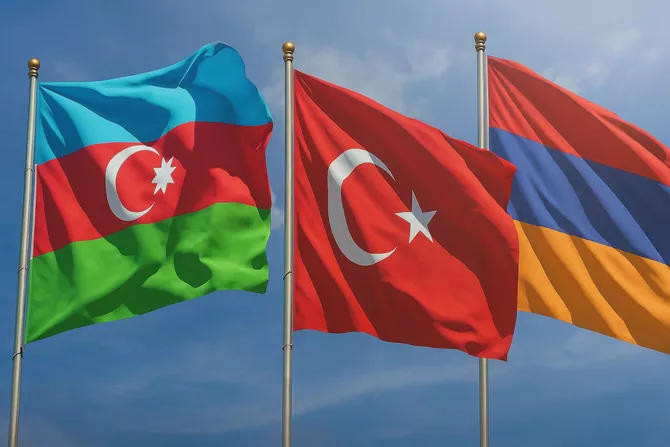
Photo: APA
This is because the forces that do not want the development of political, economic, and diplomatic relations among these three countries are today forced to deal with far more serious problems.
Above all, this concerns Iran, a state that views the rapprochement between Azerbaijan, Türkiye, and Armenia as an existential threat to its own existence. At present, Iran is facing a profound internal crisis: mass protests, pressure from its own population, and serious problems related to the regime’s legitimacy.
- Against the backdrop of a possible U.S. military strike following the arrival of the Abraham Lincoln aircraft carrier, Russia’s prolonged war against Ukraine, and France’s internal crisis, how do you assess the current situation?
- After the arrival of the Abraham Lincoln aircraft carrier in the region, assessments are increasingly being voiced that an American military strike may be a matter of the near future.
On the other hand, Russia, despite serious agreements and elements of a new geopolitical recalibration in its relations with the United States, remains entangled in a heavy and exhausting war with Ukraine.
Recent events, including strikes on Kyiv during peace talks, have clearly shown that Moscow is not yet ready for real peace and intends to continue the war, which requires ever greater resources and effort.
France, another opponent of the rapprochement among these three states, is today immersed in an internal crisis. President Emmanuel Macron is rapidly losing popularity and facing growing dissatisfaction within French society.
These circumstances can be supplemented by other factors as well: a prolonged political crisis in Iraq, where elections have taken place but a government has still not been formed; and the reduction of Iranian influence in Syria, the consequences of which are becoming increasingly evident in Iraq as well. All these processes objectively strengthen the positions of Azerbaijan, Türkiye, and Armenia.
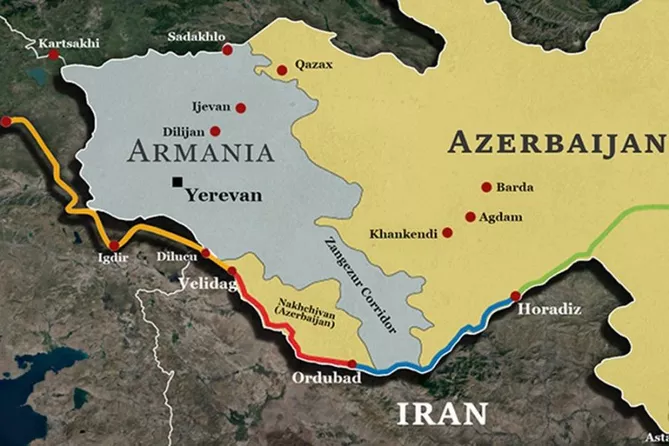
Photo: AIR Center
- To what extent has the transformation of the Zangezur corridor into the Trump route changed the balance of power in the region, and can it be said that the Azerbaijan-Türkiye tandem is now shaping the architecture of new Eurasian routes?
- If we consider the situation comprehensively, one of the key triggers of the recent period has been the transformation of the Zangezur corridor into what is known as the Trump route over the past year.
After the formation of a negotiation table with U.S. support, Russia responded by promoting alternative routes, above all by activating the North-South transport axis. In parallel, various alternative routes began to be discussed in Armenia that could potentially weaken the importance of the Zangezur corridor.
However, in this situation, Azerbaijan has proven itself to be the most mature and diplomatically experienced actor in the region. In tandem with Türkiye, it managed to create strong synergy and took serious steps to unite various routes and transport directions based on shared interests - without intimidating the parties and without destabilization.
Of particular importance is the fact that Armenian Prime Minister Nikol Pashinyan is receiving support from his electorate. The upcoming elections in June of this year significantly strengthen his position.
Ordinary Armenian citizens - those who do not belong either to the diaspora or to the so-called “Karabakh group” - are frankly tired of conflicts and are increasingly demanding peace. In this context, they support Pashinyan, seeing him as a chance for normalization.
This, in turn, opens the way for the formation of new transport routes, trade corridors, and economic dynamics.
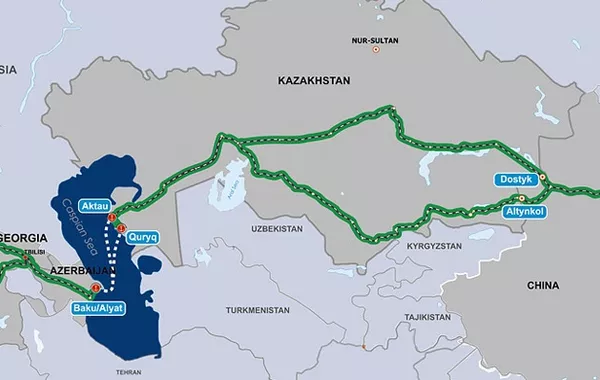
We have already seen the first real confirmation of this in the case of Kazakhstan. The transportation of Kazakh goods through Armenian territory toward Türkiye and the entire Turkic world became a symbolic beginning of a new stage and generated a strong positive response.
Personally, I am convinced that this is only the beginning, and such processes will continue to develop further.
- Can we say that Azerbaijan today is moving from the role of a regional stabilizer to the status of one of the key architects of a new Turkic and Eurasian system of security and sustainable development? And how do you see the roles of Türkiye and Georgia in this transformation?
- The states of the South Caucasus, including Georgia, over the past 30 years, especially after 2008, have learned from their own experience the destructive consequences of “color revolutions,” external interventions, and chaos initiated under various ideological slogans.
Therefore, today they are much more aware of the value of peace, stability, economic growth, and regional cooperation.
I am convinced that these processes will only intensify, particularly since Azerbaijan has recently demonstrated an extremely active and well-considered foreign policy.
The development of green energy, the hosting of COP29, and subsequent initiatives have turned Azerbaijan into a country that is shaping new global doctrines in the field of sustainable development.
At the same time, discussions about turning Baku into a headquarters and base for joint military exercises by Turkic states significantly boost Azerbaijan’s strategic role.
Today, beginning with the South Caucasus, Azerbaijan is becoming a rising star of the entire Turkic world.
It is becoming a center of attraction.
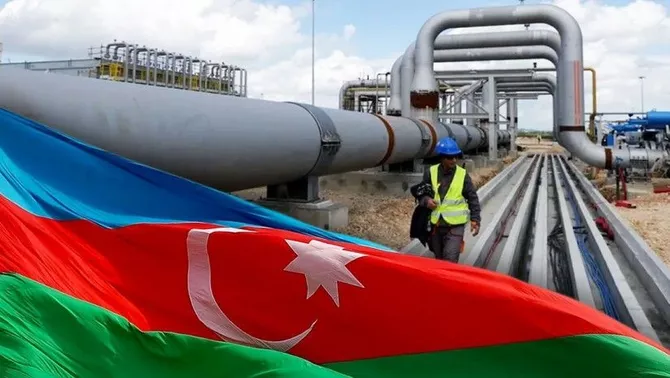
Photo: Shutterstock
- To what extent has Europe’s energy crisis increased Azerbaijan’s political weight and influenced the balance of power in the South Caucasus region?
- To put it simply, the rejection of Russian energy resources, amid broader fears of Russia, has made Azerbaijani gas vitally important to the European market.
Today, Europe objectively has an acute need for energy cooperation with Azerbaijan.
But above all, it is the consistent, rational, patient, and balanced policy that Azerbaijan has pursued from the very beginning that has led the country to its current position.
Now it can be said with confidence that from this stage onward, Azerbaijan is becoming an active and influential player in both global and regional politics.
It is coming to the forefront as a state that supports a reasonable and pragmatic peace with Armenia, builds trade and economic networks, and promotes the idea of peace and prosperity not in words, but in practice.
And the positive economic and trade results of this policy are something we will all begin to see in the very near future.