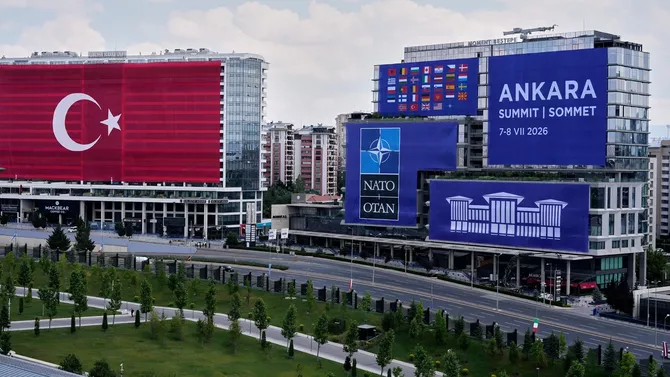
The NATO Summit in Ankara is widely seen as a critical turning point for the Alliance's future, its collective defence doctrine, and the evolving global security landscape. Russia's war against Ukraine, tensions in the Middle East, hybrid threats, and the sharing of defence burdens have all heightened the significance of the summit.
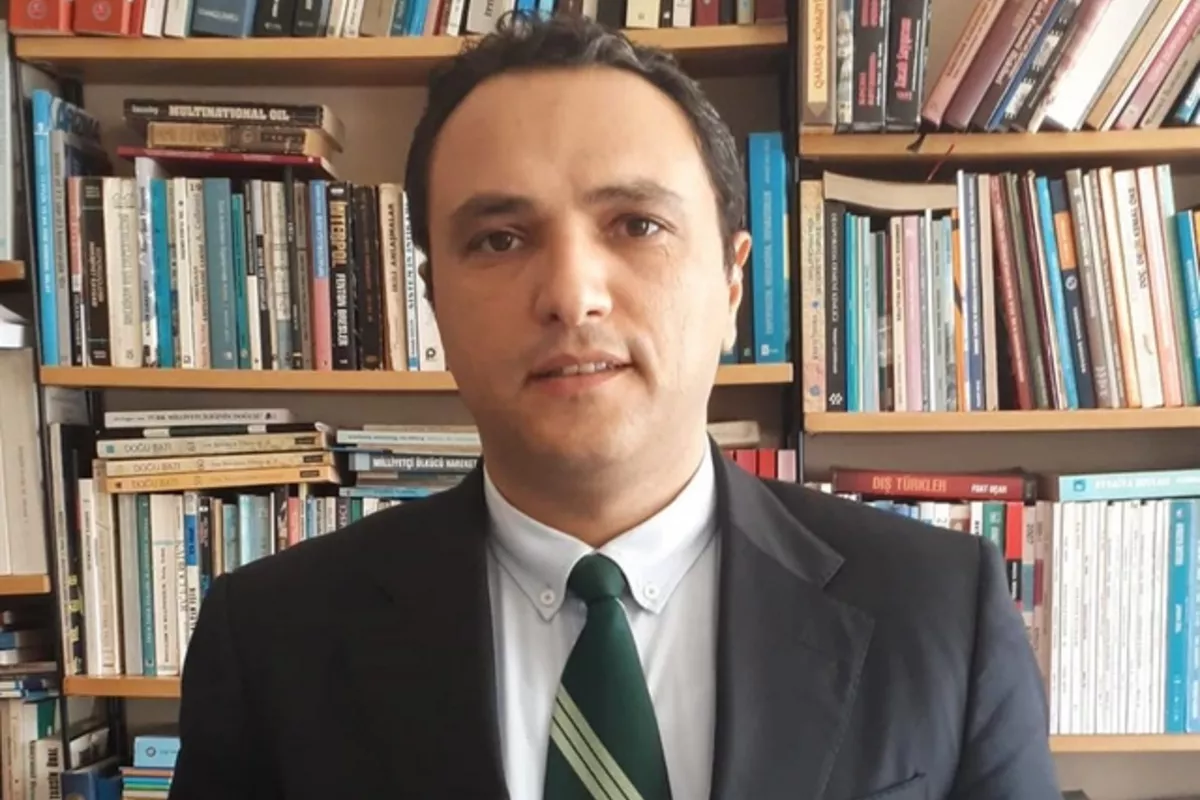
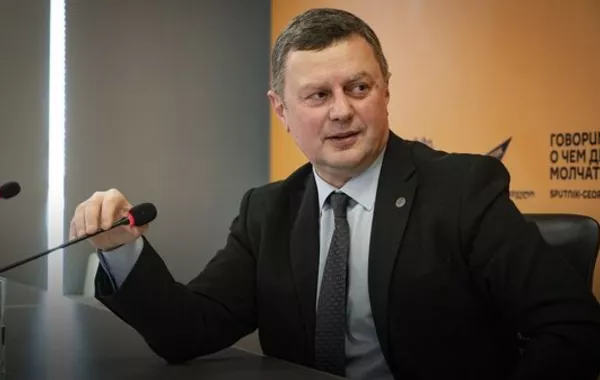
The Caspian Post spoke with Prof. Dr. Yalçın Sarıkaya, Head of the Department of International Relations at Giresun University, about what the Ankara Summit means for NATO, Türkiye's strategic role, the emerging security corridor stretching from the Black Sea to the South Caucasus, and the future of the Alliance amid a rapidly changing geopolitical landscape.
- Could the Ankara Summit mark a new strategic beginning for NATO, or will it instead expose the Alliance's internal crisis of confidence?
- During the Cold War, NATO's primary mission was to protect the transatlantic countries against the Soviet Union and the Warsaw Pact. This period later came to be known as NATO 1.0.
After 1991, with the end of the bipolar confrontation and the dissolution of the Warsaw Pact on 1 July 1991, a new era began. Throughout the mid-1990s, NATO effectively benefited from the success of the previous period. European countries gradually reduced their defence commitments and military spending, while the United States' responsibilities not only continued but, in many respects, increased.
At the same time, NATO assigned itself new missions ranging from search-and-rescue operations to state-building efforts. During this NATO 2.0 phase, particularly throughout the 2000s, several Alliance leaders made increasingly pessimistic, and at times contradictory, statements about NATO's future.
Source: AA
Russia's interventions in Georgia in 2008 and in Ukraine in 2014 and again in 2022 further deepened divisions within the Alliance. Some members argued that NATO needed to make a more tangible contribution to European security, warning that unless Russia was effectively deterred, the conflict could eventually spread beyond Ukraine.
Others maintained that the policy of severe sanctions against Russia had failed to resolve the crisis while simultaneously creating serious challenges for Europe's hydrocarbon supplies.
Today, the Ankara Summit is expected to open the door to what might be called NATO 3.0 - a new strategic concept focused on hybrid warfare, cyber threats, artificial intelligence, unmanned systems, and comprehensive societal resilience.
That said, it would be unrealistic to assume that this summit will eliminate all trust-related problems among NATO members. Such disagreements existed even during the 1949-1991 period that we now refer to as NATO 1.0.
Nevertheless, there is good reason to believe that the Ankara Summit will provide NATO with a renewed strategic vision and strengthen the Alliance's understanding of collective defence.
- How should Washington's demand for Europe to assume greater defence responsibilities be viewed in terms of strategic partnership?
- The principle on which NATO was founded is not strategic partnership but collective security, which is a much broader concept.
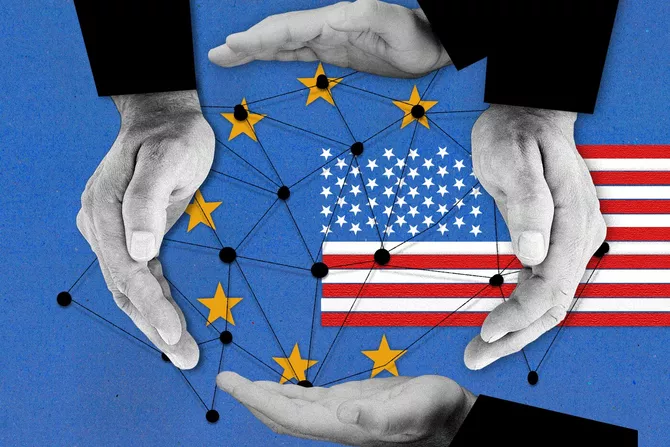
The increasingly frequent American criticism directed at Europe in recent years, encapsulated in the concept of burden sharing, is understandable from Washington's financial perspective.
Source: Reuters
Looking ahead, European defence appears likely to evolve towards a new balance of power and responsibility. The central objective of this approach is to build a stronger European defence within a stronger NATO.
As the United States shifts its strategic focus towards the Indo-Pacific and the Western Hemisphere, it is expected to rely increasingly on its European allies to assume primary responsibility for the continent's conventional defence. This will inevitably require a redistribution of responsibilities within NATO and corresponding changes in strategic planning.
- Is NATO capable of simultaneously deterring Russia, supporting Ukraine, managing risks in the Middle East, and maintaining internal cohesion?
- Managing all these challenges simultaneously is certainly not easy.
However, we should remember that NATO remains the world's most powerful defence organisation in terms of historical experience, institutional depth, and technological capabilities.
The key issue is ensuring greater convergence of members' interests, fairness in addressing security needs, and equitable burden sharing.
Russia's war against Ukraine will enter its fifth year in seven months. It has left behind enormous destruction, humanitarian suffering, and large-scale internal and cross-border displacement, while also providing important military lessons for all parties involved.
These lessons are equally important for NATO, despite the Alliance not being a direct participant in the conflict. NATO closely monitors developments on the battlefield, while leading member states continue to support Ukraine through various means. The operational experience gained is being incorporated into NATO's evolving defence concepts, logistics planning, and technological development.
Meanwhile, the Middle East, once viewed by many European countries as a secondary security concern, has become a major source of interconnected challenges - from land and maritime border security to human trafficking and terrorism.
For this reason, reducing chronic instability in the Middle East has become increasingly important for European security itself.
NATO and the broader West have launched several initiatives aimed at addressing these challenges, including the Mediterranean Dialogue, the Istanbul Cooperation Initiative, and the European Union's Neighbourhood Policy.
In my view, however, their overall impact has remained limited.
What is truly needed is a greater willingness to listen to Türkiye, which is geographically and strategically part of both Europe and the Middle East, as well as to other regional states, while strengthening practical cooperation.
- What makes Ankara such an important political and strategic venue for NATO today?
- Türkiye faces multiple security crises simultaneously.
To its north lies the Russia-Ukraine war.
To the south are Israel's military operations stretching from Palestine to Lebanon, as well as Syria's still fragile internal stabilisation process.
To the east, tensions between Iran and the United States and Israel continue to generate serious uncertainty.
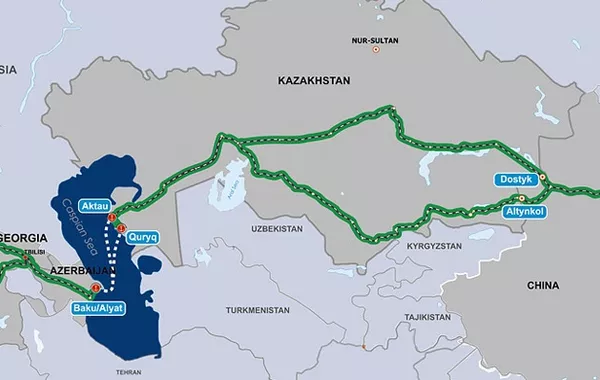
At the same time, the emerging geopolitical corridors linking a rising Asia and China with Europe are expected to pass through Türkiye and the wider Turkic world.
The Türkiye-South Caucasus-Caspian-Turkestan corridor is increasingly becoming a region that offers opportunities not only for regional peace and prosperity but also for global stability.
Türkiye remains one of the few actors capable of maintaining constructive dialogue with both Russia and Ukraine. It has successfully balanced hard and soft power in its foreign policy while making meaningful contributions to international mediation efforts.
For these reasons, Ankara represents far more than symbolic value - it offers tangible strategic advantages.
European security has been profoundly shaken by Russia's invasion of Ukraine. China's growing global influence and the escalating confrontation involving the United States, Israel and Iran have created perhaps the most complex threat environment NATO has ever faced.
At this unprecedented moment, when multiple geopolitical fault lines are converging, NATO must both reconcile differing priorities among its members and redefine its long-term strategic direction.
As Turkish Foreign Minister Hakan Fidan and National Defence Minister Yaşar Güler have both emphasised, this gathering represents much more than an ordinary leaders' summit. It is a crucial test of NATO's ability to adapt to a rapidly changing international order.
Despite deep political divisions across the Atlantic, even the participation of an unpredictable figure such as Donald Trump underlines the global significance of this political stress test and the Alliance's efforts to preserve internal cohesion.
- Could this summit demonstrate that NATO's future will increasingly be shaped along the new fault lines stretching from the Black Sea to the South Caucasus?
Source: caucasuswatch
- Personally, I do not expect the Russia-Ukraine war to end in the near term.
As a result, the geopolitical conditions necessary for Russia to re-engage fully in the South Caucasus have not yet emerged.
The three South Caucasus countries each have distinct approaches to NATO.
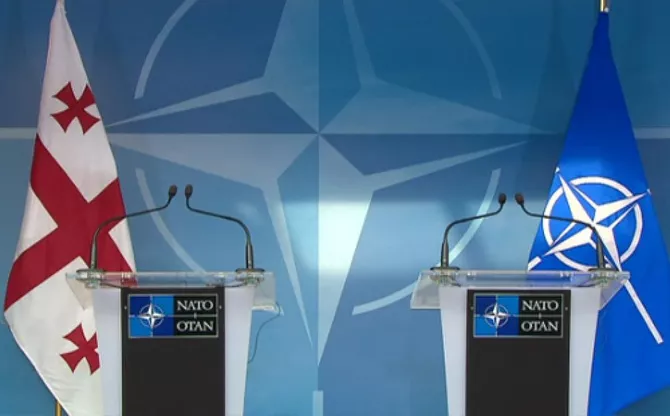
Georgia maintains its aspiration to join the Alliance but continues to face internal political challenges.
Armenia has increasingly distanced itself from Russia, yet remains one of the founding members of the Collective Security Treaty Organization.
Azerbaijan, the largest country in the South Caucasus, has made it clear that it does not seek NATO membership. At the same time, it has maintained institutional cooperation with the Alliance through the Partnership for Peace programme while continuing to value its close relations with Türkiye, the United States, and many other NATO member states.
Under these circumstances, the question of how NATO may further engage with the South Caucasus remains open.
Nevertheless, a collective security strategy that increasingly focuses on the Indo-Pacific at the geopolitical and strategic levels cannot be expected to ignore the South Caucasus and the Caspian basin.