The NATO Summit, scheduled to take place in Ankara on 7-8 July 2026, comes at a time when the global security system is experiencing one of its most turbulent periods in recent decades.
The Caspian Post spoke with political scientist Professor Aygün Attar about the summit's political significance, NATO's future, Türkiye's growing role, and the South Caucasus' place in the evolving security architecture.
- The Ankara NATO Summit is already being described as one of the most important in recent years. What is its main political significance?
- The essence of the Ankara Summit is that NATO arrives at this meeting having reached a stage of strategic maturity through crisis. The Alliance can no longer afford the luxury of relying on outdated formulas in which the United States provides the security umbrella, Europe debates defence spending as a percentage of GDP, and the remaining allies simply fit into an established decision-making architecture. That era is coming to an end - not with fanfare, perhaps, but with the unmistakable sound of heavy doors closing.
Ankara is becoming the place where NATO must finally answer a question it has postponed for far too long: Is the Alliance merely a political club issuing collective declarations, or is it a military organisation capable of acting in a world where war has once again become an instrument of great-power politics?
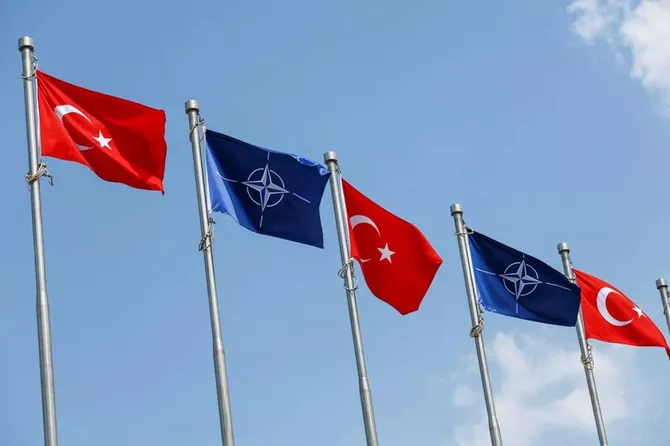
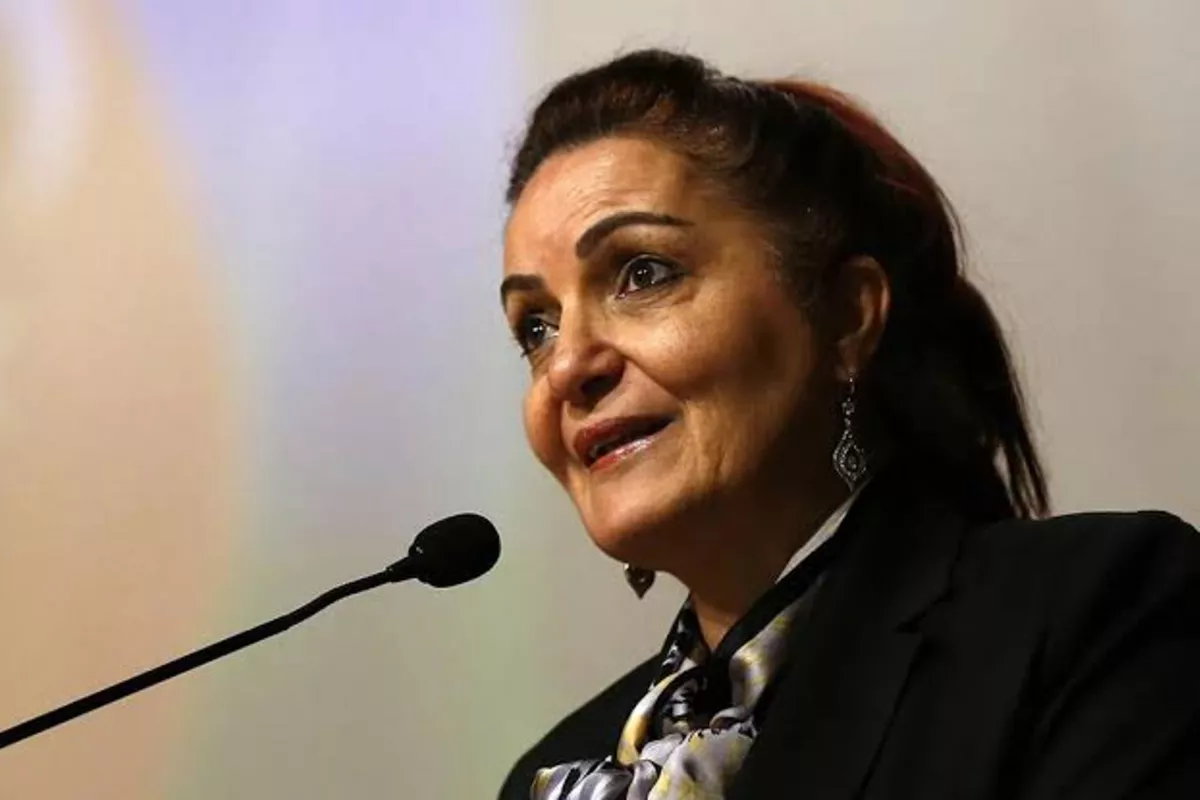
photo: getty images
The war in Ukraine continues. The Middle East remains a region of profound instability. Russia is testing the limits of Western endurance. China is closely observing the quality of Western coordination. At the same time, fatigue over the traditional distribution of responsibilities is growing within the West itself.
This summit is significant because it must demonstrate whether NATO is capable of turning political commitments into genuine military capabilities. Funding, industrial capacity, ammunition production, logistics, air defence, cybersecurity, and the protection of critical infrastructure now constitute the new grammar of security. The era of polished communiqués is not entirely over, but every communiqué is now judged against warehouse inventories, production lines, and the willingness to make difficult decisions.
- Why has Ankara become such a symbolic venue for this summit?
- Ankara carries unique symbolism today. Türkiye is a NATO member with exceptional geography, considerable military weight, and a political instinct that differs noticeably from that of many European capitals. It stands at the crossroads of the Black Sea, the Caucasus, the Middle East, the Eastern Mediterranean, and the Balkans. For traditional diplomacy, this is a highly complex map. For 21st-century security, it is the central control panel for managing risk.
In recent years, Türkiye has demonstrated that an ally can be independent, difficult, and uncompromising while remaining strategically indispensable. Ankara does not view security as an abstract bureaucratic discipline. For Türkiye, security means borders, strategic straits, migration, terrorism, energy corridors, Syria, Ukraine, the Caucasus, the defence industry, and balancing relations among major powers. In other words, it encompasses the very issues that define NATO's real agenda today.
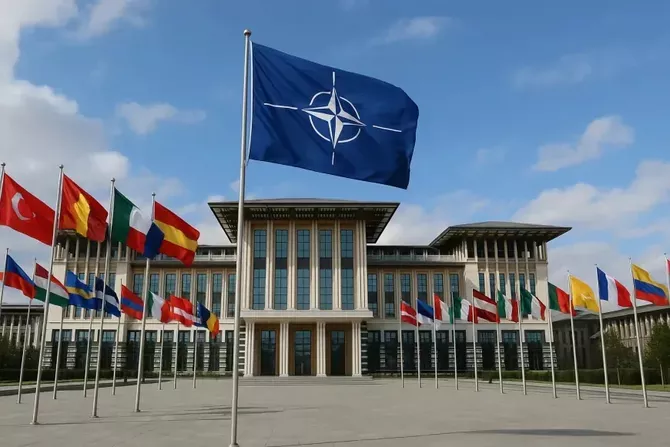
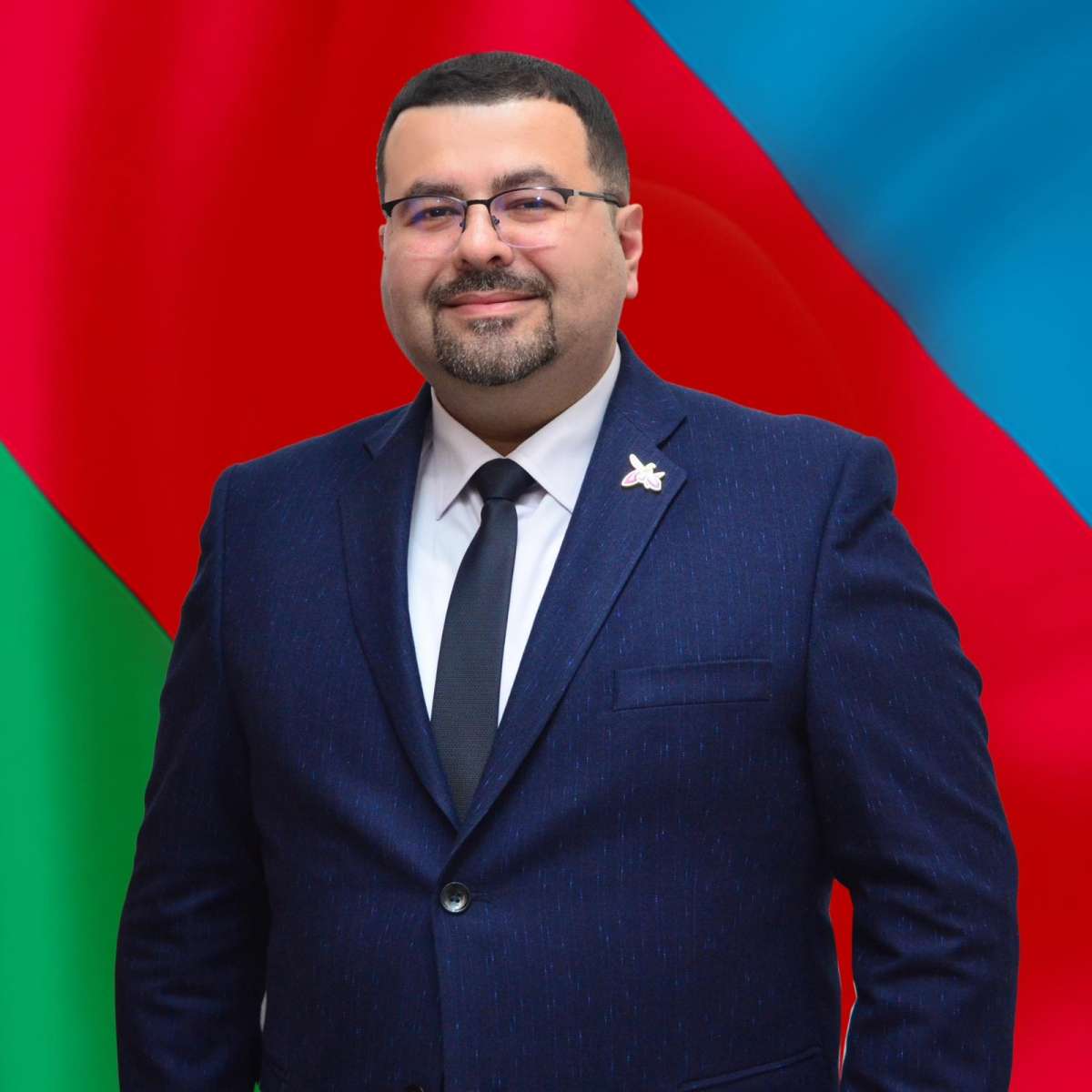
Source: Anadolu
Holding the summit in Ankara reflects a shift in the Alliance's internal geography. The centre of gravity of security is no longer confined to the Washington-Brussels-Berlin-Paris-London axis. The eastern and southern flanks are gaining greater importance because this is where crises move from analytical forecasts to everyday political reality.
Türkiye, with all its complexities, delivers an uncomfortable but necessary message to the Alliance: security cannot be administered from a distance. It must be built where the fault lines actually exist.
- How serious is the rift between the United States and Europe within NATO? Is it a temporary political disagreement or a structural problem?
- It has become a structural problem. The personal dynamics of American politics have undoubtedly intensified tensions, but it would be naïve to reduce everything to the personality of a single leader. The United States has long demanded that Europe assume greater responsibility for its own defence. What once sounded like the diplomatic grumbling of the senior partner has now evolved into a strategic requirement, driven by changing American priorities.
The United States increasingly views the world beyond the Atlantic. The Indo-Pacific, China, domestic economic pressures, and voter fatigue over foreign commitments are reshaping Washington's strategic calculations. Europe, meanwhile, spent too many years postponing difficult decisions. It discussed strategic autonomy but often failed to build the industrial, technological, and military foundations needed to achieve it. Now the bill has arrived, and there are no discounts for good intentions.
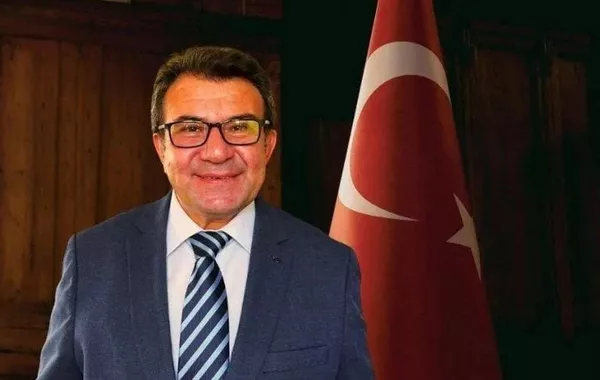
Source: AA
Europe's greatest challenge is recognising that security cannot be outsourced indefinitely. A continent may be economically wealthy yet strategically poor if it lacks sufficient ammunition stockpiles, a resilient defence industry, efficient logistics, and the political will to act. The Ankara Summit will test whether Europe's allies can move from the language of concern to the language of capability.
At the same time, tensions between the United States and Europe do not automatically imply NATO's collapse. Alliances rarely disintegrate because of a single dispute. They decline when their members cease believing that mutual obligations are fair and balanced. NATO now finds itself in precisely such a dangerous position. Unity can still be preserved, but Europe must stop treating American support as a natural phenomenon, like rainfall. Rain does not always fall. Tanks, missiles, and air defence systems certainly do not descend from the clouds.
- Ukraine and the Middle East are simultaneously dominating the summit's agenda. How can the Alliance maintain a balance between these crises?
- Achieving that balance will be extremely difficult because Ukraine and the Middle East demand different kinds of attention.
Ukraine is fundamentally a question of European security. The outcome there will determine whether changing borders by force can once again become an accepted norm on the European continent. For NATO, the Ukrainian front represents a test of strategic endurance. Supporting Kyiv must be a long-term, costly, and systematic effort - not a series of emotional aid packages, but an integral part of sustainable defence planning.
The Middle East creates pressure in a different way. Crises there unfold more rapidly, more emotionally, and with a much greater risk of sudden escalation. Energy routes, maritime security, terrorism, migration, and relations with regional powers all directly affect NATO allies. A single mistake in the Middle East can alter the mood of financial markets, public opinion, and national parliaments within days.
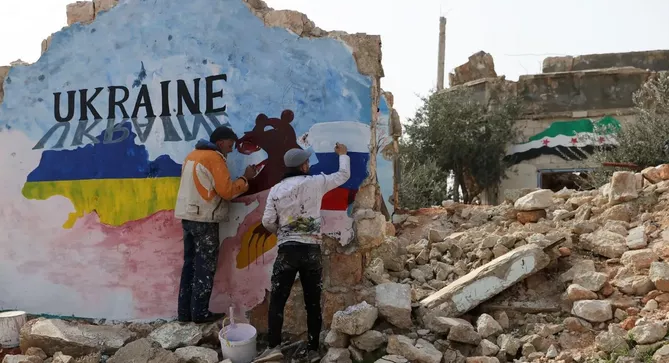
Source: Ukrinform
NATO's greatest challenge is not choosing between Ukraine and the Middle East, but proving that it is capable of managing multiple crises simultaneously. In today's world, security can no longer be divided into neat categories such as "the eastern flank", "the southern flank", "energy", "terrorism", or "cyberspace". Everything is interconnected.
An attack on an energy corridor can affect defence budgets. A failure to sustain support for Ukraine may embolden other actors. Chaos in the Middle East can weaken Europe's strategic focus on Russia.
That is why Ankara matters as a venue for strategic synchronisation. NATO must demonstrate that it can simultaneously support Ukraine, strengthen its defence industry, deter Russia, address southern security challenges, and avoid fragmenting into competing regional security blocs. In other words, the Alliance must prove that it is capable of functioning in an era defined by multiple, overlapping crises.
- What role can NATO's partners, including the countries of the South Caucasus, play in this emerging security architecture?
- NATO's partners are becoming increasingly important because modern security has long since extended beyond formal membership. The Alliance needs strong relationships with states that influence transport routes, energy corridors, regional stability, and communication between different geopolitical spaces. In this respect, the South Caucasus is becoming an increasingly important region, although it is often underestimated through the lens of Western strategic thinking.
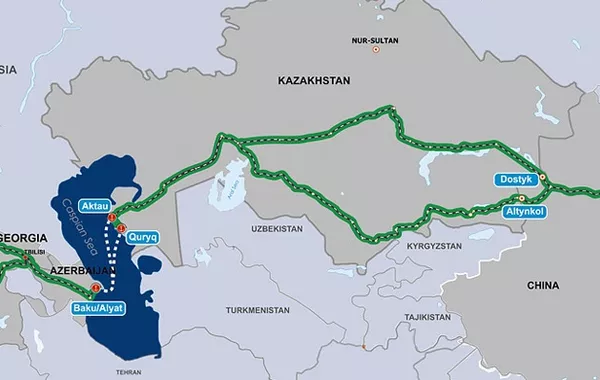
The region connects the Black Sea, the Caspian Sea, Central Asia, Türkiye, Iran, Russia, and Europe. It hosts energy and transport corridors that are essential to Europe's resilience. Therefore, stability in the South Caucasus is not an abstract geopolitical concept - it is a matter of practical security. Here, the diplomatic map is directly linked to the map of pipelines, ports, railways, and digital connectivity.
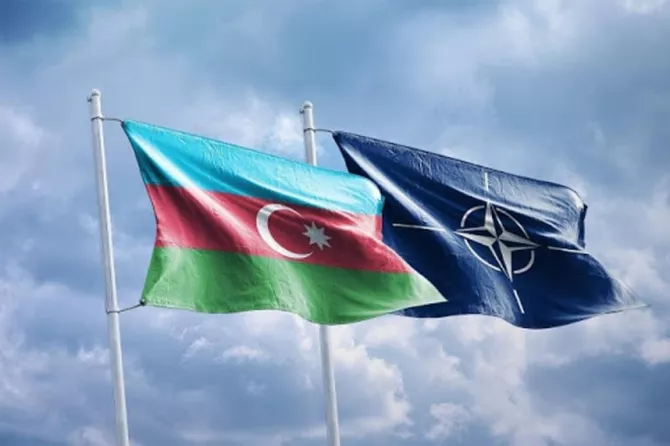
In this context, Azerbaijan stands out as an important partner with whom NATO has already built substantial experience through Euro-Atlantic cooperation programmes. Azerbaijan's significance stems from its geography, energy resources, transport potential, and its role in shaping the region's post-war reality.
Source: caucasuswatch
At the same time, this subject should not be burdened with slogans. The true value of partnership is measured not by the volume of political declarations, but by a state's ability to remain predictable, resilient, and useful in addressing concrete security challenges.
The Ankara Summit may signal that NATO is beginning to pay closer attention to the strategic space between Europe and Asia. For the Alliance, this is no longer the periphery of the map. It is the region where energy, logistics, military security, and the diplomacy of the future converge.
Those who recognise the strategic importance of these connecting regions first will gain an advantage in the emerging system of international competition. Those who fail to do so may eventually wonder why the train has already left the station - along a route they once failed to notice.