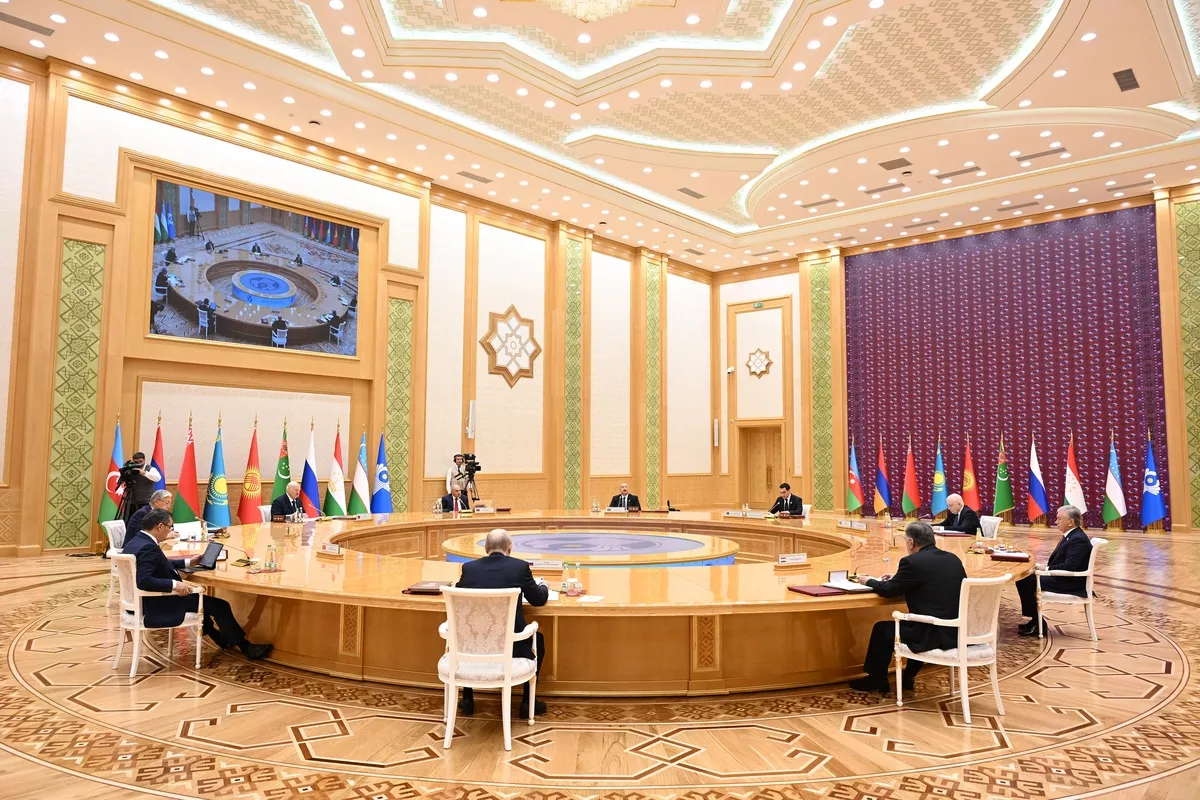
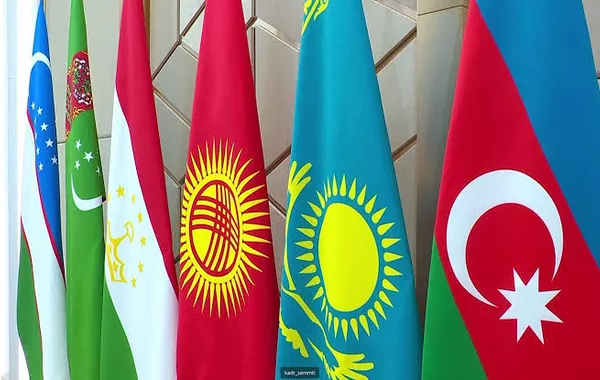
The meeting in Turkmenbashi should not be seen as another routine diplomatic gathering. It reflects a deeper transformation underway across the Caspian region, Central Asia and the South Caucasus - one in which Azerbaijan and the five Central Asian republics are seeking to expand their economic options, strengthen political autonomy and shape a more secure regional order.
For these countries, the challenge is not limited to increasing trade or building additional infrastructure. The more consequential task is to create the political, institutional and economic foundations for a modern, stable and prosperous region. That requires a clear commitment to secular governance, national sovereignty, regional security, education, technological development and pragmatic diplomacy.
Azerbaijan and the Central Asian states occupy an exceptionally important geographical space. They connect China, Russia, Europe, the Middle East and South Asia; possess substantial energy and natural-resource potential; and stand at the center of emerging Eurasian transport networks. Yet geography and resources alone do not guarantee long-term development.
Without strong institutions, secular education, scientific research, industrial capacity and technological innovation, the region risks remaining primarily a transit zone or a supplier of raw materials for larger economies. The objective must be more ambitious: to ensure that regional connectivity produces jobs, technology, productive industries and greater prosperity for the societies of Azerbaijan and Central Asia.
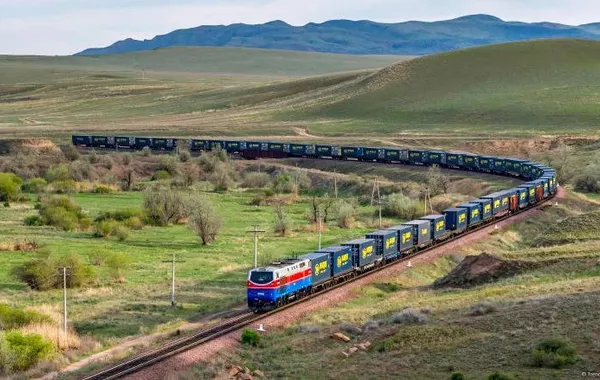
The Middle Corridor is central to this discussion. By linking China with Europe through Central Asia, the Caspian Sea, Azerbaijan, Georgia and Türkiye, it offers countries in the region an opportunity to diversify trade routes and reduce excessive dependence on traditional transit networks.
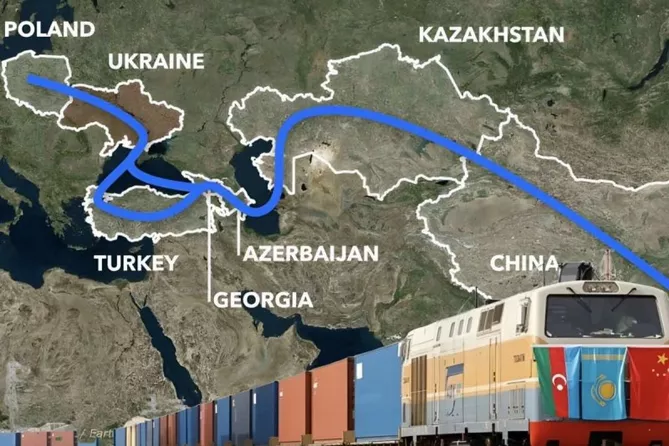
photo: getty images
But the success of the Middle Corridor cannot be measured merely by the volume of cargo moving between China and Europe. A country can become an important logistical hub without developing a strong industrial or technological base. Infrastructure must therefore be accompanied by coordinated customs procedures, efficient ports, interoperable rail systems, maritime connectivity, digitalization and investment in value-added industries.
The Caspian countries should use their strategic location to build production capacity rather than simply facilitate the movement of goods produced elsewhere. Regional governments need to deepen cooperation in manufacturing, digital transformation, higher education, research and innovation. Otherwise, the Middle Corridor may benefit external powers more than it benefits the populations living along it.
Azerbaijan’s full-fledged participation in this wider framework is particularly significant. Azerbaijan has become an important political, economic and logistical bridge between Central Asia, the South Caucasus and European markets. Its investments in infrastructure, its energy role and its balanced foreign policy have created new opportunities for regional cooperation.
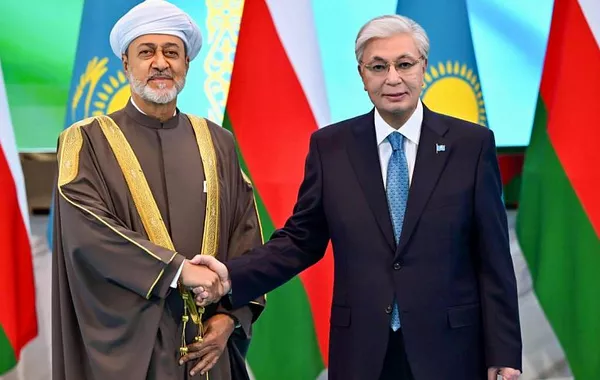
The strategic partnership between Azerbaijan and Kazakhstan is especially important. Both countries have demonstrated that pragmatic leadership, economic modernization and a balanced approach toward major powers can reinforce national sovereignty and regional stability. Their growing cooperation in transport, energy, trade and infrastructure can help create a stronger foundation for a connected Caspian region.
This should not be interpreted as an attempt to build a geopolitical bloc against Russia, China, the European Union, the United States or any other major actor. On the contrary, the growing cooperation between Azerbaijan and the Central Asian republics reflects the political maturity of states seeking to engage with all major powers without becoming dependent on any single one.
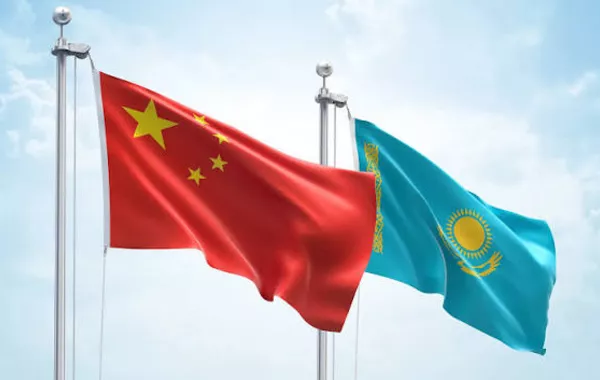
Photo: Vecteezy
China is likely to see this process as largely compatible with the Belt and Road Initiative. Beijing has an evident interest in stable transport routes, deeper Eurasian connectivity and a politically secure Central Asia. Russia will naturally watch the development of alternative routes closely, particularly as greater connectivity could create competition in trade and logistics. Yet stronger regional cooperation does not mean Russia’s exclusion. Moscow will remain an important economic, political and security partner for several Central Asian states.
The European Union, meanwhile, has an opportunity to support transportation, energy security, investment and technological cooperation. Europe’s interest in diversifying economic links with Asia can complement the region’s own goals. However, Azerbaijan and Central Asia should not become instruments in a geopolitical contest between the West, Russia and China. Their policies must be guided first and foremost by their own national interests.
Türkiye also remains an important partner because of its historical, cultural, linguistic and economic ties with Azerbaijan and the Turkic republics of Central Asia. Cooperation with Türkiye in transport, education, trade and technology can contribute to regional development. At the same time, regional governments should carefully distinguish between beneficial cultural cooperation and ideological agendas that could weaken secular political traditions.
The experience of the Middle East offers a serious warning. The politicization of religion, sectarian competition, extremist networks and outside interference have weakened institutions and destroyed social and economic infrastructure in several states. Syria, Iraq and Afghanistan have different histories and their conflicts cannot be reduced to religion alone. Still, their experiences demonstrate how rapidly instability can undermine development when state institutions become vulnerable to ideological conflict and transnational extremism.
Azerbaijan and the Central Asian states should not allow their societies to become battlegrounds for competing forms of political Islam, pan-Islamism or other imported ideological projects. Protecting freedom of conscience and religious belief is essential. But so too is protecting the secular character of the state, the independence of national institutions and the cultural foundations of society.
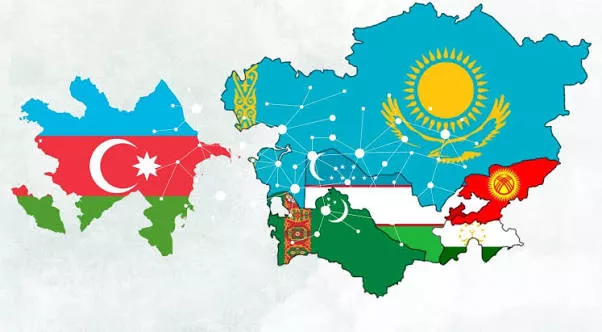
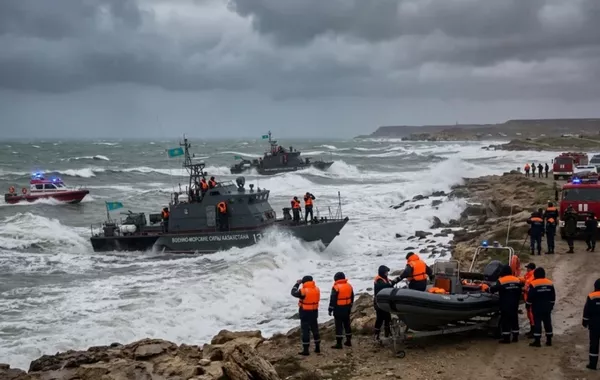
photo: aircenter.az
Secularism, security and economic modernization are not separate goals. They are interconnected. A stable investment environment requires capable institutions. Technological progress requires modern education and scientific research. Regional connectivity requires political stability and effective security cooperation. And national sovereignty depends on the ability of states to make strategic decisions free from ideological pressure or excessive external dependence.
The future of the Caspian region should therefore be shaped by economic integration, technological advancement and pragmatic diplomacy - not by imported rivalries. Azerbaijan and Central Asia have an opportunity to develop their own modernization model, grounded in their historical experience, cultural identity and national interests.
This vision should also extend beyond the six countries. Peace and stability in the South Caucasus are closely linked to the economic future of Central Asia. Deeper cooperation with Georgia and, where conditions allow, Armenia in transportation, trade, energy, education and technology would benefit the wider region.
The United States, China, Russia, the European Union, India and Türkiye should support this process rather than turn Central Asia and the South Caucasus into another arena of zero-sum geopolitical competition. A stable, economically connected and technologically advancing Eurasia serves the interests of all.
Turkmenbashi should ultimately be judged not by declarations alone, but by whether it advances this broader objective: a Caspian and Central Asian region that is more integrated, more productive, more secure and more capable of determining its own future.