From Transit Route to Strategic Partner: Georgia’s New Role
The consecutive state visits by the presidents of Uzbekistan and Turkmenistan to Georgia in July 2026 cannot be regarded as a mere coincidence of diplomatic scheduling. Rather, they reflect a new geoeconomic dynamic gradually taking shape between Central Asia and the South Caucasus.
Against the backdrop of shifting international logistics and persistent geopolitical uncertainty, Central Asian states are seeking to diversify their foreign trade routes, expand access to global markets, and reduce their dependence on a limited number of transport corridors. This is precisely why cooperation with Azerbaijan and Georgia is assuming growing strategic importance for the region.
Uzbek President Shavkat Mirziyoyev's state visit to Georgia on 2-3 July was historic, marking the first visit at this level by an Uzbek head of state to Tbilisi in 23 years. The main political outcome was the establishment of a strategic partnership between the two countries.
However, the practical substance of the agreements reached appears even more significant. They include the development of transport and logistics infrastructure, the expansion of investment cooperation, the establishment of an Uzbek logistics hub, the use of the Georgian ports of Poti and Batumi, and closer cooperation in digitalisation, industrial development and trade.
A similar agenda shaped Turkmen President Serdar Berdimuhamedov's state visit to Georgia on 16-17 July. Transport corridors, port infrastructure, trade and investment were also at the centre of the talks.
Particular attention was paid to the possible establishment of a Turkmen cargo terminal on Georgia's Black Sea coast and to linking major international transport routes, including the Trans-Caspian Transport Corridor, the Lapis Lazuli Corridor and TRACECA.
In my view, both visits demonstrate that Georgia, like Azerbaijan, is gradually acquiring the status not merely of a transit country, but of a fully fledged strategic partner for the Central Asian states.
For countries without direct access to the world's oceans, access to Black Sea ports is becoming one of the most important factors in ensuring the resilience of foreign trade. It enables them to diversify supply routes, reduce logistical risks and strengthen their economic independence.
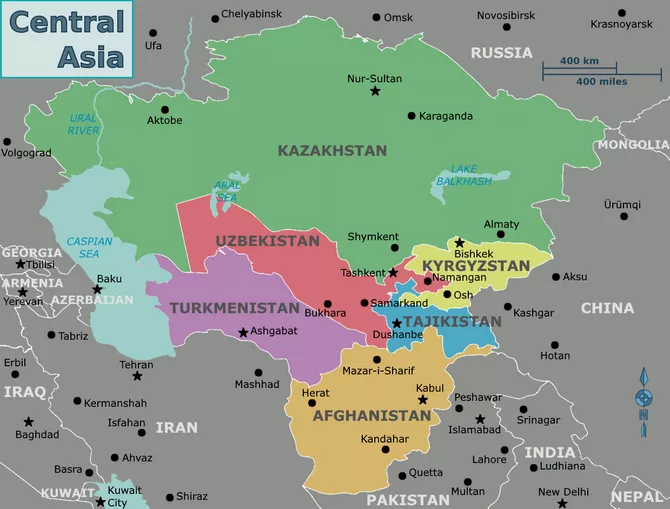
photo: getty images
In the past, Central Asia viewed the South Caucasus primarily as a transit region. Today, however, the situation is changing. The focus is shifting towards establishing a long-term investment, infrastructure and institutional presence.
The establishment of logistics centres and cargo terminals, participation in the development of port infrastructure, and coordination of transport policy indicate that cooperation is moving to a qualitatively new level. Central Asian states are no longer merely using existing routes; they are seeking to participate directly in their development and management.
In a broader context, one can speak of the gradual emergence of a unified Central Asia-South Caucasus economic and logistics space. Within this model, Azerbaijan serves as the key link across the Caspian Sea, while Georgia provides access to the Black Sea and European markets.
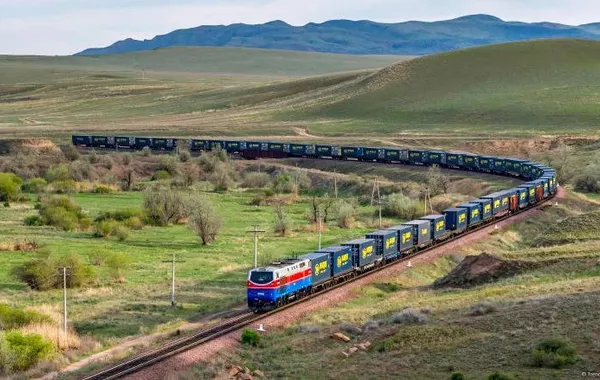
The development of the Middle Corridor is becoming not only a transport initiative but also a strategic project. A new system of trade, investment and industrial ties is taking shape around it, connecting Central Asia, the Caspian region, the South Caucasus, Türkiye and Europe.
At the same time, the significance of the Middle Corridor should not be reduced solely to cargo transportation. Its development creates opportunities for industrial cooperation, digital integration, joint investment and the establishment of new value chains.
For this reason, the July visits to Tbilisi by the leaders of Uzbekistan and Turkmenistan should be viewed as part of Central Asia's long-term strategy to strengthen its transport, trade and economic resilience.
Within this strategy, Georgia is becoming one of the key partners providing access to the Black Sea and facilitating the onward movement of goods to European markets. Azerbaijan, meanwhile, remains the essential bridge across the Caspian Sea, without which the effective functioning of east-west transport routes would be impossible.
A new geoeconomic reality is therefore gradually emerging across the space between Central Asia and the South Caucasus. It is based not on temporary political arrangements but on long-term infrastructure, investment and trade interests.