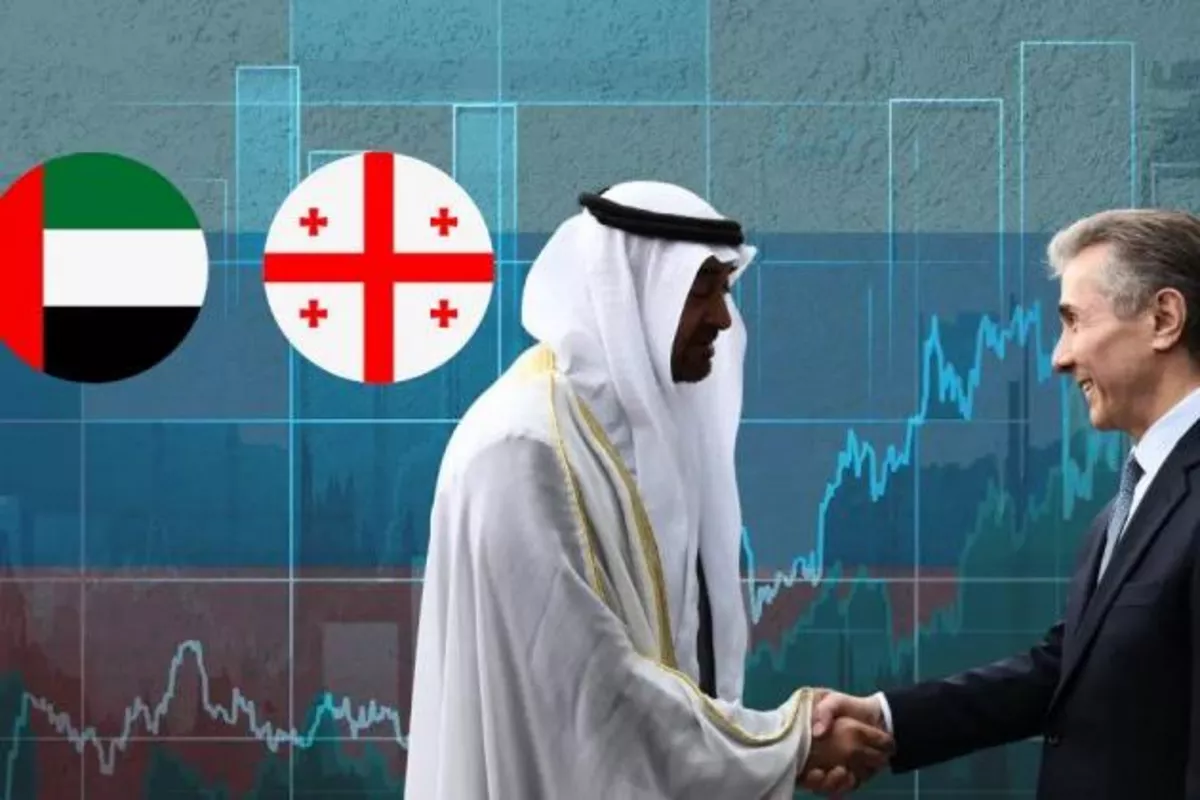
The recent meeting in Tbilisi between Georgian Foreign Minister Maka Bochorishvili and UAE Minister of State at the Ministry of Foreign Affairs Saeed bin Mubarak Al Hajeri may, at first glance, look like a routine diplomatic exchange. In reality, however, it carries a much broader meaning in the current regional environment. This was not only about strengthening bilateral relations between Georgia and the United Arab Emirates, but also about Tbilisi’s attempt to reinforce its investment appeal at a time when Georgia’s political relations with the West are going through a difficult period.
According to Georgia’s Foreign Ministry, the two sides discussed bilateral relations, investment projects, the situation in the Middle East, and Georgia’s role in the context of the South Caucasus. In Georgia’s foreign policy environment, this is particularly important: Tbilisi is trying to demonstrate that, despite tensions with the EU and the United States, the country remains open to capital, logistics, energy, and international business.
For Georgia, the UAE is not simply a wealthy Gulf state. It is one of the world’s major investment hubs, actively seeking new opportunities in infrastructure, transport, real estate, energy, ports, tourism, and logistics. For the Emirates, Georgia is attractive not only as a market, but also as a geographic link between the Black Sea, the South Caucasus, Türkiye, Central Asia, and Europe.
That is why the meeting in Tbilisi should be viewed not as an isolated diplomatic protocol, but as part of a wider trend: Gulf states are showing growing interest in the South Caucasus as a region of opportunity. Amid global competition for routes, ports, transport hubs, and energy corridors, Georgia is trying to consolidate its status as a regional hub.
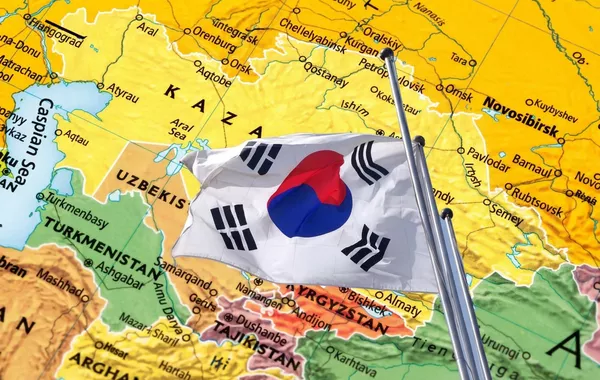
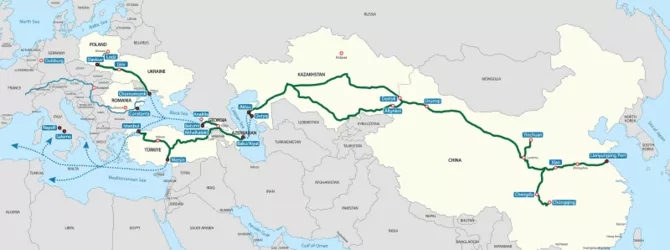
The Middle Corridor is especially important in this context. This transport route connects China, Central Asia, the Caspian Sea, the South Caucasus, Türkiye, and Europe. Since the start of the war in Ukraine, it has been increasingly discussed as an alternative to northern routes running through Russia. For Georgia, this is a chance to strengthen its role in international logistics. For Gulf states, it offers another potential gateway to European markets through the infrastructure of the South Caucasus.
Analysts have already noted that Gulf countries are showing interest in the development of Georgian ports and railway infrastructure precisely in the context of the Middle Corridor. In this sense, Georgia is becoming not just a recipient of investment, but part of a new map of regional connectivity. It is also telling that as early as 2008, an investment entity from the emirate of Ras Al Khaimah acquired the Black Sea port of Poti, showing that the UAE’s interest in Georgian infrastructure is not accidental, but driven by long-term logic.
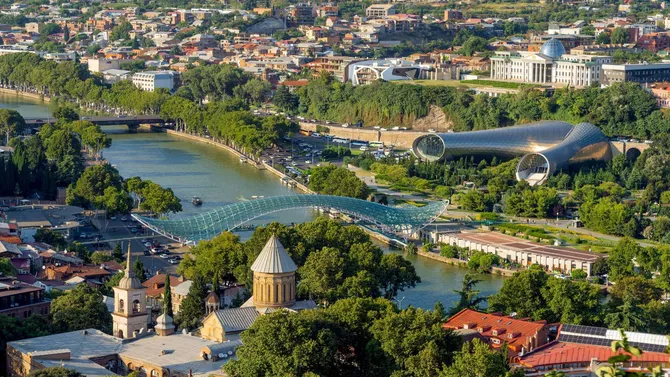
Credit: investingeorgia.ae
Against this backdrop, the UAE delegation’s interest in investment opportunities in Georgia, especially in transport, logistics, and infrastructure, appears entirely logical. According to Georgian media reports, representatives of the Emirates expressed particular interest in investment opportunities in these sectors. These are precisely the areas that could help turn Georgia from a small economy into an important transit hub between regions.
Georgia’s economy is currently showing impressive momentum. According to preliminary data, the country’s economy grew by 10.7% in March 2026, while average growth in the first quarter reached 9.1%. Against the backdrop of political crisis, tensions with Brussels and Washington, and domestic disputes over the ruling party’s course, these figures look especially striking. They show that Georgia’s economic model remains resilient for now, supported by trade, services, tourism, remittances, and regional logistics.
However, this raises a key question: can Georgia turn short-term economic growth into a long-term investment advantage? To do so, the country needs not only strong macroeconomic indicators, but also political predictability, legal stability, investor confidence, and the ability to balance between different external centres of power.
The UAE may become an important partner for Georgia precisely because Emirati capital tends to be highly pragmatic. For Abu Dhabi and Dubai, the key priorities are not ideological declarations, but routes, assets, profitability, infrastructure, and long-term geoeconomic logic. If Georgia can offer ports, roads, railways, energy projects, tourism zones, and a convenient business environment, interest from the Emirates is likely to grow.
For Tbilisi, this is especially important at a time when relations with the EU and the United States remain complicated. Georgian authorities are trying to diversify the country’s external economic ties and show that Georgia does not depend on a single political direction. Closer cooperation with the UAE allows Georgia to deepen its ties with the Middle East, attract Gulf investment, and at the same time present itself as an open platform for international capital.
But this strategy also carries risks. Investments from Gulf countries can produce a quick economic effect, particularly in real estate, tourism, logistics, and infrastructure. However, they cannot fully replace the European market, Western financial institutions, political support from the EU, or access to long-term modernisation programmes. For this reason, Georgia should not set one direction against another, but rather build a multi-layered foreign economic policy.
The situation in the Middle East also gives the meeting additional significance. The UAE is one of the region’s key players, seeking to maintain a balance between economic openness, regional security, and diplomatic flexibility. Georgia, in turn, is located in a region where the interests of Russia, Türkiye, the EU, the United States, Iran, Azerbaijan, and Armenia intersect. The discussion of the Middle East situation in Tbilisi shows that dialogue between Georgia and the UAE is moving beyond economics and touching on broader issues of regional security.
For the South Caucasus, this is also an important signal. The region is gradually becoming not only a space of post-Soviet politics, but also an arena of global economic competition. Azerbaijan is strengthening its role as an energy and transport centre. Armenia is trying to intensify ties with the EU and the West. Georgia is seeking to preserve its role as a transit bridge to the Black Sea. Against this background, capital from the UAE and other Gulf states could increase competition for infrastructure projects, logistics routes, and investment flows.
For Georgia, the main challenge is not to miss the moment. The country has a favourable geographic position, access to the Black Sea, experience in attracting international business, and growing interest from external investors. At the same time, it faces political turbulence, tensions with Western partners, and questions about the state of its institutions. Investors may be interested in routes and assets, but they always assess not only geography, but also risk.
That is why the meeting between Maka Bochorishvili and Saeed bin Mubarak Al Hajeri matters not only as a diplomatic event, but as an indicator of a broader trend. Georgia is trying to strengthen its economic diplomacy, attract capital from the Gulf, and position itself within the new architecture of regional connectivity. The UAE, for its part, appears to see Georgia as a potential entry point into the South Caucasus, the Black Sea region, and the Middle Corridor.
Credit: Getty images
If Tbilisi manages to combine investment openness with political predictability, partnership with the UAE could become one of the important elements of Georgia’s new economic strategy. But if the political crisis deepens and relations with the West continue to deteriorate, even interest from wealthy Gulf states will not be able to fully compensate for the loss of confidence in Georgia as a stable and reliable platform.
This is the central meaning of the current moment: Georgia remains attractive to investors, but its future will depend on whether it can turn geography into strategy, and diplomatic meetings into real projects.