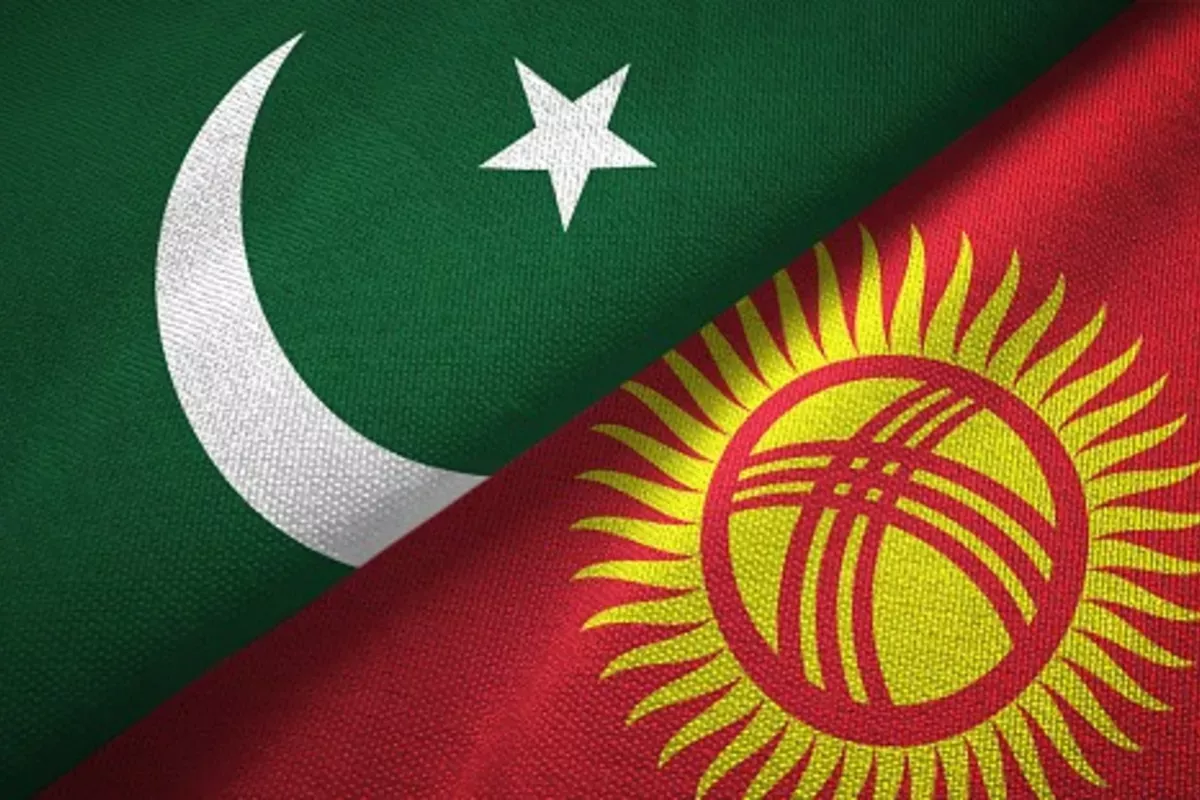
President Asif Ali Zardari’s visit to Kyrgyzstan, the first by a Pakistani head of state in 21 years, should not be viewed as a ceremonial diplomatic engagement. It reflects Islamabad’s growing determination to translate its “Vision Central Asia” policy into a practical system of trade corridors, energy links and strategic partnerships.
Pakistan is offering the five landlocked Central Asian republics something they cannot create on their own: direct access to the sea.
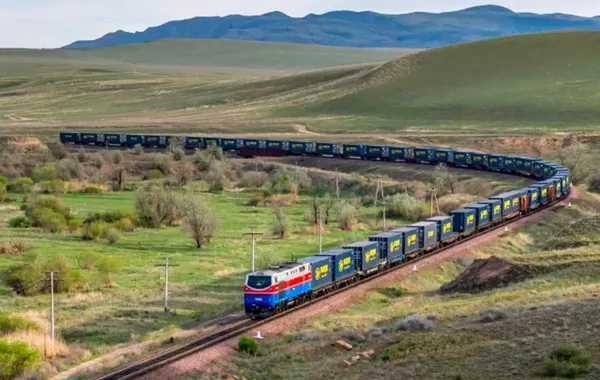
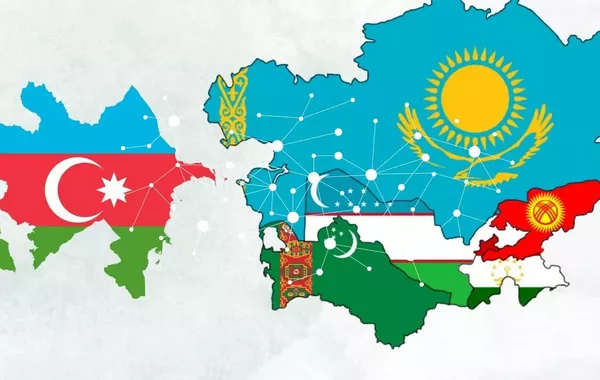
For Kazakhstan, Kyrgyzstan, Tajikistan, Turkmenistan and Uzbekistan, geography remains both an economic constraint and a geopolitical vulnerability. Their exports must pass through the territory of larger powers before reaching global markets. Traditionally, much of their trade has moved north through Russia, east through China or south through Iran.
Pakistan is now presenting another possibility: access to the Arabian Sea through the ports of Karachi and Gwadar.
This proposal is strategically significant. Islamabad is not simply offering port facilities. It is seeking to position Pakistan as the southern gateway of Central Asia - a transit state connecting the region with the Middle East, Africa and international maritime markets.
Central Asian governments have strong reasons to consider such an option. Russia remains an important economic and security partner, but the region is increasingly uncomfortable with excessive dependence on any single route or external patron. Moscow’s ability to dominate Eurasian transport networks has also been weakened by geopolitical tensions, sanctions and disruptions linked to the war in Ukraine.
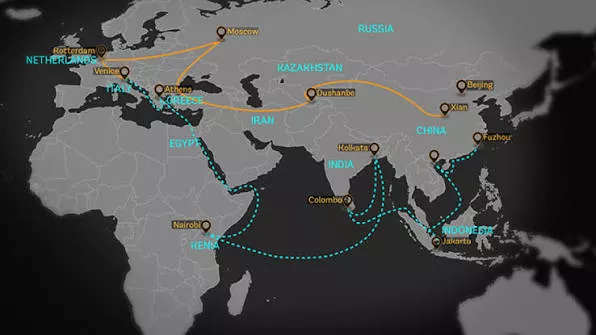
photo: Caucasus Watch
China’s Belt and Road Initiative provides infrastructure, financing and scale, but it also creates new forms of dependence. Central Asian states welcome Chinese investment, yet they are equally interested in balancing Beijing’s influence by developing alternative partnerships.
Iran already offers established access to the ports of Bandar Abbas and Chabahar. However, international sanctions, political uncertainty and tensions surrounding Iran’s relations with Western countries complicate the long-term commercial attractiveness of these routes.
A corridor through Pakistan could therefore become a third southern option. It would not necessarily replace Russian, Chinese or Iranian networks. Instead, it would give Central Asian states greater room for manoeuvre by allowing them to diversify their trade routes and reduce the risks associated with relying on a limited number of transit partners.
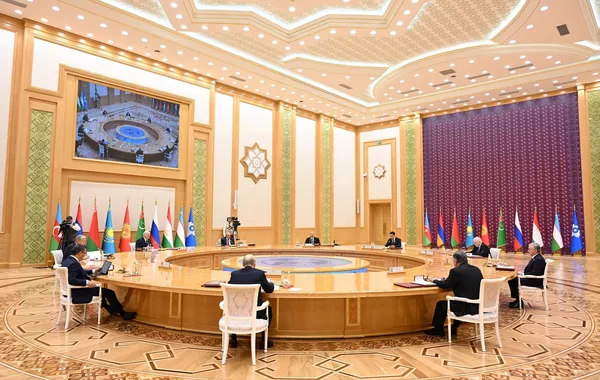
The discussions held in Cholpon-Ata demonstrate that Islamabad and Bishkek are attempting to move beyond general diplomatic declarations. The Pakistani and Kyrgyz leadership reaffirmed their commitment to the CASA-1000 electricity project and welcomed the operationalisation of a road corridor under the Quadrilateral Traffic in Transit Agreement.
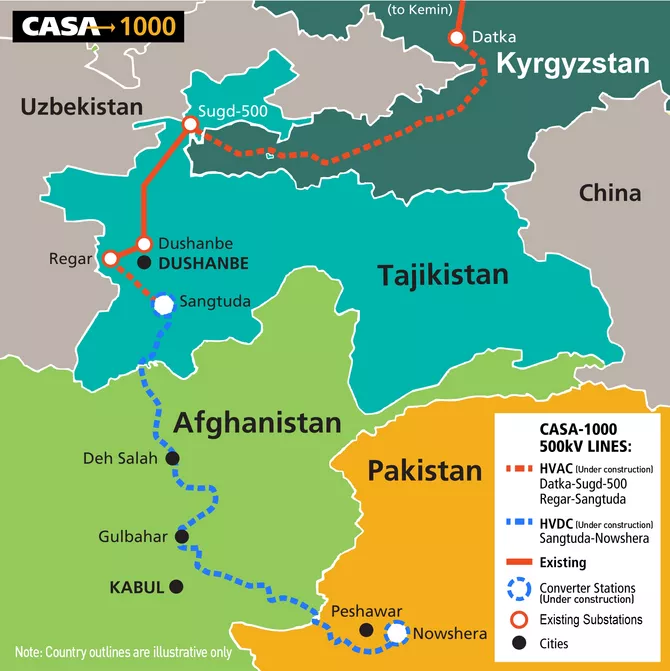
photo: getty images
CASA-1000 is particularly important because it connects regional diplomacy with material economic interests. The project is designed to transmit surplus hydropower from Kyrgyzstan and Tajikistan through Afghanistan to Pakistan. Despite years of delays and security concerns, it represents the kind of cross-regional infrastructure that could bind South and Central Asia together.
The road corridor is equally relevant. Infrastructure projects only become geopolitically meaningful when goods can actually move across borders. Pakistan’s ambitions will therefore depend not on speeches about connectivity but on customs reforms, transit guarantees, reliable highways, security and predictable commercial conditions.
The two countries have also set a bilateral trade target of $200 million by 2027-2028. This figure is modest when compared with the trade volumes Central Asian states maintain with Russia, China or the European Union. Nevertheless, the importance of the relationship cannot be measured solely in immediate trade statistics.
The real significance lies in the architecture Islamabad is attempting to build.
Pakistan wants to connect its ports, transport networks and domestic market with a region that has traditionally remained outside its immediate sphere of influence. For Islamabad, closer ties with Central Asia could generate investment, transit revenue and new export opportunities. More importantly, they could increase Pakistan’s strategic relevance in Eurasia.
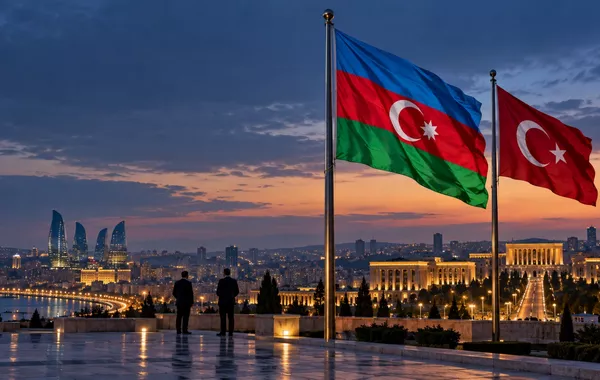
This approach also complements Pakistan’s growing relations with the Turkic world. Pakistan is not a member of the Organization of Turkic States, but it has developed a functioning trilateral partnership with Azerbaijan and Türkiye. This cooperation includes political consultations, summits and joint military exercises.
Pakistan could eventually seek closer engagement with the Turkic organisation, possibly through observer status or expanded institutional cooperation. Zardari’s increased involvement in Central Asia strengthens this wider network and demonstrates that Islamabad sees the region not as a distant diplomatic arena but as part of its emerging geopolitical neighbourhood.
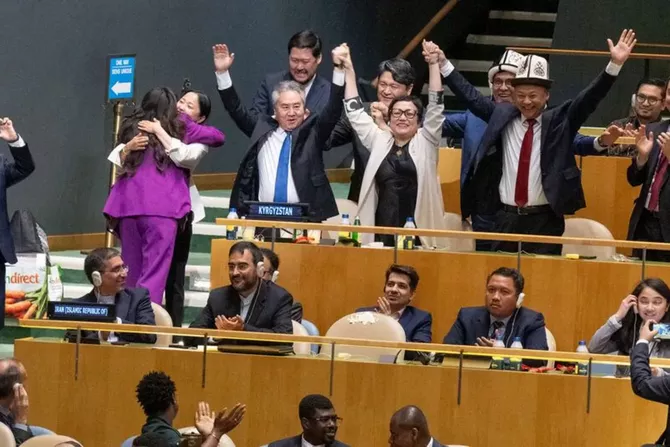
photo: UN News
Pakistan-Kyrgyzstan relations have also acquired a broader multilateral dimension. As a member of the United Nations Security Council, Pakistan backed Kyrgyzstan’s candidacy for a non-permanent seat for the 2027-2028 term. Such support helps transform economic dialogue into a more durable political partnership.
This evolving relationship reflects a wider change in Eurasia. The region’s established hierarchy of transport routes is being renegotiated. The central question is no longer simply who possesses the strongest military or the largest economy. Increasingly, influence is determined by who controls the roads, railways, ports, energy grids and customs corridors through which regional trade passes.
Transit agreements, power lines and access to maritime infrastructure are becoming currencies of geopolitical influence.
Countries once considered peripheral are discovering that geography can provide leverage. Central Asian states can bargain among Russia, China, Iran, Türkiye, the European Union and South Asian partners. Pakistan, meanwhile, can use its location to become a bridge between the Eurasian interior and the Arabian Sea.
Of course, the vision faces serious obstacles. Afghanistan remains the geographical link between Pakistan and much of Central Asia, and instability there continues to threaten cross-border connectivity. Poor infrastructure, bureaucratic barriers and regional rivalries could also delay implementation.
Yet the direction of travel is clear.
The real importance of Zardari’s visit to Kyrgyzstan does not lie in ceremonial speeches or even in the announced trade target. It lies in the emerging lattice of corridors stretching across Eurasia. Islamabad is trying to secure a place within this network by offering Central Asia an additional route to global markets.
If Pakistan can transform its geographical promise into dependable infrastructure and predictable transit arrangements, it could become a major stakeholder in the southern corridor - and a far more important Eurasian player than it has been in the past.