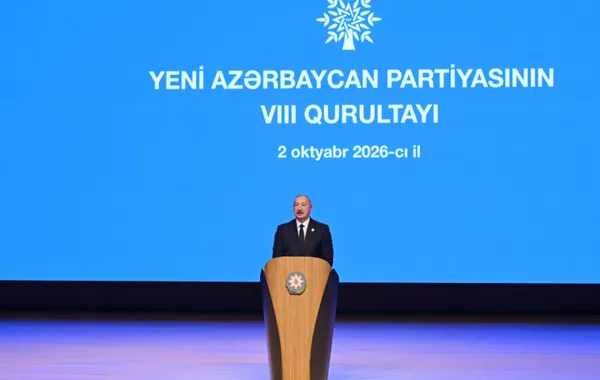
EurasiaReview highlights that 2025 solidified Azerbaijan’s position as a crucial link between Asia and Europe, establishing the nation as a central hub for regional trade, infrastructure connectivity, and diplomatic engagement.
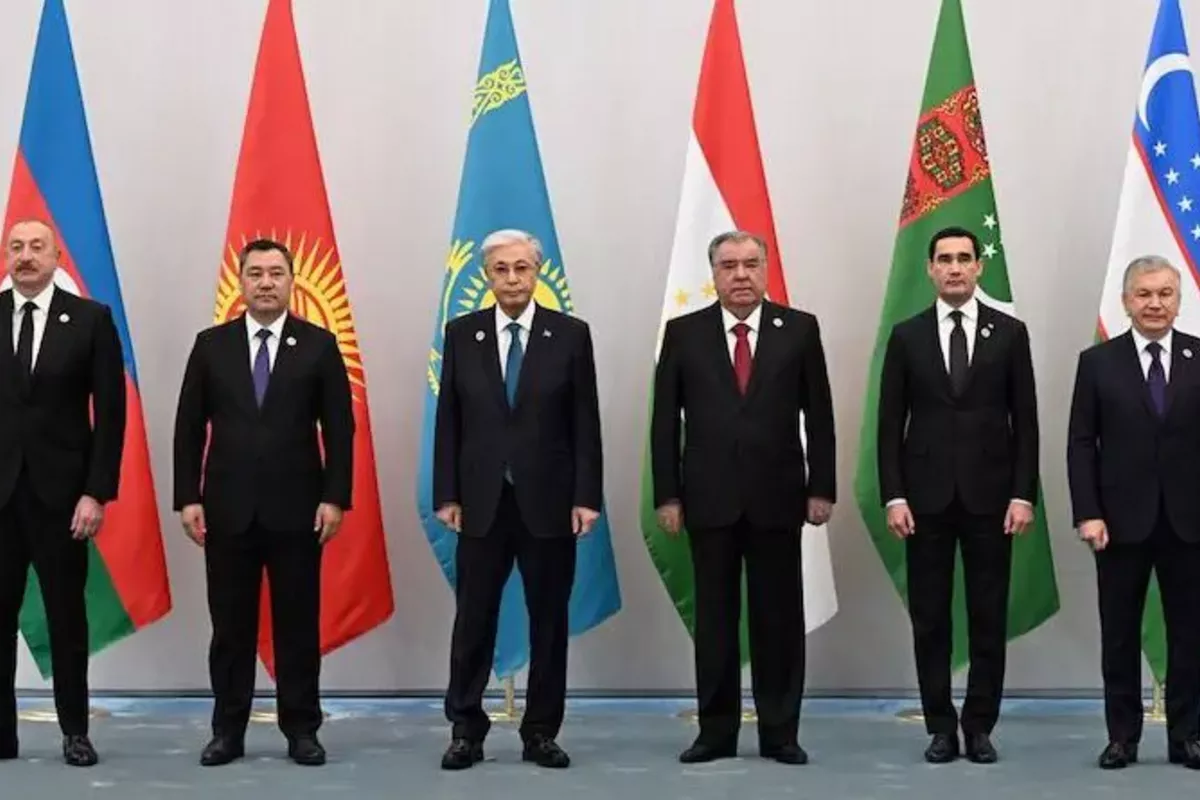
Azerbaijan is increasingly emerging as a vital bridge between Asia and Europe, and the year 2025 has clearly confirmed its strategic geographic position and its crucial role for both Europe and Central Asia. It is important to recall that Azerbaijan has become a full-fledged member of the Consultative Meetings of Heads of State of Central Asia. Central Asian leaders unanimously approved Azerbaijan’s accession to this consultative framework as a permanent member during the Seventh Consultative Meeting of Heads of State held in Tashkent in November 2025.
This announcement was made during the seventh meeting, where Azerbaijani President Ilham Aliyev emphasized that Azerbaijan and Central Asia today form “a single geopolitical and geo-economic region, whose importance in the world is steadily increasing”.
Ilham Aliyev, President of Azerbaijan, has pursued a notably successful foreign policy. His ability to maintain balanced relations with both the United States and Asian countries deserves particular attention. Against the backdrop of Russia’s invasion of Ukraine-which has profoundly reshaped perceptions of power and influence-Central Asia has risen to prominence within the geopolitical landscape of the 21st century. Since the outbreak of the war in Ukraine, European countries have actively sought new partners that are rich in natural resources and, above all, reliable. Central Asian states, with their multi-vector foreign policies, have inspired confidence in Europe, prompting European nations to seek closer engagement with the region.
Following a request by Turkmenistan’s national leader, Gurbanguly Berdimuhamedov, Azerbaijan joined the C5+1 format, further reinforcing its unity with Central Asian countries. The year 2025 truly marked a turning point in the deepening relationship between Azerbaijan and Central Asia. This rapprochement was reflected in high-level visits, including those of Gurbanguly Berdimuhamedov and Uzbek President Shavkat Mirziyoyev to Azerbaijan, as well as President Ilham Aliyev’s visits to Turkmenistan, Uzbekistan, Tajikistan, and Kazakhstan.
In reality, Azerbaijan’s integration into the C5 framework is entirely logical. Without Azerbaijan, the functioning of transit routes and the Middle Corridor would be significantly more difficult, as Azerbaijan is the critical link on the western side of the Caspian Sea connecting Asia to Europe. Its transcontinental position makes it indispensable both to Central Asian states and to the European Union. Azerbaijan is a Turkic-speaking country and a member of the Organization of Turkic States, alongside four of the five Central Asian countries, with Turkmenistan holding observer status. Moreover, Azerbaijan is a valued partner for Central Asian nations. This was clearly illustrated during the Central Asia Media Forum, where Kazakhstan’s Ministry of Foreign Affairs included Azerbaijan alongside Central Asian states. Cultural and linguistic proximity, combined with shared economic interests, makes Azerbaijan an attractive and indispensable partner for the region.

photo: OC Media
Azerbaijan and the Central Asia Consultative Summit
During the summit in Uzbekistan in November 2025, Central Asian leaders supported Azerbaijan’s accession to the Consultative Meetings format as a full participant, despite Azerbaijan’s location in the South Caucasus. This consultative framework serves as a key mechanism for high-level cooperation on trade, security, and other strategic issues among Central Asian states, which have gradually worked to resolve border disputes and longstanding tensions.
Azerbaijan’s determination to become an integral component of Central Asian geopolitics had already been noted. Azerbaijan’s accession represents not merely an expansion of a diplomatic forum, but rather the emergence of a deeply interconnected regional space. By combining Central Asia’s strategic resources with the transit capabilities of the South Caucasus, this development has the potential to reshape Eurasia’s political economy.
Azerbaijan’s admission as a permanent member of the Consultative Summit signals a major geopolitical shift, marking the emergence of a trans-Caspian political and economic space that connects Central Asia and the South Caucasus more closely than at any time since the dissolution of the Soviet Union. United with Central Asia, Azerbaijan is positioned to transform the Middle Corridor into one of the world’s most vital connectivity arteries.
President Shavkat Mirziyoyev emphasized that Azerbaijan’s inclusion would help “build a solid bridge between Central Asia and the South Caucasus, paving the way for a unified space of cooperation that will strengthen the strategic interconnectedness and resilience of both regions”.
Kazakhstan, Uzbekistan, and Turkmenistan have increasingly committed themselves to diversifying connectivity routes and reducing dependence on Russian transit corridors. For this reason, closer ties with Azerbaijan naturally facilitate stronger engagement with Türkiye and, more broadly, the Western world, including Europe and the United States.
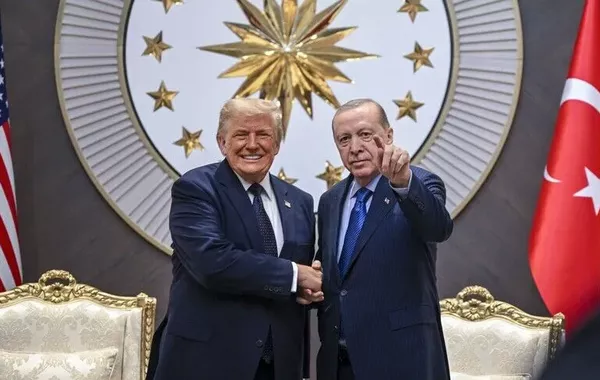
It is worth recalling President Ilham Aliyev’s meeting with U.S. President Donald Trump, as well as the Central Asia-USA Summit. Both Central Asian countries and Azerbaijan share a strong interest in strengthening relations with the United States. Cooperation with Washington is often perceived as involving less political pressure and fewer double standards than engagement with Europe, where issues related to politics and human rights frequently complicate economic cooperation, as seen after the EU-Central Asia summit and the Cyprus-related tensions. In this regard, the United States appears more attractive to regional actors. Similarly, President Tokayev has expressed appreciation for working with China for comparable reasons. In Azerbaijan’s case, it was President Trump who mediated in the resolution of the Armenian-Azerbaijani conflict, and President Aliyev’s joint letter advancing his nomination for the Nobel Peace Prize further reflects this diplomatic dynamic.
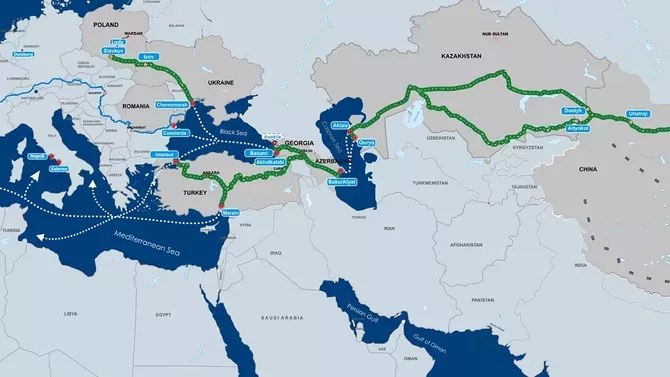
photo: Caucasus Watch
The Middle Corridor
The Middle Corridor-stretching from China through Kazakhstan, across the Caspian Sea to Azerbaijan, then onward to Georgia, Türkiye, and Europe-has become a central pillar of long-term development strategies across the region. Within this framework, Azerbaijan is not merely a neighboring state but a critical transit hub. Its integration into Central Asian institutional structures formalizes this reality.
Azerbaijan’s integration into Central Asian regionalization is strongly influenced by external actors, particularly China and the European Union. A triangular dynamic has emerged, with the South Caucasus functioning as a connective hinge. Over the past two decades, Azerbaijan has systematically developed major transport and energy corridors linking the Caspian basin to global markets. These include the Baku-Tbilisi-Ceyhan oil pipeline, the Trans-Anatolian and Trans-Adriatic gas pipelines, as well as strategic infrastructure such as the Port of Alat and the Baku-Tbilisi-Kars railway.
By becoming a full participant in the Consultative Summit, Azerbaijan is now directly shaping long-term regional cooperation in transportation, trade, energy, digital connectivity, and diplomacy. This enhanced status strengthens its role in Eurasian planning, deepens ties with Türkiye, and extends its diplomatic reach beyond the South Caucasus. During the November 2025 summit in Tashkent, President Aliyev announced that construction of the Zangezur Corridor was nearing completion, with an initial capacity of 15 million tons, positioning it as a key artery of the Middle Corridor.
The opening of the Zangezur Corridor will transform what was once a fragmented geography into a cohesive network of connectivity. The Middle Corridor gained unprecedented momentum in 2025, supported by the EU’s €12 billion Global Gateway investment and the announcements made during the 3rd EU-Central Asia Economic Forum in Tashkent.
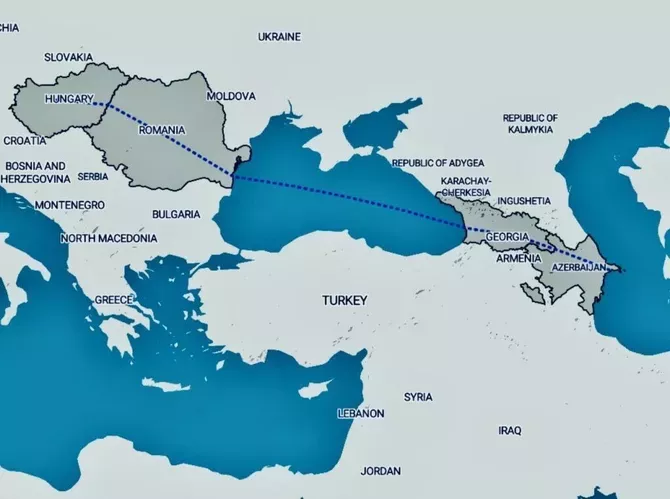
photo: Jam-news.net
Azerbaijan: A Reliable Country Linking Continents
Azerbaijan is intensifying cooperation across regions, reinforcing its role as a central hub in this evolving network. President Ilham Aliyev has emphasized that Azerbaijan is the only reliable country capable of geographically linking Central Asia with the West amid geopolitical instability affecting alternative routes. With sustained investment in infrastructure and participation in global trade corridors, Azerbaijan is rapidly positioning itself as a major logistics center.
The Baku-Tbilisi-Kars railway and the Baku International Sea Trade Port at Alat, combined with the Alat Free Economic Zone, further consolidate Azerbaijan’s strategic role. Routes through Russia and Iran remain constrained by sanctions and political tensions, reinforcing Azerbaijan’s indispensability.
The year 2025 also marked strengthened relations between Azerbaijan and Europe, the United States, and China. EU-Azerbaijan relations are evolving from normative divergence toward strategic convergence. The EU remains Azerbaijan’s largest trading partner and primary investor. Meanwhile, Azerbaijan’s ties with China deepened through the Belt and Road Initiative, with bilateral trade reaching $3.74 billion in 2024.
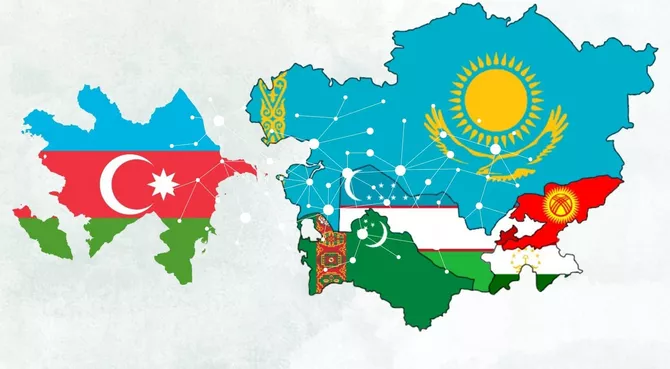
photo: aircenter.az
Azerbaijan’s Exemplary Foreign Policy and Partnership with Central Asia
President Aliyev’s participation in multiple summits across diverse regions within a short period underscores Azerbaijan’s growing diplomatic influence. Joint projects with Kazakhstan and Uzbekistan, as well as infrastructure initiatives involving China, illustrate the success of Azerbaijan’s regional engagement.
Azerbaijan also plays an active role within the Organization of Turkic States, frequently emphasizing shared identity and unity. Economic cooperation with Kazakhstan and Uzbekistan has produced tangible results, with trade volumes and mutual investments reaching record levels.
Conclusion
In conclusion, the year 2025 marked a decisive milestone in Azerbaijan’s transformation into a pivotal geopolitical and geo-economic actor. By fully integrating into Central Asia’s consultative mechanisms, strengthening trans-Caspian connectivity, and balancing relations with Europe, the United States, China, and Türkiye, Azerbaijan has positioned itself as the indispensable bridge linking continents. Its strategic vision, infrastructure investments, and pragmatic diplomacy are reshaping Eurasian connectivity, placing the Middle Corridor at the heart of global trade and cooperation. Azerbaijan’s role is no longer peripheral-it is central to the future architecture of Eurasia.