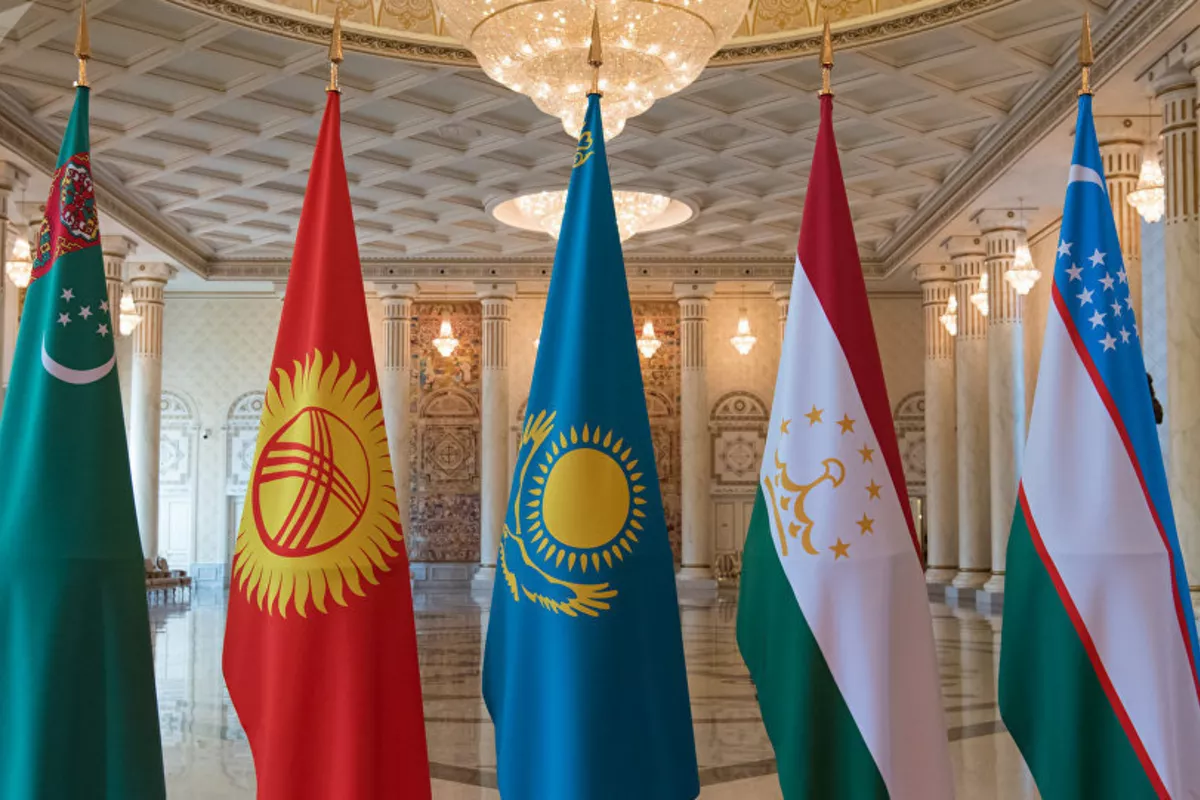
More than three decades after the dissolution of the Soviet Union, the five Central Asian states-Kazakhstan, Uzbekistan, Turkmenistan, Kyrgyzstan, and Tajikistan-have emerged as pivotal actors in a renewed geopolitical contest. Rather than functioning as passive objects of external influence, these states increasingly demonstrate agency in shaping their international relations. Their foreign policies are guided by a multi-vector approach aimed at preserving sovereignty while simultaneously engaging Russia, China, and Western powers.
Historically, Russia exercised dominant influence in the region due to deep-rooted historical, linguistic, economic, and security connections. Yet the geopolitical realities of the 2020s reveal a more complex, multipolar environment. China’s expanding economic and infrastructural presence, alongside growing engagement by Western actors such as the United States and the European Union, has transformed Central Asia into a space of competitive coexistence rather than exclusive dominance. This analysis examines the evolution of Central Asia’s multi-vector strategy, recent diplomatic initiatives and agreements, and the structural constraints shaping the region’s balancing efforts amid intensifying great-power rivalry.
The Logic and Foundations of Multi-Vector Diplomacy
Multi-vector diplomacy refers to the deliberate foreign policy strategy adopted by Central Asian governments to cultivate diversified partnerships with multiple major powers in order to avoid dependence on any single actor. At its core, this approach is designed to preserve national sovereignty by hedging between competing geopolitical interests. It also facilitates economic diversification through engagement with Russia, China, the European Union, and other external partners, while enabling security balancing via participation in multiple institutional frameworks.
An additional objective of this strategy is the maintenance of domestic and regional stability by avoiding entanglement in open great-power conflicts. Central Asian leaders often tailor their messaging to different audiences, emphasizing shared security concerns to Moscow while highlighting regional stability and economic openness to Western partners. This diplomatic flexibility allows them to extract security assurances and economic benefits without entering into rigid alliance commitments. Geography, post-Soviet historical legacies, and structural economic dependencies-particularly in energy and infrastructure-have shaped this approach, which has become even more pronounced as global power competition has intensified during the 2020s.
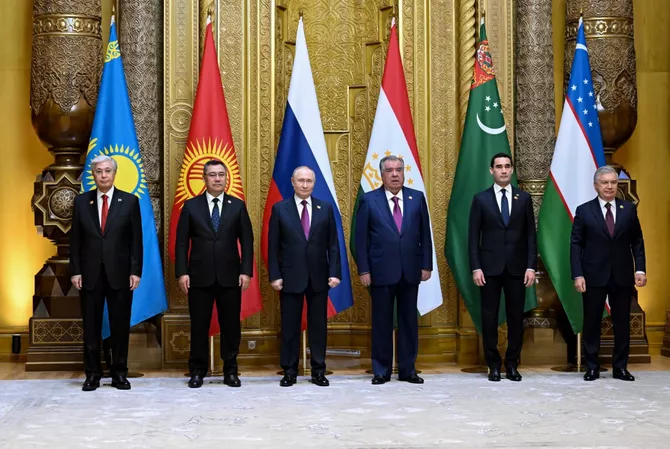
Photo: TASS
Russia’s Persistent Role and Its Structural Limitations
Russia’s post-Soviet influence in Central Asia has been grounded in enduring military, economic, and cultural ties. Institutions such as the Collective Security Treaty Organization (CSTO) and the Eurasian Economic Union (EAEU) formalize Moscow’s role by providing security guarantees and preferential trade arrangements. Labor migration further reinforces this relationship, as millions of Central Asian workers reside in Russia, generating remittances that remain critical to several national economies.
Despite the imposition of Western sanctions following Russia’s full-scale invasion of Ukraine, Moscow has managed to sustain and, in some cases, reinforce its regional presence through increased trade, expanded credit mechanisms, and continued energy cooperation. Central Asian economies remain integrated into Russian financial and logistical networks, and the region has served as an important channel for Russia to mitigate losses from restricted Western markets.
Nevertheless, Moscow’s influence faces growing constraints. Central Asian states are increasingly diversifying trade and infrastructure partnerships beyond Russia, regional elites are reconsidering exclusive reliance on Russian security guarantees, and Russia’s strategic and economic focus on Ukraine has limited its capacity to project power elsewhere. While Russia continues to rely on institutional mechanisms, bilateral diplomacy, and its role as a major energy and trade partner-particularly for Kazakhstan and Uzbekistan-its leverage is no longer uncontested. Central Asian leaders increasingly seek alternative partners to balance Russian dominance when circumstances allow.
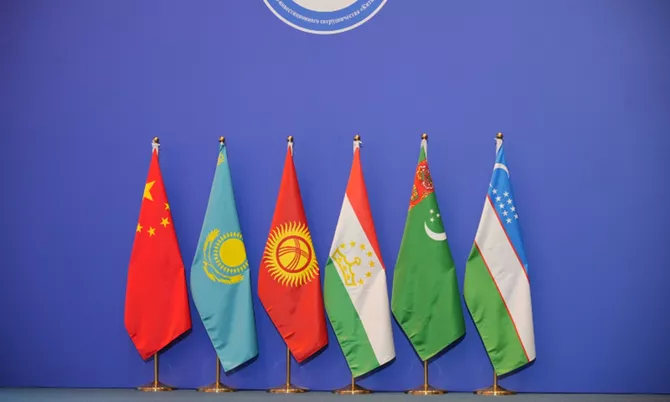
Photo: VCG
China’s Expanding Economic Presence and Strategic Caution
China’s role in Central Asia has expanded rapidly through trade growth, infrastructure development, and financing under the Belt and Road Initiative. Beijing has become one of the region’s largest trading partners, investing heavily in energy projects, transport corridors, and cross-border connectivity. A prominent example is the China-Kyrgyzstan-Uzbekistan railway, whose construction began in 2025. This project is designed to link Kashgar with Andijan, significantly reducing transit times to Europe and providing Central Asia with alternatives to Russia-centric transport routes.
China’s diplomatic engagement has also become more institutionalized. The China-Central Asia Summit held in Astana in June 2025 marked a significant step toward formalizing long-term cooperation under the framework of a “shared future.” While the summit underscored China’s central position in the region’s economic architecture, Central Asian states continue to approach Chinese investment pragmatically, seeking economic benefits while guarding against excessive dependence.
Strategically, China has pursued a cautious balancing act with Russia. Beijing avoids overtly challenging Moscow’s traditional influence in Central Asia and has refrained from actions that could provoke Russian resistance, such as dramatically rerouting trade flows away from Russian territory. This approach reflects China’s preference for stability and incremental economic integration over geopolitical confrontation.
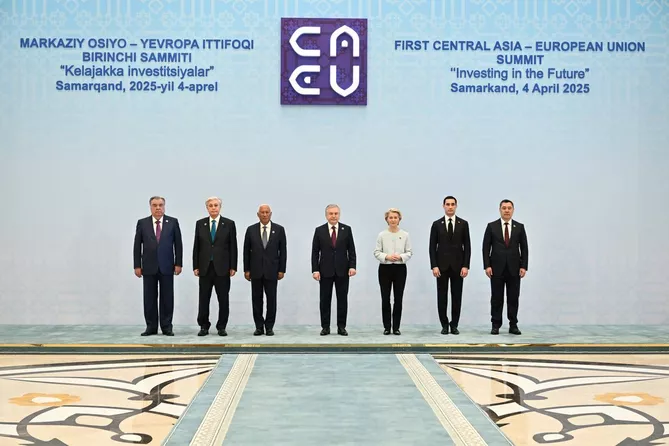
Photo: Uzbekistan President's press service
Western Engagement and Its Structural Constraints
Western interest in Central Asia has intensified as part of broader competition with Russia and China, as well as concerns over access to critical minerals, regional security, and governance standards. The United States has expanded its engagement through the C5+1 framework, which brings together Washington and the five Central Asian states to coordinate on issues ranging from critical minerals and counterterrorism to border security.
The European Union has also deepened its involvement. The first EU-Central Asia summit, held in Samarkand in April 2025, resulted in the establishment of a formal strategic partnership and the announcement of a US$13.2 billion investment package. This initiative linked economic cooperation with commitments to governance reforms and human rights, signaling a more structured and long-term EU approach to the region.
Additional Western engagement has taken place through expert forums, cultural exchanges, and policy dialogues. One example is the Azerbaijan-U.S. think tanks forum held in Baku in November 2025, which addressed strategic cooperation in energy and security and highlighted the growing interconnectedness of Central Asia with the South Caucasus.
Despite these efforts, Western influence faces clear limitations. Western financial packages remain modest compared to Chinese infrastructure financing and Russian trade volumes. Central Asian elites often prioritize political stability and predictability over conditionality tied to democratic reforms. Moreover, Western attention is frequently divided by other geopolitical crises, limiting sustained engagement. As a result, while Western actors can provide alternatives, they have not displaced Russia or China as the region’s primary economic and security partners.
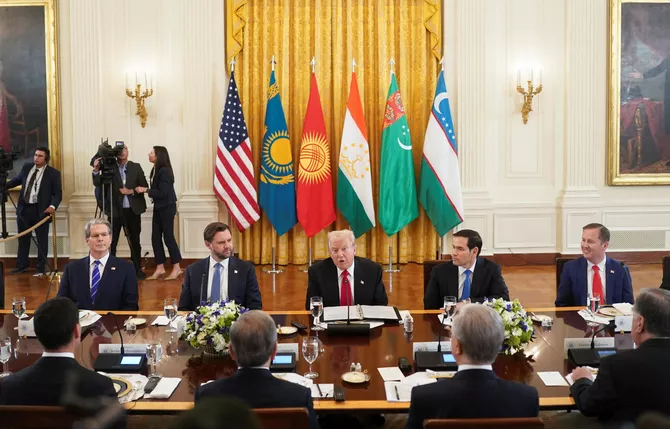
Photo: AP
Strengthening Regional Cooperation
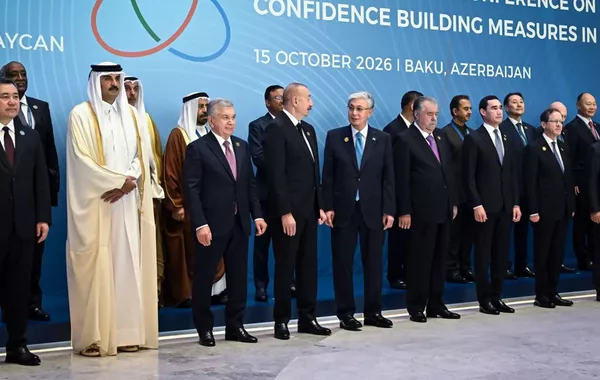
Alongside external balancing, Central Asian states are investing in regional integration. Consultative mechanisms among regional leaders have gained momentum, exemplified by the seventh Consultative Meeting of Heads of Central Asian States held in Dushanbe in November 2025. The participation of Azerbaijan as a full member marked a significant expansion of this forum, linking Central Asia more closely with the South Caucasus and opening new avenues for economic cooperation.
Progress has also been made on longstanding internal challenges. The signing of the Khujand Treaty in March 2025 by Tajikistan, Kyrgyzstan, and Uzbekistan resolved critical border disputes in the Fergana Valley, reducing internal tensions and enhancing regional stability. Such developments strengthen Central Asia’s collective negotiating position vis-à-vis external powers.
Regional identity-building has been further reinforced through broader initiatives, including cooperation within the Organization of Turkic States. The summit held in Bishkek in November 2024 emphasized cultural, economic, and political ties among Turkic-speaking countries, complementing multi-vector diplomacy by diversifying partnerships beyond the traditional Eurasian framework.
Structural Constraints on Strategic Autonomy
Despite notable diversification efforts, Central Asian states remain constrained by structural dependencies. Turkmenistan’s gas exports are overwhelmingly directed toward China, creating asymmetrical leverage. Kyrgyzstan and Tajikistan carry substantial debt obligations to Chinese creditors, limiting their policy flexibility. At the same time, Kazakhstan and Uzbekistan remain deeply embedded in Russian energy and trade networks.
Security considerations further restrict maneuverability. While Central Asian governments explore alternatives to Russian-led security arrangements, viable substitutes remain limited. NATO offers no formal defense guarantees, and U.S. military engagement is deliberately restrained to avoid escalation with Russia. Consequently, most Central Asian states continue to view baseline security cooperation with Moscow as unavoidable.
Domestic political dynamics also shape foreign policy choices. Centralized governance structures and authoritarian tendencies lead many regimes to prioritize internal stability and regime security, often constraining deeper alignment with Western political norms.
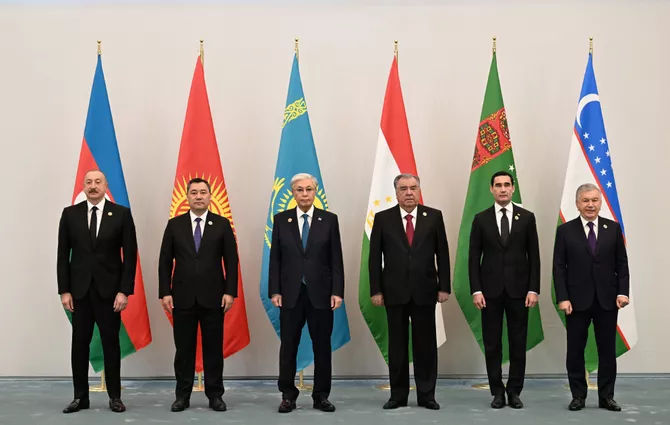
Photo: AZERTAC
Strategic Outlook in a Multipolar Eurasia
As the global order continues to evolve toward multipolarity, Central Asia is likely to remain both a zone of competition and a space for pragmatic cooperation. China’s economic rise and Russia’s enduring security role necessitate continued diplomatic balancing. To enhance agency, Central Asian states may expand intra-regional trade, develop alternative connectivity corridors such as the Middle Corridor, and deepen engagement with partners like the European Union, Türkiye, Azerbaijan, and Middle Eastern states.
The growing inclusion of actors such as Azerbaijan in regional mechanisms signals a willingness to broaden cooperation networks beyond traditional boundaries. However, navigating intensifying U.S.-China competition, Russian security ambitions, and China’s expanding economic leverage will require sustained diplomatic sophistication, economic innovation, and strategic foresight.
Conclusion: Managing Balance in a Competitive Environment
Central Asia’s multi-vector strategy represents a pragmatic and adaptive response to a complex international environment. Far from being mere arenas of great-power rivalry, the region’s states actively shape their trajectories through diversified partnerships, regional cooperation, and diplomatic balancing.
Yet the limits of this approach remain evident. Economic dependencies, security constraints, and the entrenched influence of Russia and China prevent full strategic autonomy. Western engagement offers valuable alternatives but has not fundamentally altered the regional balance. Ultimately, Central Asia occupies a layered geopolitical space-neither unipolar nor bipolar-where multi-vector diplomacy is not only a choice, but an essential strategy for survival and development in the twenty-first century.