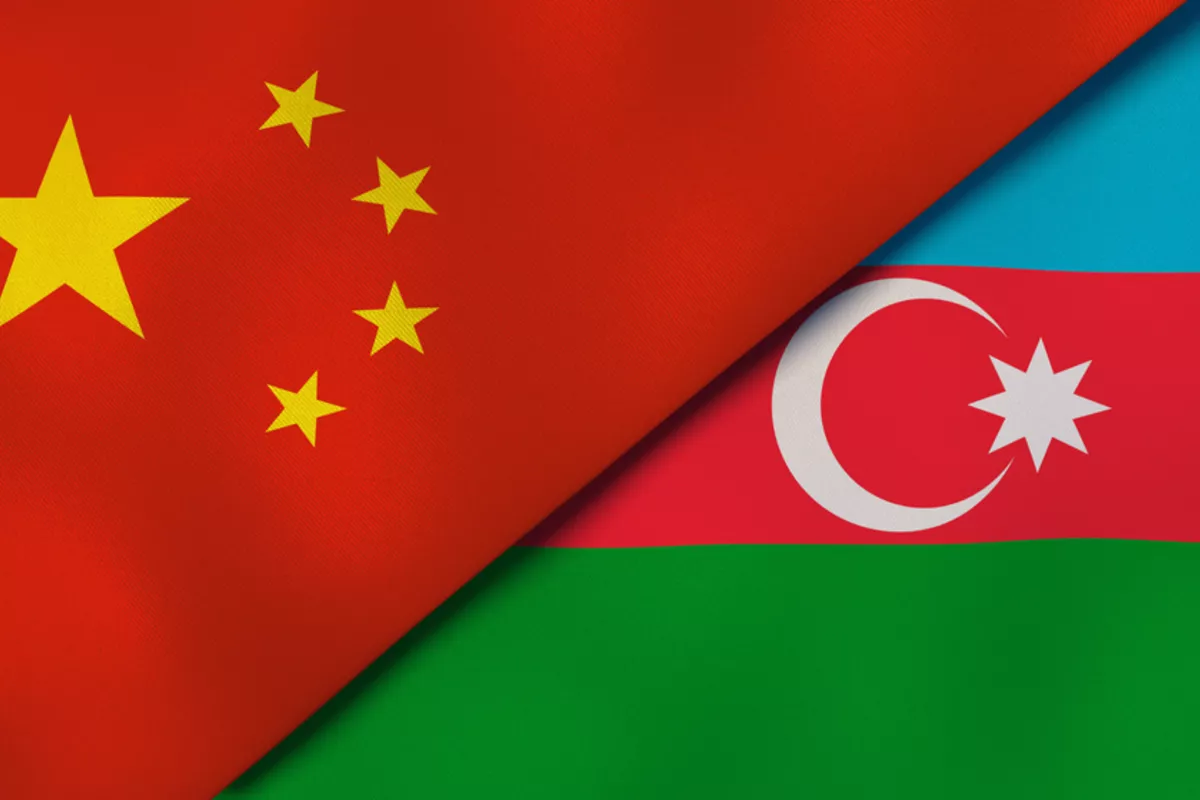
The Eurasian Trade Map of China and Azerbaijan
The Middle Corridor is reshaping the region’s geopolitical landscape, offering participating countries a historic opportunity to free themselves once and for all from their role as ‘transit appendages’ to Moscow and become independent players.
China is seriously intent on radically and irreversibly increasing freight traffic to Europe via the international Trans-Caspian route, better known as the Middle Corridor, The Caspian Post reports via Asia News.
This is no longer simply an alternative route or a contingency plan in the event of a crisis; it is a global strategic project which, if successfully implemented, will completely eliminate the monopoly of the northern routes and radically change the entire architecture of Eurasian logistics in the 21st century.
Against a backdrop of profound changes in global politics, the Middle Corridor is becoming the continent’s main artery, directly linking Asian production capacity with European consumer markets via Central Asia and the South Caucasus.
The main reason for Beijing’s strategic reorientation towards the south is the toxicity, unreliability and vulnerability of the Russian route to sanctions.
After 2022, major Western companies, multinationals and logistics giants began to abandon transit through Russia en masse, citing critical legal risks, cargo insurance issues and political unpredictability.
The traditional Northern Corridor has suddenly turned into a sanctions trap, whilst maritime routes through the Red Sea and the Suez Canal have faced a systemic security crisis due to ongoing Houthi attacks and general military tensions in the Middle East. Sea freight rates and insurance premiums on maritime routes have skyrocketed, whilst transit times have lengthened due to the need to circumnavigate Africa via the Cape of Good Hope.
In these circumstances, the Central Corridor offers unique logistical opportunities, and Azerbaijan plays a key and irreplaceable role in this new landscape.
The Alat International Commercial Seaport and the Baku-Tbilisi-Kars railway, in which the Azerbaijanis have invested heavily in modernisation, have significantly increased capacity, and container traffic along the Corridor is expected to grow exponentially in the period 2026-2027, with transit volumes in some segments rising by 450-500 per cent compared with previous periods.
In recent years, relations between Baku and Beijing have reached a qualitatively new and unprecedented level. In 2025, Azerbaijan and China signed the Declaration on the Establishment of a Comprehensive Strategic Partnership, one of the highest-ranking and most reliable partnerships within the rigid hierarchy of Chinese foreign policy.
Beijing has moved from words to deeds, investing substantial financial and technological capital in Azerbaijan’s infrastructure, port facilities and digital logistics ecosystem.
A crucial practical step in this integration was the entry of the Chinese state-owned company China Railways Container Transport Corporation into the joint venture Middle Corridor Multimodal Ltd.
For Moscow, the rapid development of the Middle Corridor represents a severe geopolitical and economic blow, arousing deep jealousy and irritation within the Kremlin.
Russia has always regarded itself as the main land bridge between Asia and Europe, using transit as a lever to exert political pressure. Now this status has been completely lost, and analysts estimate that the re-routing of freight flows is costing the Russian budget billions of dollars a year in lost revenue.
Particularly painful for the Kremlin is the fact that this global project is being implemented under the leadership of Azerbaijan, a country that Russia, until recently, sought to keep within its exclusive sphere of influence, whilst Baku is now confidently building a deeply sovereign, multi-dimensional policy.
The Middle Corridor is completely reshaping the geopolitical landscape of Eurasia, offering the participating countries - Azerbaijan, Kazakhstan, Georgia and Türkiye - a historic opportunity to free themselves once and for all from their role as ‘transit appendages’ and become independent actors.
China gains a stable land route to its main markets, protected from external interference, whilst Europe achieves reliable diversification of supplies and finally frees itself from dependence on Russia, which is rapidly sliding towards strategic isolation, as its traditional model of control is proving increasingly inadequate in today’s conditions.
By Vladimir Rozanskij